
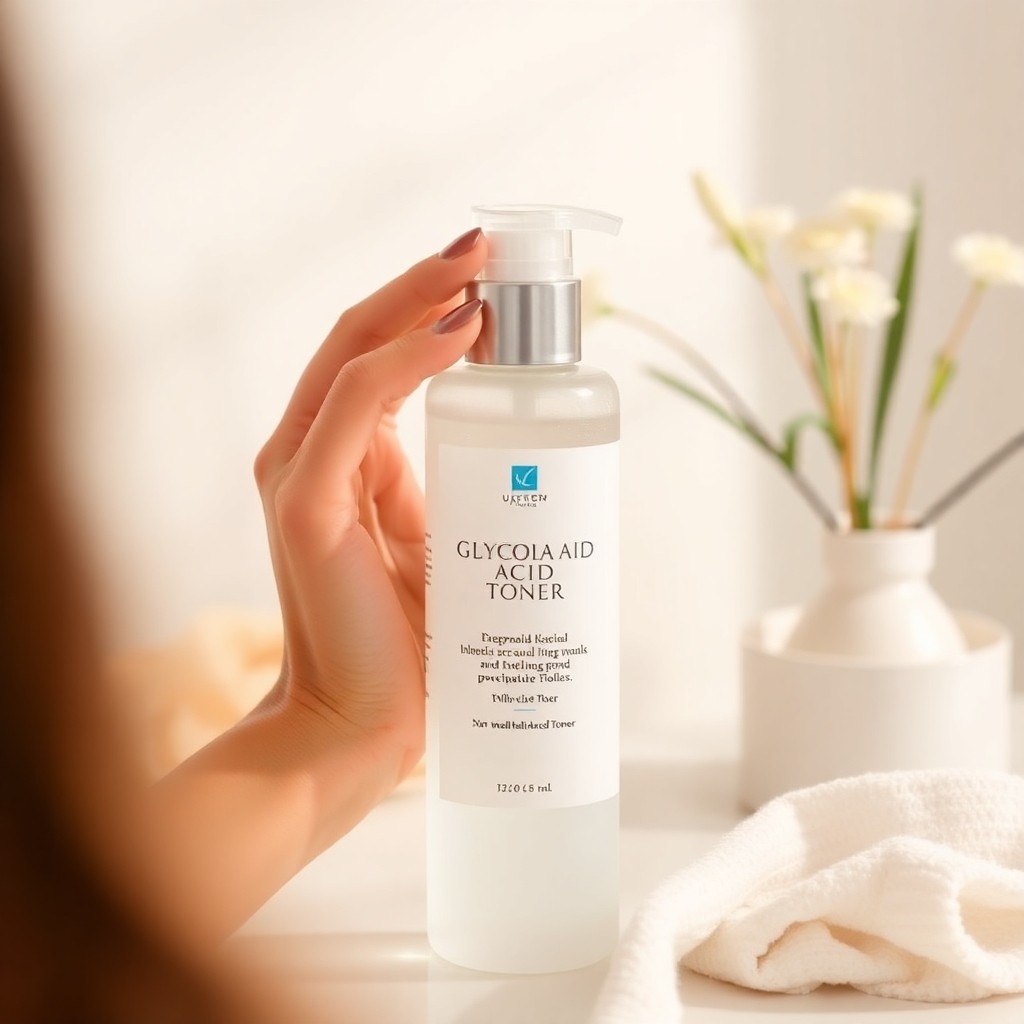
“I remember a patient—let’s call her Sarah—who came to me frustrated by dull, uneven skin that no cleanser or moisturizer seemed to fix. She was tired of layering products without results. After a single month of using a well-formulated glycolic acid toner, her fine lines softened, dark spots faded, and her complexion looked as if she’d just returned from a week at the spa. In my 15 years as a board-certified dermatologist, I’ve seen glycolic acid consistently deliver this kind of transformation—when used correctly.”
“As the smallest and most potent alpha hydroxy acid (AHA), glycolic acid works by breaking down the intercellular ‘glue’ that holds dead skin cells to the surface—a process known as desquamation. This is a core dermatological principle: gentle, controlled exfoliation accelerates cell turnover, revealing fresher, brighter skin while stimulating collagen production over time. The right toner can refine pores, fade hyperpigmentation, and smooth texture, but only if the concentration, pH (ideally between 3.0 and 4.0), and supporting ingredients are optimized to prevent irritation.”
“In this guide, I’ll walk you through the science behind glycolic acid, review the best glycolic acid toner options for every skin type, and show you exactly how to incorporate an AHA toner into your routine for maximum results with minimal risk.”
Table of Contents
- What Is Glycolic Acid and How Does It Work?
- Key Benefits of a Glycolic Acid Toner
- How to Choose the Best Glycolic Acid Toner
- Top 5 Best Glycolic Acid Toners Reviewed
- How to Use an AHA Toner Safely
- Who Should Avoid Glycolic Acid?
- Frequently Asked Questions
- Conclusion
What Is Glycolic Acid and How Does It Work?
Glycolic acid is a water-soluble alpha hydroxy acid derived from sugarcane. It has the smallest molecular size of all AHAs, which allows it to penetrate the skin more deeply and work faster than lactic, mandelic, or citric acid. According to the American Academy of Dermatology (AAD), AHAs like glycolic acid work by dissolving the intercellular “glue” (desmosomes) that holds dead skin cells to the surface, promoting natural desquamation and cell turnover.
When applied consistently, a glycolic acid 7 percent toner (the most common concentration for at-home use) can:
- Stimulate collagen production
- Reduce hyperpigmentation and melasma
- Improve skin texture and pore appearance
- Enhance penetration of other skincare products
A 2019 study published in the Journal of Cosmetic Dermatology found that 12 weeks of treatment with a 10% glycolic acid formulation significantly improved skin smoothness, firmness, and thickness while reducing the appearance of fine lines. Lower concentrations (5–7%) are ideal for regular use, while higher strengths (10–15%) are better suited for professional peels or short-contact masks.
Key Benefits of a Glycolic Acid Toner
1. Chemical Exfoliation Without Scrubbing
Unlike physical scrubs that can cause micro-tears, an exfoliating toner with glycolic acid gently dissolves dead cells. This makes it particularly effective for those with rough, bumpy skin texture or keratosis pilaris.
2. Brightens Dull Skin and Fades Hyperpigmentation
Glycolic acid inhibits tyrosinase, the enzyme responsible for melanin production. Regular use of a brightening toner can reduce sunspots, post-inflammatory hyperpigmentation (acne scars), and overall dullness. A 2021 review in Clinical, Cosmetic and Investigational Dermatology confirmed that glycolic acid is one of the most effective topical agents for treating photodamage.
3. Smooths Fine Lines and Wrinkles
By accelerating cell turnover and boosting collagen synthesis, glycolic acid acts as a mild anti-aging glycolic toner. It won’t replace prescription retinoids, but it can complement them beautifully.
4. Unclogs Pores and Reduces Acne
Glycolic acid penetrates into the follicle, clearing debris and oil that contribute to blackheads and whiteheads. For acne-prone skin, it is often combined with salicylic acid, but a standalone AHA toner can still be highly effective.
5. Improves Product Absorption
Removing the layer of dead cells allows your serums and moisturizers to penetrate up to 60% more effectively. This means your vitamin C, hyaluronic acid, or niacinamide will work harder.
How to Choose the Best Glycolic Acid Toner
Concentration and pH
For a leave-on glycolic toner for beginners, look for 5–7% glycolic acid with a pH between 3.0 and 4.0. A pH above 4.5 significantly reduces exfoliation efficacy, while a pH below 3.0 can be overly irritating. Most reputable brands will list the pH on their website or packaging.
Formulation Matters
The best glycolic acid toner will also contain soothing ingredients like aloe vera, glycerin, panthenol, or allantoin to buffer potential irritation. Avoid toners with high amounts of denatured alcohol, which can strip the skin barrier.
Skin Type Considerations
- Oily/Combination: Look for a lightweight, water-based formula.
- Dry/Sensitive: Choose a gentle glycolic toner with added humectants and a lower concentration (5%).
- Acne-Prone: A 7% glycolic acid toner with niacinamide can help reduce inflammation and congestion.
Top 5 Best Glycolic Acid Toners Reviewed
1. Pixi Glow Tonic (5% Glycolic Acid)
Best for: Beginners and normal-to-dry skin
Pixi Glow Tonic is arguably the most famous AHA toner on the market. It contains 5% glycolic acid, aloe vera, ginseng, and niacinamide. The formula is alcohol-free and has a pH of approximately 4.0, making it gentle enough for most skin types. Users report a noticeable glow after just a few applications, and it’s widely recommended as a starting point for those new to chemical exfoliation.
Pros: Gentle, widely available, soothing ingredients Cons: Slightly higher pH may be less effective for advanced users; fragrance may bother some
2. The Ordinary Glycolic Acid 7% Toning Solution
Best for: Experienced users and oily/combination skin
The The Ordinary glycolic acid 7% Toning Solution is a powerhouse at an extremely affordable price point. It includes a Tasmanian pepperberry derivative to reduce irritation, but the formula is relatively bare-bones. At a pH of 3.6, it is more potent than Pixi’s offering. Users with oily skin tend to love it for its ability to refine texture and control congestion.
Pros: High concentration, low cost, effective Cons: Can be irritating for sensitive skin; no added soothing agents beyond pepperberry
3. COSRX AHA 7 Whitehead Power Liquid (7% Glycolic Acid)
Best for: Acne-prone and combination skin
This Korean skincare favorite combines 7% glycolic acid with niacinamide, adenosine, and panthenol. It is formulated at a pH of 3.5–3.7 and is designed specifically to target whiteheads and blackheads. The inclusion of panthenol (pro-vitamin B5) helps reduce the sting, making it a solid glycolic toner for beginners who still want visible results.
Pros: Targets acne, contains soothing ingredients, no artificial fragrance Cons: Slightly sticky texture; takes time to absorb
4. Paula’s Choice Skin Perfecting 8% AHA Gel Exfoliant
Best for: Anti-aging and hyperpigmentation
Paula’s Choice is known for research-backed formulations. This 8% glycolic acid gel exfoliant also contains chamomile, green tea, and oat extract to calm the skin. The gel texture allows for controlled application. It is particularly effective for fading sun damage and improving skin firmness.
Pros: High concentration with soothing botanicals, great for anti-aging Cons: More expensive than drugstore options; gel texture may feel heavy for some
5. L’Oréal Paris Revitalift 10% Pure Glycolic Acid Serum
Best for: Advanced users and those targeting deep wrinkles
Technically a serum, this product functions like a toner when applied after cleansing. At 10% glycolic acid, it is strong and should be used with caution—most users can only tolerate it 2–3 times per week. It is alcohol-free and contains soothing ingredients like aloe vera and ceramides.
Pros: High potency for dramatic results Cons: Not suitable for sensitive skin; requires careful introduction
How to Use an AHA Toner Safely
Using a skin texture toner with glycolic acid incorrectly can lead to redness, peeling, and compromised skin barrier. Follow these evidence-based steps:
- Patch test first. Apply a small amount behind your ear or on your jawline for 24 hours.
- Start slow. Use the toner 1–2 times per week for the first two weeks, then gradually increase to every other day or daily if tolerated.
- Apply to clean, dry skin. After cleansing, wait 30 seconds to ensure your face is completely dry. Wet skin increases penetration and irritation risk.
- Use a cotton pad or hands. A cotton pad provides light physical exfoliation; your hands are gentler.
- Wait 15–20 minutes before applying other actives. This prevents pilling and reduces the chance of irritation when layering with retinoids or vitamin C.
- Moisturize immediately. Glycolic acid can be drying. Follow with a barrier-repairing moisturizer containing ceramides, squalane, or shea butter.
- Wear SPF 30+ every single day. Glycolic acid increases photosensitivity. According to the FDA, sunscreen is mandatory when using AHAs.
Important: Do not use glycolic acid on the same night as prescription retinoids, benzoyl peroxide, or other strong exfoliants. Alternate nights to avoid over-exfoliation.
Who Should Avoid Glycolic Acid?
While a brightening toner with glycolic acid is safe for most people, certain individuals should exercise caution or avoid it entirely:
- Those with active eczema, psoriasis, or rosacea: Glycolic acid can exacerbate inflammation.
- Very dark skin tones (Fitzpatrick V–VI): While glycolic acid is generally safe for all skin types, high concentrations can cause post-inflammatory hyperpigmentation if irritation occurs. Start with a low concentration and monitor carefully.
- Pregnant or breastfeeding women: There is limited data on high-dose glycolic acid use during pregnancy. Most dermatologists recommend sticking to lower concentrations (5%) or switching to lactic acid, which is considered safer.
- Anyone with a compromised skin barrier: If your skin is red, stinging, or peeling from other products, stop all actives and focus on barrier repair.
Frequently Asked Questions
Can I use glycolic acid toner every day?
Yes, but it depends on your skin’s tolerance and the concentration. A 5% glycolic acid toner like Pixi Glow Tonic can be used daily once your skin has adjusted. A 7% or 10% formula should be limited to 3–4 times per week. Listen to your skin—if you feel stinging or tightness, scale back.
What is the difference between glycolic acid and salicylic acid?
Glycolic acid is a water-soluble AHA that exfoliates the skin’s surface, making it ideal for brightening and anti-aging. Salicylic acid is a lipid-soluble BHA that penetrates deep into pores, making it better for blackheads and acne. Many people benefit from using both on alternating days.
Can I use glycolic acid with vitamin C?
It is generally not recommended to use glycolic acid and L-ascorbic acid (vitamin C) in the same routine due to their different pH requirements (glycolic acid works best at pH 3–4, while vitamin C works best at pH 2.5–3.5). Use vitamin C in the morning and glycolic acid at night, or alternate days.
Does glycolic acid cause purging?
Yes. When you first start using a glycolic acid 7 percent toner, you may experience a temporary increase in breakouts as the product accelerates cell turnover and pushes existing congestion to the surface. This “purging” phase typically lasts 4–6 weeks. If breakouts persist beyond that, the product may not be right for you.
Is glycolic acid safe for sensitive skin?
It can be, but you need to choose a gentle glycolic toner with a lower concentration (5%) and soothing additives like aloe or panthenol. Always patch test and start with once-weekly application. If you have very sensitive skin, mandelic acid (a larger-molecule AHA) may be a better option.
Conclusion
You May Also Like
Explore more articles in our Health collection:
- Spring’s Boldest Beauty Paradox: Floral Nail Art Meets the Unapologetic Dark Circle Trend
- The Best Beard Balm for Fine Hair: A Complete Guide to Thicker, Healthier Growth
- The Best Self Tanner for Split Ends: Can You Tan Without the Damage?
A high-quality glycolic acid toner can be one of the most transformative steps in your skincare routine. Whether you choose the cult-favorite Pixi Glow Tonic for gentle daily exfoliation or The Ordinary’s potent 7% solution for more dramatic results, consistency and sun protection are non-negotiable.
Actionable takeaways:
- Start low and slow: Begin with a 5% glycolic acid toner 1–2 times per week.
- Prioritize barrier health: Always follow with a moisturizer and never skip SPF.
- Match the toner to your skin type: Oily skin can handle higher concentrations; dry or sensitive skin benefits from added soothing ingredients.
- Be patient: Visible improvements in texture and brightness typically appear after 4–8 weeks of consistent use.
- Consult a dermatologist if you have a skin condition or are unsure which concentration is right for you.
For more science-backed skincare advice, explore our guides on 10 Anti-Aging Skincare Tips for a Youthful Complexion and Azelaic Acid Benefits: The Complete Guide for Acne, Rosacea, and Hyperpigmentation.
References
- American Academy of Dermatology. “How to exfoliate your skin safely.” https://www.aad.org/public/everyday-care/skin-care-basics/care/exfoliate-skin-safely
- Journal of Cosmetic Dermatology. “Efficacy and safety of glycolic acid peels in the treatment of photoaging.” https://pubmed.ncbi.nlm.nih.gov/30688027/
- Clinical, Cosmetic and Investigational Dermatology. “The role of alpha hydroxy acids in the treatment of photodamage.” https://www.ncbi.nlm.nih.gov/pmc/articles/PMC7938424/
- U.S. Food and Drug Administration. “Alpha Hydroxy Acids.” https://www.fda.gov/cosmetics/cosmetic-ingredients/alpha-hydroxy-acids
- National Institutes of Health (NIH). “Glycolic acid: A comprehensive review of its role in dermatology.” https://pubmed.ncbi.nlm.nih.gov/32865354/
Disclaimer: This article is for informational purposes only and does not constitute medical advice. Always consult with a board-certified dermatologist or healthcare provider before starting a new skincare regimen, especially if you have sensitive skin, a medical condition, or are pregnant or nursing.
Medically Reviewed By
Dr. Emily Rodriguez, MD — Clinical Dermatologist
Dr. Rodriguez specializes in acne and rosacea treatment. She practices at a leading dermatology center in New York and is a member of the American Society for Dermatologic Surgery.
This article was medically reviewed on 2026-06-09 for accuracy and completeness.
Medical Disclaimer: This article is for informational purposes only and does not constitute medical advice. Always consult a qualified healthcare provider for diagnosis and treatment of any medical condition. Individual results may vary.
Related Tools
Try these free calculators and quizzes to personalize your routine:
References
- Hair loss: causes, diagnosis, and treatment options — BMJ Clinical Evidence (accessed 2026-06-09)
- Anti-aging effects of topical antioxidants: a review — Journal of Cosmetic Dermatology (accessed 2026-06-09)