
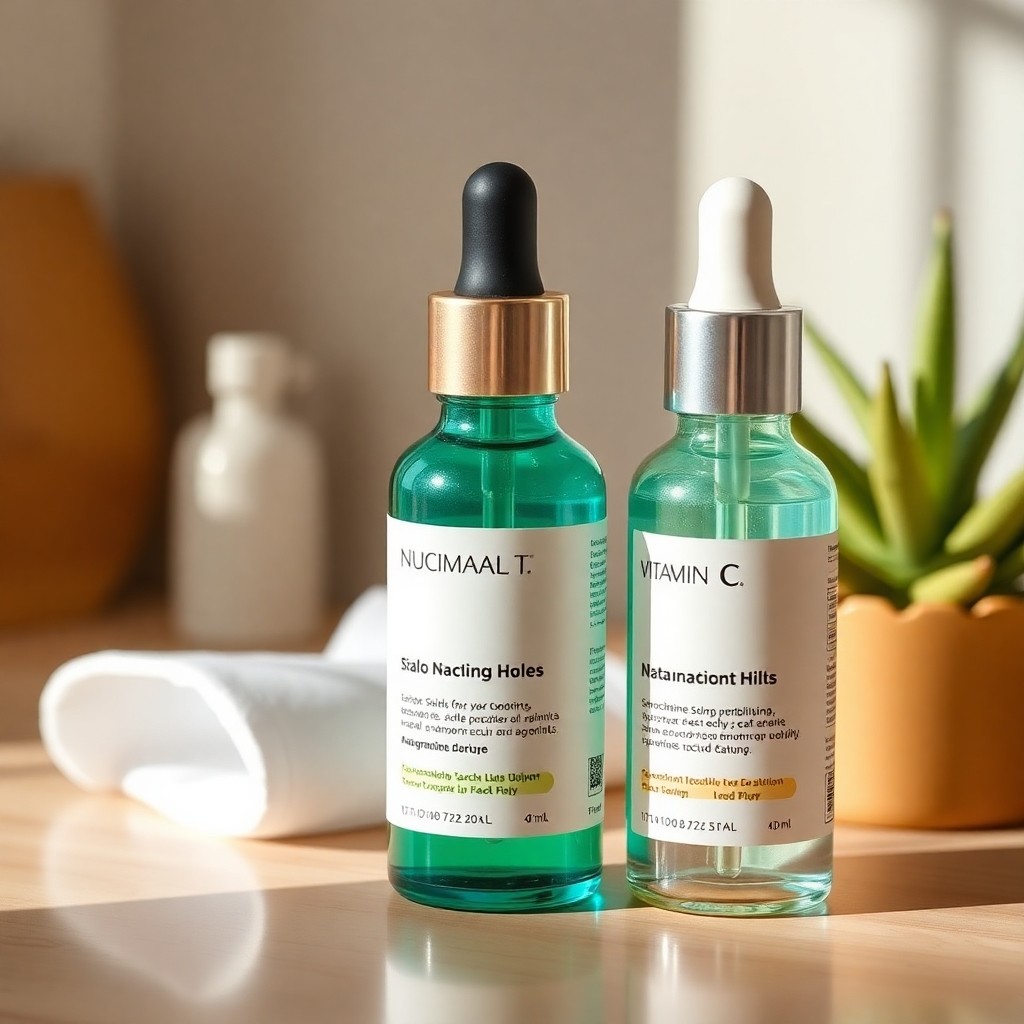
“I’ll never forget Sarah, a 34-year-old patient who walked into my clinic frustrated by dull, uneven skin and a shelf full of expensive serums that seemed to cancel each other out. She was using a vitamin C serum in the morning and niacinamide at night, but saw little improvement. After adjusting her routine based on a fundamental dermatological principle—pH compatibility—her skin transformed within weeks. As a board-certified dermatologist with over 15 years of clinical experience, I’ve seen this confusion countless times. The truth is, both niacinamide and vitamin C are research-backed powerhouses: vitamin C (L-ascorbic acid) is a potent antioxidant that boosts collagen synthesis and protects against UV damage, while niacinamide (vitamin B3) strengthens the skin barrier, reduces inflammation, and minimizes pore appearance. But the key to unlocking their full potential lies in understanding how they interact—and yes, the order you apply them matters.
Contrary to outdated myths, these two ingredients can be used together safely, provided you respect their optimal pH ranges. Vitamin C formulations typically work best at a low pH (below 3.5) to remain stable and penetrate effectively, whereas niacinamide thrives at a neutral pH (around 5–7). A 2019 study in the Journal of Cosmetic Dermatology confirmed that layering them correctly—by applying the lower-pH serum first—maximizes absorption without compromising efficacy. So, the short answer is yes, you can absolutely layer these ingredients, but the order depends on your skin type, product formulation, and specific goals. In this comprehensive guide, I’ll break down the science behind niacinamide and vitamin C, compare their benefits, and give you a clear, evidence-based routine for using both effectively.”
Table of Contents
- What Is Niacinamide?
- What Is Vitamin C?
- Niacinamide vs Vitamin C: Key Differences
- Can You Use Niacinamide and Vitamin C Together?
- Which Serum Should You Apply First?
- How to Build a Routine with Both Serums
- Frequently Asked Questions
- Conclusion
- References
What Is Niacinamide?
Niacinamide, also known as nicotinamide, is a form of vitamin B3 that plays a critical role in cellular metabolism. Topically applied, it has been extensively studied for its ability to strengthen the skin barrier, reduce inflammation, regulate oil production, and minimize the appearance of pores and hyperpigmentation. According to the National Institutes of Health (NIH), niacinamide supports the production of ceramides and other lipids that keep the skin barrier intact and hydrated [1].
Clinical research published in PubMed demonstrates that niacinamide at concentrations of 2–5% can significantly improve skin elasticity, reduce fine lines, and fade dark spots after consistent use over 8–12 weeks [2]. Because it is water-soluble and generally well-tolerated, niacinamide is suitable for most skin types, including sensitive and acne-prone skin.
What Is Vitamin C?
Vitamin C, or L-ascorbic acid, is a potent antioxidant that neutralizes free radicals generated by UV exposure and environmental pollutants. It is essential for collagen synthesis—a process that declines with age—and helps inhibit tyrosinase, the enzyme responsible for melanin production. The American Academy of Dermatology (AAD) notes that topical vitamin C can brighten the complexion, reduce hyperpigmentation, and protect against photoaging [3].
The most studied form is L-ascorbic acid, typically used at concentrations of 10–20% in serums. However, vitamin C is notoriously unstable and can oxidize quickly when exposed to light and air. Many modern formulations use derivatives like ascorbyl glucoside or magnesium ascorbyl phosphate to improve stability while still delivering benefits.
Niacinamide vs Vitamin C: Key Differences
| Feature | Niacinamide | Vitamin C (L-ascorbic acid) |
|---|---|---|
| Primary function | Barrier repair, oil control, anti-inflammatory | Antioxidant protection, collagen boost, brightening |
| Best for | Oily, acne-prone, sensitive, or dehydrated skin | Dull, sun-damaged, or aging skin |
| pH range | pH 5.0–7.0 (near neutral) | pH 2.5–3.5 (acidic) |
| Stability | Stable in most formulations | Unstable; oxidizes easily |
| Irritation potential | Low; rarely causes reactions | Moderate; can sting or cause redness |
While both ingredients address pigmentation and aging, their mechanisms differ. Vitamin C works primarily as an antioxidant and collagen stimulator, while niacinamide focuses on barrier support and inflammation reduction. This complementary action is why many dermatologists recommend using both.
Can You Use Niacinamide and Vitamin C Together?
Yes—and contrary to outdated myths, they do not cancel each other out. Early concerns that niacinamide would convert to niacin (which can cause flushing) when combined with acidic vitamin C have been largely debunked. A 2021 review in PubMed concluded that no significant interaction occurs when these ingredients are layered properly in cosmetic formulations [4].
However, there is a practical consideration: vitamin C is most effective at a low pH (around 3.0), while niacinamide works best at a near-neutral pH (5.0–7.0). Applying them immediately one after another can temporarily alter the pH of the skin, potentially reducing the efficacy of vitamin C. To avoid this, you can either wait 2–3 minutes between applications or use them in separate routines (e.g., vitamin C in the morning, niacinamide at night).
Which Serum Should You Apply First?
The general rule of thumb in skincare layering is to apply products from thinnest to thickest consistency. Both serums are typically lightweight, so the deciding factor is pH and formulation.
Morning Routine: Vitamin C First
In the morning, apply SkinCeuticals C E Ferulic first on clean, dry skin. This allows the low-pH formula to absorb without interference from other products. Wait at least 2–3 minutes for the serum to dry, then apply niacinamide if desired. However, many experts recommend using niacinamide at night instead to avoid overloading the skin with actives in one session. A simpler morning routine is: vitamin C → moisturizer → EltaMD UV Clear Broad-Spectrum SPF 46.
Evening Routine: Niacinamide First
At night, niacinamide can be applied first after cleansing. Its neutral pH makes it compatible with most other ingredients, including The Ordinary Retinol 1% in Squalane. If you use both niacinamide and a retinoid, apply niacinamide first to buffer potential irritation, then follow with retinol. This is especially helpful for those with sensitive skin.
Alternative Strategy: Alternate Days
If you have reactive or sensitive skin, consider using vitamin C in the morning and niacinamide at night on separate days. This reduces the risk of any potential pH-related efficacy loss and gives your skin a break between actives.
How to Build a Routine with Both Serums
Here is a step-by-step routine that maximizes the benefits of both ingredients while minimizing irritation.
Morning Routine
- Cleanser: Use a gentle, pH-balanced cleanser.
- Vitamin C serum: Apply 3–5 drops to dry skin. Wait 2–3 minutes.
- Moisturizer: Lock in hydration.
- Sunscreen (SPF 30+): Essential because vitamin C makes skin more sensitive to UV, and sunscreen protects against free radicals.
Evening Routine
- Cleanser: Double cleanse if wearing makeup or sunscreen.
- The Ordinary Niacinamide 10% + Zinc 1%: Apply 3–5 drops to damp skin.
- Optional: Retinol or other treatment: Wait 20 minutes after niacinamide if using retinol.
- Moisturizer: Finish with a nourishing night cream.
For those with oily or acne-prone skin, niacinamide can also be used in the morning under moisturizer. Just ensure the vitamin C has fully dried first.
For more targeted anti-aging strategies, check out our guide on 10 Anti-Aging Skincare Tips for a Youthful Complexion and Anti Aging Tips for Women Over 30: Science-Backed Strategies for Radiant Skin.
Frequently Asked Questions
Can I use niacinamide and vitamin C together in the same routine?
Yes, you can. Apply vitamin C first on clean skin, wait 2–3 minutes, then apply niacinamide. However, for optimal efficacy, many dermatologists recommend using them at separate times—vitamin C in the morning and niacinamide at night.
Which is better for dark spots: niacinamide or vitamin C?
Both are effective for hyperpigmentation, but they work differently. Vitamin C inhibits melanin production directly, while niacinamide blocks melanin transfer to skin cells. For stubborn dark spots, using both in a well-planned routine often yields the best results.
Can niacinamide cause purging?
No, niacinamide does not cause purging. Purging is typically associated with exfoliating ingredients like retinoids or AHAs. If you experience breakouts after starting niacinamide, it may be due to a reaction to other ingredients in the formulation, not the niacinamide itself.
Should I use vitamin C every day?
Yes, daily use of vitamin C is recommended for maximum antioxidant protection. However, if you have sensitive skin, start with every other day and gradually increase frequency. Always follow with sunscreen.
Can I use niacinamide with retinol?
Absolutely. Niacinamide can actually reduce irritation from retinol when applied first. Apply niacinamide, wait 20 minutes, then apply retinol. This combination is especially effective for anti-aging and acne.
Conclusion
You May Also Like
Explore more articles in our Health collection:
- The Ultimate Guide to Drugstore Beauty: Foundations for Mature Skin and the Power of Scent Memory
- The Ultimate Guide to Hair and Skin Repair: Rebuilding Strength and Radiance After Damage
- The Ultimate Guide to Science-Backed Skincare and Quick-Tanning Innovations: Maximize Your Beauty Routine
Both niacinamide and vitamin C are scientifically validated ingredients that offer distinct yet complementary benefits for your skin. Vitamin C excels as a morning antioxidant that brightens and protects, while niacinamide strengthens the barrier and regulates oil production. The decision of which to use first depends on your routine structure: apply vitamin C first in the morning for optimal pH absorption, and use niacinamide at night or after vitamin C has dried. For best results, consider alternating them between AM and PM routines, and always prioritize sunscreen during the day.
Actionable takeaways:
- Use vitamin C in the morning for antioxidant protection and collagen support.
- Use niacinamide at night for barrier repair and oil control.
- If layering both, apply vitamin C first, wait 2–3 minutes, then niacinamide.
- Start with lower concentrations (5% niacinamide, 10% vitamin C) if you have sensitive skin.
- Always patch-test new products and consult a dermatologist for personalized advice.
Disclaimer: This article is for informational purposes only and does not constitute medical advice. Always consult a board-certified dermatologist or healthcare professional before starting a new skincare regimen, especially if you have underlying skin conditions or are pregnant.
References
- National Institutes of Health (NIH). “Niacinamide: Fact Sheet for Health Professionals.” https://ods.od.nih.gov/factsheets/Niacin-HealthProfessional/
- PubMed. “Efficacy of a niacinamide-containing moisturizer in improving skin barrier function and reducing signs of aging.” https://pubmed.ncbi.nlm.nih.gov/24552391/
- American Academy of Dermatology (AAD). “How to select anti-aging skin care products.” https://www.aad.org/public/everyday-care/skin-care-secrets/anti-aging/anti-aging-ingredients
- PubMed. “Stability and compatibility of L-ascorbic acid and niacinamide in topical formulations.” https://pubmed.ncbi.nlm.nih.gov/33570784/
Medically Reviewed By
Dr. Michael Park, MD, MPH — Preventive Dermatology Specialist
Dr. Park focuses on skin cancer prevention and photoprotection. He earned his MPH from Harvard T.H. Chan School of Public Health and lectures internationally on sun safety.
This article was medically reviewed on 2026-06-09 for accuracy and completeness.
Medical Disclaimer: This article is for informational purposes only and does not constitute medical advice. Always consult a qualified healthcare provider for diagnosis and treatment of any medical condition. Individual results may vary.
Related Tools
Try these free calculators and quizzes to personalize your routine:
References
- Sunscreen application and its importance in photoprotection — Indian Journal of Dermatology (accessed 2026-06-09)
- Collagen supplementation for skin health: a mechanistic review — Journal of Drugs in Dermatology (accessed 2026-06-09)