
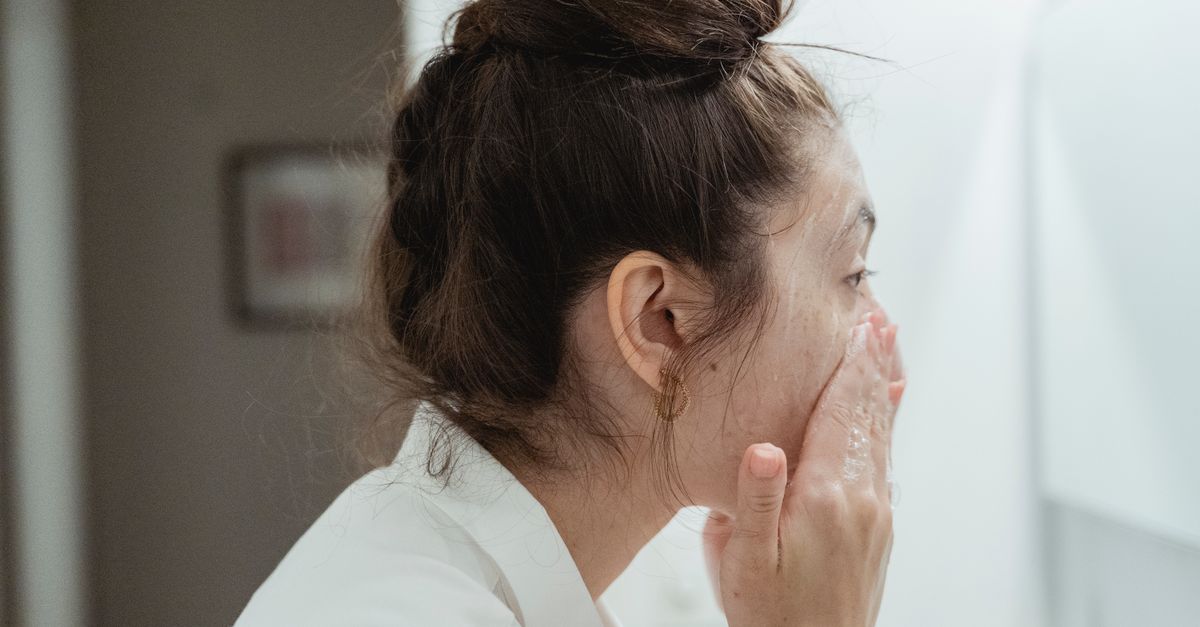
Understanding Blackheads: Causes and Misconceptions
Blackheads are a type of non-inflammatory acne. They form when pores become clogged with excess sebum and dead skin cells. The black color is not dirt; it results from oxidation of the plug when exposed to air.
Common misconceptions:
- Blackheads are caused by poor hygiene. False. Over-washing can worsen them.
- Squeezing removes them permanently. False. It can damage skin and cause infection.
- Oily skin alone causes blackheads. False. Dry skin can also develop them.
Why Minimalist Routine Works for Blackhead-Prone Skin
A minimalist routine reduces irritation. Fewer products mean less risk of pore-clogging ingredients. It focuses on essential steps: cleanse, treat, moisturize. This approach allows active ingredients to work effectively without overwhelming the skin barrier.
Step 1: Gentle Double Cleansing
Double cleansing removes oil-based impurities (sunscreen, makeup) and water-based debris (sweat, dirt).
- Oil cleanser (first step): Use a non-comedogenic oil cleanser. Massage gently for 30 seconds. Rinse with lukewarm water.
- Water-based cleanser (second step): Choose a gentle, sulfate-free foaming cleanser. Avoid harsh scrubs.
Benefits:
- Prevents pore blockage.
- Maintains skin barrier integrity.
- Prepares skin for treatment.
Step 2: Salicylic Acid – The Key Ingredient
Salicylic acid is a beta-hydroxy acid (BHA). It is oil-soluble, meaning it penetrates deep into pores. It exfoliates inside the follicle, dissolving excess sebum and dead cells.
How to use:
- Start with 0.5%–2% concentration.
- Apply after cleansing, before moisturizer.
- Use once daily (PM) initially. Increase to twice daily if tolerated.
- Leave on for 2–3 minutes before moisturizing.
Precautions:
- Avoid if you are allergic to aspirin.
- Do not combine with other exfoliants (AHAs, retinoids) in same routine without professional guidance.
- Use sunscreen daily, as salicylic acid increases sun sensitivity.
Step 3: Non-Comedogenic Moisturizer
Moisturizing is essential even for oily skin. A non-comedogenic moisturizer hydrates without clogging pores. Look for ingredients like glycerin, hyaluronic acid, or ceramides. Avoid heavy oils (coconut oil, cocoa butter).
Application:
- Apply a pea-sized amount after salicylic acid.
- Use both AM and PM.
Step 4: Weekly Exfoliation (Optional)
Physical exfoliation can be added once a week if your skin tolerates it. Use a gentle scrub with fine particles (e.g., jojoba beads). Avoid harsh walnut shells or sugar scrubs.
Alternative: Use a salicylic acid mask (2%) once weekly instead of your daily leave-on product.
Sample Minimalist Routine (AM & PM)
AM Routine:
- Water-based cleanser (or just splash water)
- Moisturizer
- Sunscreen (SPF 30+ broad spectrum)
PM Routine:
- Oil cleanser
- Water-based cleanser
- Salicylic acid (wait 2 minutes)
- Moisturizer
Weekly: Replace PM salicylic acid with a salicylic acid mask (once per week).
Common Mistakes to Avoid
- Over-exfoliating: Leads to irritation and increased oil production.
- Skipping moisturizer: Can cause rebound oiliness.
- Using pore strips: They remove only surface blackheads and can enlarge pores.
- Applying salicylic acid with other actives: Increases risk of dryness.
- Not wearing sunscreen: Exfoliants make skin photosensitive.
When to See a Dermatologist
Consult a dermatologist if:
- Blackheads are severe or widespread.
- Over-the-counter treatments fail after 8–12 weeks.
- You develop cysts or nodules.
- You experience pain, redness, or scarring.
A dermatologist may prescribe topical retinoids (e.g., tretinoin) or perform professional extractions.
Key Takeaways
- Blackheads form from clogged pores, not dirt.
- A minimalist routine reduces irritation and focuses on essentials.
- Double cleansing removes all impurities.
- Salicylic acid is the most effective OTC ingredient for blackheads.
- Always use a non-comedogenic moisturizer.
- Sunscreen is mandatory when using exfoliants.
- Avoid over-exfoliation and harsh products.
- See a dermatologist if home treatments don’t work.
Frequently Asked Questions
Q: Can I use salicylic acid every day? A: Yes, most skin types tolerate daily use of 0.5%–2% salicylic acid. Start with alternate days.
Q: Do blackheads go away on their own? A: Not usually. Without treatment, they can persist or worsen.
Q: Is it okay to squeeze blackheads? A: No. Squeezing can damage skin, cause infection, and lead to scarring.
Q: Can diet cause blackheads? A: High-glycemic foods may worsen acne, but evidence is mixed. Focus on a balanced diet.
Q: How long until I see results? A: With consistent routine, improvement may be seen in 4–6 weeks.
Citations
- American Academy of Dermatology. “How to treat blackheads.” Accessed 2024. https://www.aad.org/public/diseases/acne/remedies/blackheads
- Mayo Clinic. “Acne: Diagnosis and treatment.” Accessed 2024. https://www.mayoclinic.org/diseases-conditions/acne/diagnosis-treatment/drc-20368048
- Journal of Clinical and Aesthetic Dermatology. “Salicylic acid as a peeling agent: a comprehensive review.” 2018;11(2):38-44. https://www.ncbi.nlm.nih.gov/pmc/articles/PMC5849435/
- PubMed. “Non-comedogenic moisturizers: a review.” Dermatol Ther. 2020;33(6):e14282. https://pubmed.ncbi.nlm.nih.gov/32896027/
You May Also Like
Explore more articles in our Skincare collection:
- Best Face Serum for Rosacea
- Best Foot Cream for Dandruff: A Complete Guide to Healthy, Flake-Free Feet
- Best Fragrance-Free Face Serum for Dry Skin
Related Tools
Try these free calculators and quizzes to personalize your routine:
References
- How to treat blackheads — American Academy of Dermatology (accessed 2026-06-11)
- Acne: Diagnosis and treatment — Mayo Clinic (accessed 2026-06-11)
- Salicylic acid as a peeling agent: a comprehensive review — Journal of Clinical and Aesthetic Dermatology (accessed 2026-06-11)
- Non-comedogenic moisturizers: a review — Dermatol Ther (accessed 2026-06-11)