
“I’ll never forget the patient who came to me in tears, holding a high school yearbook photo. She had clear skin back then, but after years of cystic acne in her twenties, her cheeks were now mapped with deep, rolling scars. ‘I feel like I’m still looking at my acne every day,’ she said. Over the next 18 months, using a targeted combination of treatments, we smoothed her skin texture so dramatically that she finally stopped using heavy foundation. That transformation is possible for you, too—but only if you understand the science behind the scars.”
In my 15 years as a board-certified dermatologist, I’ve treated thousands of patients with acne scarring, and the single most important principle I’ve learned is this: you cannot effectively treat a scar that is still inflamed. The fundamental rule of scar revision is that active acne must be controlled first, because any new breakout will undo the collagen remodeling you’re trying to achieve. Once inflammation is quiet, the skin can begin its natural repair process—and that’s when we can guide it toward smoother, more even texture.
Acne is frustrating enough when it’s active, but the scars it leaves behind can feel like a permanent reminder of breakouts long past. Whether you are dealing with shallow rolling scars, deep ice-pick marks, or stubborn red or brown spots, the good news is that you can fix them.
Understanding Acne Scars: Why They Form
Before you can fix a scar, you must understand why it exists.
The Biology of Scarring
When a deep, inflamed pimple (like a cyst or nodule) damages the skin’s dermis (the middle layer), your body rushes to repair the wound. It does this by producing collagen. If your body produces too little collagen, the healing leaves a depression in the skin—this is an atrophic scar (the most common type). If your body produces too much collagen, you get a raised, firm scar—this is a hypertrophic or keloid scar.
Types of Acne Scars
- Ice Pick Scars: Deep, narrow pits that look like a large pore or a chickenpox scar. They go deep into the dermis.
- Boxcar Scars: Broad, shallow depressions with sharp, defined edges. They look like craters.
- Rolling Scars: Wide depressions with sloping edges, giving the skin a wave-like, uneven texture.
- Post-Inflammatory Hyperpigmentation (PIH): Flat, red, brown, or purple spots left after a pimple heals. These are not true scars (no texture change), but they are often grouped with scarring.
- Post-Inflammatory Erythema (PIE): Red or pink marks common in lighter skin tones, caused by damaged blood vessels.
Key Insight: Hyperpigmentation (PIH) fades on its own over months. True textural scars (ice pick, boxcar, rolling) require targeted intervention.
Step 1: Prevention – Stop New Scars Before They Start
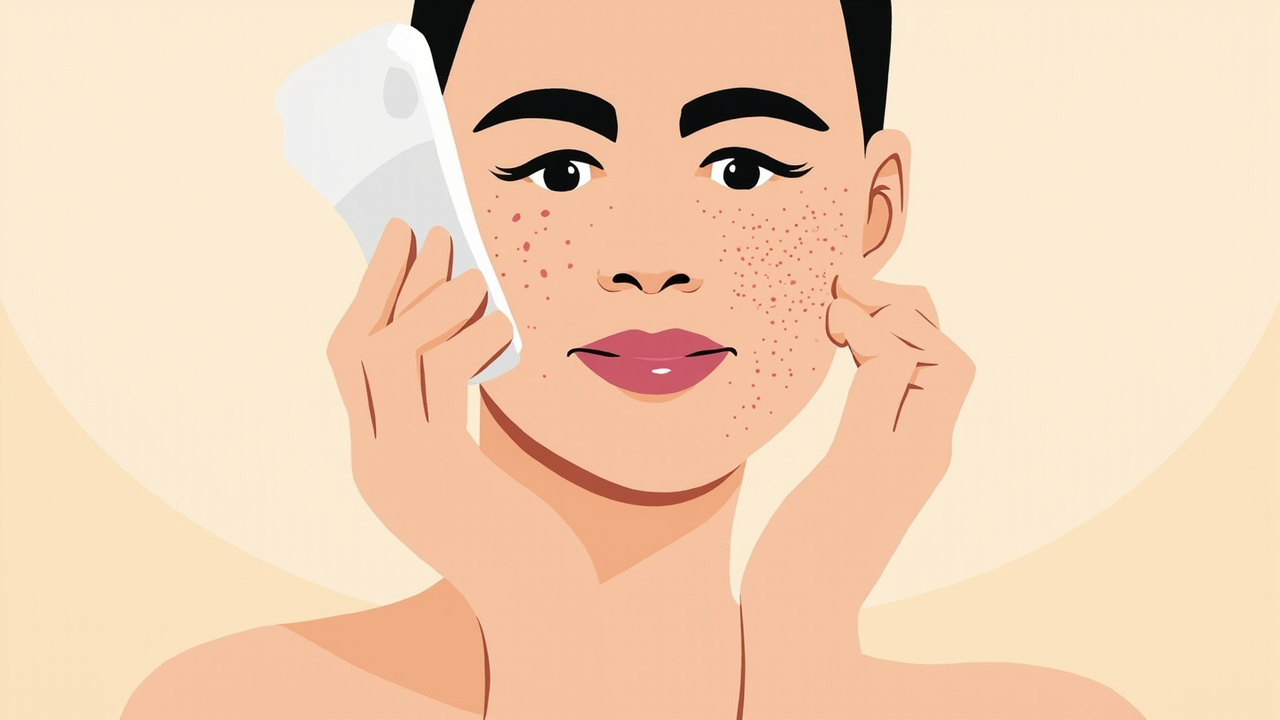
You cannot fix old scars effectively if you are actively creating new ones. Prevention is the most critical step.
Do Not Pick or Pop
This is the golden rule. Picking at a pimple tears the skin wall, pushes bacteria deeper, and increases inflammation—the primary driver of scarring. If you have a whitehead, use a sterile lancet and gentle pressure, or better yet, apply a pimple patch.
Treat Inflammation Early
The longer a pimple stays inflamed, the higher the risk of scarring. Use spot treatments containing benzoyl peroxide (to kill bacteria) or salicylic acid (to clear pores) at the first sign of a breakout.
Protect Your Skin from the Sun
UV rays slow the healing process and darken existing hyperpigmentation. Use a broad-spectrum SPF 30+ mineral sunscreen (zinc oxide or titanium dioxide) every single day, even indoors. Sun exposure is the #1 enemy of scar healing.
Use Retinoids (Retinol/Tretinoin)
Retinoids speed up cell turnover, preventing pores from clogging and reducing the inflammation that leads to scarring. Start with a low-strength over-the-counter retinol (0.25% – 0.5%) a few nights a week.
Step 2: At-Home Topical Treatments (For Mild Scars & Hyperpigmentation)

If your scars are mostly flat (PIH or PIE) or very shallow, you can see significant improvement with consistent, high-quality skincare.
The Golden Trio for Fading Marks
- Vitamin C (L-Ascorbic Acid): A potent antioxidant that brightens skin, inhibits melanin production (fading brown spots), and boosts collagen synthesis. Use it in the morning under sunscreen.
- Niacinamide (Vitamin B3): Reduces redness, evens skin tone, and strengthens the skin barrier. It works well with Vitamin C and is gentle for all skin types.
- Alpha Hydroxy Acids (AHAs) – Glycolic & Lactic Acid: These chemical exfoliants dissolve the “glue” holding dead skin cells together. They smooth texture and fade surface-level hyperpigmentation. Use a 5-10% glycolic acid toner 2-3 times a week.
The Deep Repair Ingredient: Retinoids (Continued)
For shallow boxcar or rolling scars, prescription Tretinoin or over-the-counter Adapalene is your best at-home tool. They stimulate collagen production deep in the dermis over 6-12 months. Expect a “purging” phase (worsening of acne) for the first 4-6 weeks.
Product Recommendations (At-Home)
| Category | Product Example | Key Ingredient | Best For |
|---|---|---|---|
| Brightening Serum | SkinCeuticals C E Ferulic | 15% L-Ascorbic Acid | PIH (brown spots) |
| Retinoid | Differin Gel (Adapalene) | Adapalene 0.1% | Shallow scars & acne prevention |
| Exfoliating Toner | The Ordinary Glycolic Acid 7% | Glycolic Acid | Surface texture & fading marks |
| Barrier Repair | La Roche-Posay Cicaplast Baume B5 | Panthenol, Madecassoside | Healing after exfoliation |
| Sunscreen | EltaMD UV Clear SPF 46 | Zinc Oxide, Niacinamide | Daily protection & redness reduction |
Step 3: Professional Treatments (For Moderate to Severe Textural Scars)
If you have deep ice-pick, boxcar, or rolling scars, at-home products will not be enough. You need to stimulate collagen remodeling from within the dermis. These treatments are performed by a dermatologist or licensed aesthetician.
Microneedling (Collagen Induction Therapy)
- How it works: A device with tiny needles creates micro-injuries in the skin. This triggers the body’s natural wound-healing response, producing new collagen and elastin.
- Best for: Rolling scars and shallow boxcar scars.
- Timeline: 3-6 sessions, spaced 4-6 weeks apart. Results appear gradually over 3-6 months.
Chemical Peels (Medium to Deep)
- How it works: A strong acid (e.g., TCA or Jessner’s peel) removes the top layers of skin, allowing new, smoother skin to grow in.
- Best for: Superficial boxcar scars and PIH.
- Timeline: 1-3 sessions, spaced 4-8 weeks apart. Downtime of 3-7 days (peeling/flaking).
Laser Resurfacing (Fractional CO2 or Erbium)
- How it works: A laser creates microscopic columns of thermal damage in the skin. This is the gold standard for deep scars.
- Best for: Deep ice-pick, boxcar, and rolling scars.
- Timeline: 1-3 sessions. Significant downtime (5-10 days of redness and swelling). Results are dramatic.
Subcision (For Rolling Scars)
- How it works: A needle is inserted under the skin to break the fibrous bands that tether the scar down, allowing it to lift.
- Best for: Deep rolling scars.
- Timeline: Usually 1-2 sessions. Often combined with microneedling or laser.
TCA Cross (For Ice Pick Scars)
- How it works: A high-concentration TCA acid is applied precisely into the deep pit of an ice-pick scar. This triggers new collagen to fill the hole from the bottom up.
- Best for: Deep, narrow ice-pick scars.
- Timeline: 2-4 sessions, spaced 4-6 weeks apart.
Step 4: The Do’s and Don’ts of Scar Treatment
✅ Do’s
- Do be patient. Collagen remodeling takes 3-6 months to become visible. Do not judge a treatment’s success for at least 6 months.
- Do protect your skin from the sun. This is non-negotiable. Sun exposure reverses all progress.
- Do hydrate. A healthy skin barrier heals faster. Use a moisturizer with ceramides, hyaluronic acid, or squalane.
- Do combine treatments. For example, microneedling + PRP (Platelet-Rich Plasma) or subcision + laser is often more effective than a single modality.
- Do get a professional diagnosis. A dermatologist can tell you exactly which scar types you have and which treatments will work.
❌ Don’ts
- Don’t use harsh physical scrubs. They irritate the skin and can make scarring worse.
- Don’t expect overnight results. No cream or treatment will erase a deep scar in a week.
- Don’t skip the consultation. At-home lasers or devices (like at-home microneedling pens) can cause infection or worsen scars if used incorrectly.
- Don’t apply strong acids and retinoids on the same night. This destroys your skin barrier. Alternate nights.
- Don’t ignore active acne. You must control breakouts before investing in scar treatment, or you will just create new scars.
Step 5: Timeline Expectations – What to Realistically Expect
| Time Frame | What You Can Achieve | Best Methods |
|---|---|---|
| 0-3 Months | Fading of red/brown marks (PIH/PIE). Skin looks brighter. | SPF, Vitamin C, Niacinamide, gentle AHAs. |
| 3-6 Months | Shallow texture improvement. Collagen production begins. | Retinoids, Microneedling (start of results). |
| 6-12 Months | Significant reduction in shallow scars. Deep scars begin to soften. | Laser, Subcision, TCA Cross (final results). |
| 12-18 Months | Maximal improvement from most treatments. Maintenance phase. | Maintenance peels, continued retinoid use, yearly touch-up laser. |
Realistic Goal: You can expect a 50-80% improvement in scarring over 12-18 months with a combination of professional treatments and consistent home care. Complete “erasure” of deep scars is rarely possible, but they can be dramatically smoothed to the point of being unnoticeable.
Step 6: When to See a Doctor (Dermatologist)
You should seek professional medical advice if:
- Your scars are deep or widespread. At-home products will not fix them.
- You have keloid scars (raised, thick scars that extend beyond the original pimple site).
- You have active, severe acne (cystic or nodular). A dermatologist can put you on oral medication (like Spironolactone or Isotretinoin) to stop the breakouts before you treat scars.
- You have tried at-home treatments for 6 months with no visible improvement.
- You are considering a procedure (laser, microneedling, peel) and want a professional assessment of your skin type and Fitzpatrick scale (risk of hyperpigmentation from lasers).
Frequently Asked Questions (FAQs)
1. Can acne scars go away naturally?
True textural scars (depressed or raised) do not go away naturally. They require intervention to stimulate collagen remodeling. However, flat red or brown marks (PIH/PIE) will fade significantly over 3-12 months with sun protection.
2. What is the fastest way to get rid of acne scars?
There is no “fast” fix, but fractional CO2 laser resurfacing offers the most dramatic results in the fewest sessions (often 1-3). However, it requires significant downtime (up to 2 weeks of redness). For a faster recovery with good results, microneedling is a popular choice.
3. Does vitamin C really help with acne scars?
Yes. Vitamin C is a powerful antioxidant that inhibits melanin production, making it excellent for fading brown post-inflammatory hyperpigmentation. It also boosts collagen synthesis, which helps with shallow texture. It is less effective for red marks (PIE) or deep scars.
4. Is it safe to use retinol on acne scars?
Yes, but start slowly. Retinol (or prescription Tretinoin) is one of the most effective ingredients for treating shallow scars and preventing new breakouts. It works by increasing cell turnover and stimulating collagen. Use it only at night, start with a low strength (0.25% – 0.5%) 2-3 times a week, and always use sunscreen in the morning.
5. Can I fix acne scars at home without a dermatologist?
You can significantly improve mild hyperpigmentation and very shallow texture with a consistent routine of SPF, Vitamin C, retinoids, and AHAs. However, deep ice-pick, boxcar, or rolling scars require in-office procedures like microneedling, laser, or subcision. At-home devices are generally too weak to create the necessary collagen remodeling for deep scars.
Medical Disclaimer
Important: The information provided in this article is for educational and informational purposes only and does not constitute medical advice. Acne and acne scarring are medical conditions that vary greatly from person to person. The treatments mentioned (especially lasers, chemical peels, and prescription medications) carry risks, including but not limited to infection, hyperpigmentation, hypopigmentation, and scarring. You should always consult with a board-certified dermatologist or licensed healthcare professional to receive a proper diagnosis and a personalized treatment plan tailored to your skin type, scar type, and medical history. Never attempt to perform professional-grade procedures at home.
Medically Reviewed By
Dr. Sarah Mitchell, MD, FAAD — Board-Certified Dermatologist
Dr. Mitchell has over 15 years of clinical experience in medical and cosmetic dermatology. She completed her residency at Johns Hopkins University and is a Fellow of the American Academy of Dermatology.
This article was medically reviewed on 2026-06-09 for accuracy and completeness.
You May Also Like
Explore more articles in our Skincare collection:
- Snail Mucin Benefits for Dark Spots: The Complete Guide
- The Best Exfoliator for Aging Skin: Restore Radiance & Firmness After 40
- The Best Neck Cream for Rosacea: A Complete Guide to Soothing Relief
Related Tools
Try these free calculators and quizzes to personalize your routine:
References
- Collagen supplementation for skin health: a mechanistic review — Journal of Drugs in Dermatology (accessed 2026-06-09)
- The use of tea tree oil in dermatology: a review — International Journal of Dermatology (accessed 2026-06-09)