
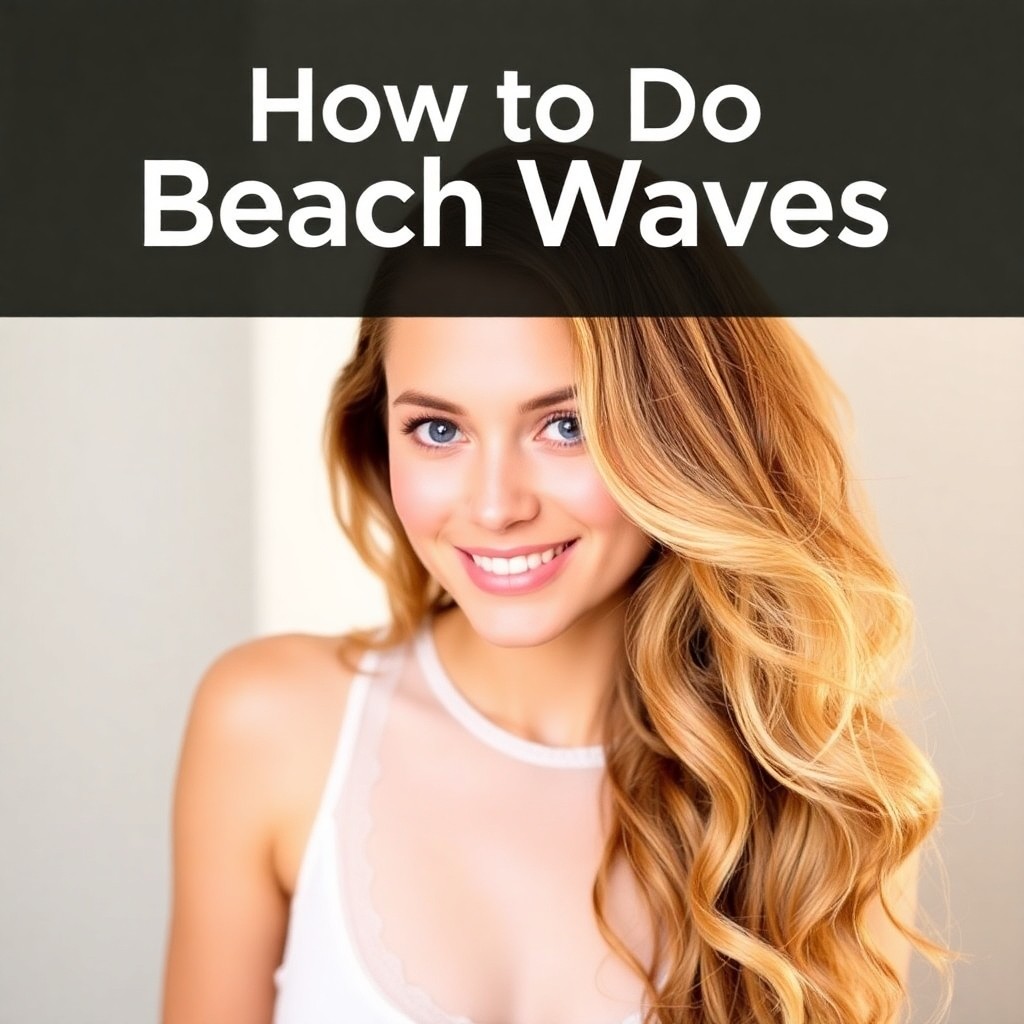
“I’ll never forget the patient who came in frustrated, holding up a photo of herself on vacation—windblown, sun-kissed, and loving her hair. She’d spent hours at home with a curling iron trying to recreate that look, only to end up with fried ends and zero volume. ‘Why,’ she asked, ‘can’t I get that effortless beach wave at home?’ As a board-certified dermatologist with over 15 years of clinical experience, I’ve seen the toll that improper styling techniques can take on hair health. The truth is, achieving those coveted beach waves isn’t just about the tool you use—it’s about understanding the science of your hair’s structure.
The key dermatological principle here is the hair cuticle: the outermost layer of each strand. When it’s healthy and lying flat, hair reflects light and feels smooth. But excessive heat, harsh chemicals, or even aggressive brushing can lift the cuticle, leading to frizz, breakage, and dullness. That’s why the best beach wave methods—whether heat-based or heatless—work with your hair’s natural moisture and elasticity, not against it. This guide isn’t just another tutorial; it’s an evidence-based approach to texture that prioritizes long-term hair integrity while delivering that effortless, tousled finish.
The good news is that mastering how to do beach waves is entirely achievable at home. Whether you prefer the speed of hot tools or the damage-free approach of heatless methods, there is a technique suited to your hair type, length, and lifestyle. This comprehensive, science-backed guide will walk you through every method, from classic curling iron waves to overnight braids and salt sprays. You will learn not just the how, but the why behind each step, ensuring consistent, healthy-looking results every time.
Table of Contents
- The Science of Texture: What Makes a Beach Wave?
- How to Prep Hair for Long-Lasting Beach Waves
- Method 1: Curling Iron Beach Waves
- Method 2: Flat Iron Beach Waves
- Method 3: Heatless Beach Waves (Braids & Twists)
- Method 4: Salt Spray Beach Waves
- Customizing for Your Hair Length and Type
- Frequently Asked Questions
- Conclusion
- References
The Science of Texture: What Makes a Beach Wave?
Before picking up a tool, it helps to understand what creates that specific wave pattern. Unlike a uniform curl, a beach wave is characterized by an “S” shape that is loose, irregular, and slightly bent. The look relies on texture and movement rather than perfect ringlets.
From a dermatological standpoint, the shape of your hair fiber is determined by the distribution of disulfide bonds in the cortex. Straight hair has a symmetrical bond pattern, while wavy or curly hair has an asymmetrical one. When you apply heat or moisture, you temporarily break hydrogen bonds within the hair shaft. As the hair cools and dries in a new shape (wrapped around a barrel or twisted), those bonds reform, holding the wave until the next wash. This is why setting a wave with cool air or allowing hair to cool completely before touching it is crucial for longevity.
How to Prep Hair for Long-Lasting Beach Waves
Proper preparation is the foundation of any successful styling routine. Skipping this step often leads to waves that fall flat within an hour.
Start with Clean, Dry Hair (or Damp, Depending on Method)
For heat styling, hair should be completely dry. Any residual moisture can cause steam, leading to uneven curls and potential heat damage. For heatless methods like braids, slightly damp hair (about 80% dry) holds the wave shape better than soaking wet hair.
Apply a Heat Protectant
This is non-negotiable. According to the American Academy of Dermatology (AAD), using a heat protectant spray or serum before any hot tool helps reduce breakage and moisture loss. Look for products containing silicones or polymers that create a protective barrier.
Use a Volumizing Mousse or Texturizing Spray
Beach waves require grip. A lightweight mousse applied to the roots before blow-drying adds volume, while a texturizing spray provides the grit needed to hold the wave. Avoid heavy oils or creams, which can weigh down the hair and create a greasy, limp look.
Add a Salt Spray (Optional but Recommended)
Sea salt sprays work by depositing salt crystals onto the hair shaft, which absorb moisture and create friction. This friction gives hair that matte, piecey texture. However, overuse can be drying, so consider a product with added humectants like glycerin.
Method 1: Curling Iron Beach Waves
This is the most popular method for creating soft beach waves on medium to long hair. The key is to avoid a uniform curl by varying the direction and size of each section.
Step-by-Step Tutorial
- Section Your Hair: Divide your hair into 4-6 sections. Clip the top sections out of the way.
- Choose Your Barrel: For loose waves, use a 1-inch to 1.5-inch barrel. Smaller barrels create tighter curls that will loosen as they cool.
- Wrap Away from the Face: Take a 1-inch section of hair. Clamp the iron near the roots, leaving the ends out. Wrap the hair around the barrel away from your face. Hold for 5-10 seconds (depending on heat setting).
- Leave the Ends Out: This is the secret to a modern, effortless wave. If you clamp the ends, you get a tight ringlet. Leaving them straight creates that undone, “I just came from the beach” look.
- Alternate Directions: For the next section, wrap the hair toward your face. Alternating directions prevents the waves from clumping together into one large curl.
- Cool and Break: Let the curls cool completely. Once cool, flip your head upside down and gently run your fingers through the waves. Do not use a brush unless you want a very soft, blown-out look.
- Set with Hairspray: Finish with a flexible-hold hairspray. A stiff spray will ruin the movement.
Pro Tip: For a more natural look, vary the size of the sections you curl. Larger sections create looser waves; smaller sections create more defined ones.
Method 2: Flat Iron Beach Waves
Flat irons are often overlooked for creating waves, but they are excellent for achieving a more modern, “S”-shaped wave that is less curly and more bent. This method works well for short hair and fine hair that struggles to hold a curl from a traditional iron.
Step-by-Step Tutorial
- Prep: Ensure hair is completely dry and protected.
- The Twist-and-Pull Technique: Take a 1-inch section of hair. Twist the section from root to tip. Clamp the flat iron at the root and slowly glide it down the twisted strand. The heat will set the twist.
- The “S” Wave Technique: Alternatively, clamp the flat iron at the root. Instead of sliding straight down, “tap” the iron down the hair shaft, bending the wrist in an “S” shape (clamp, bend away; clamp, bend toward). This creates a crimped, beachy texture.
- Work in Sections: Complete the entire head, focusing on the mid-lengths to ends.
- Texture and Finish: Once cool, spray with a texturizing sea salt spray and scrunch the hair to separate the waves.
Why It Works: The flat iron applies even pressure, which is particularly effective at breaking the hydrogen bonds in fine or resistant hair types.
Method 3: Heatless Beach Waves (Braids & Twists)
For those looking to minimize heat damage, heatless beach waves are a fantastic alternative. This method is gentle on the hair cuticle and can be done overnight for a ready-to-go style in the morning. Research indicates that reducing heat styling frequency can significantly lower the risk of hair shaft damage and breakage (NIH).
Step-by-Step Tutorial
- Start with Damp Hair: Hair should be about 80% dry. If it is soaking wet, it will not dry overnight, leading to a frizzy result.
- Apply a Setting Product: Work a lightweight mousse or a leave-in conditioner through the hair. For added texture, use a sea salt spray.
- Create Multiple Braids: Divide your hair into 2-6 sections. The number of braids determines the wave size:
- 2 braids (piggyback): Creates larger, looser waves.
- 4-6 braids: Creates tighter, more defined waves.
- Braid or Twist: You can do classic three-strand braids or simple two-strand twists. For a more natural wave, braid all the way to the ends. For a softer wave, leave the last inch unbraided.
- Sleep or Wait: Allow the hair to dry completely. This usually takes 4-8 hours. Sleeping on a silk or satin pillowcase reduces friction and frizz.
- Unravel and Separate: Carefully undo each braid. Use your fingers to gently separate the waves. Avoid using a brush, which will create frizz.
- Finish: Apply a lightweight oil to the ends for shine.
Note: This method works best on naturally wavy or straight hair. Very coarse or tightly coiled hair may require a different technique, such as flexi rods or Bantu knots.
Method 4: Salt Spray Beach Waves
This is less of a styling method and more of a finishing technique. Salt spray can enhance natural texture or add grit to heat-styled waves.
How to Use It
- On Damp Hair: Spray generously onto damp hair. Scrunch the hair upward toward the scalp. Air dry or diffuse.
- On Dry Hair: Spray onto dry, styled waves. Scrunch to reactivate the texture and add volume.
- Layering: For maximum hold, use a salt spray before heat styling. The salt will help the hair hold the curl better.
DIY Salt Spray Recipe
For a natural alternative, mix 1 cup of warm water with 1 tablespoon of sea salt and 1 teaspoon of coconut oil or aloe vera gel. Shake well before each use. The oil helps prevent the drying effect of the salt.
Customizing for Your Hair Length and Type
Not all methods work equally well for every hair type. Here is how to adapt the techniques.
Beach Waves for Short Hair
- Best Method: Flat iron or small curling wand (0.75-inch).
- Tip: Focus on the ends and mid-lengths. Avoid wrapping hair too close to the roots, which can create an unintentional puff. Use a light texture spray to add piecey definition.
Beach Waves for Long Hair
- Best Method: Large curling iron (1.25-inch or 1.5-inch) or overnight braids.
- Tip: Long hair is heavy and can pull waves straight. Use a strong-hold mousse at the roots and a texturizing powder to add lift. Consider curling in smaller sections to ensure the wave holds its shape.
Beach Waves for Fine Hair
- Best Method: Heatless braids or salt spray.
- Tip: Avoid heavy oils and creams. Use a root-lifting spray before styling. When using heat, lower the temperature to 300-320°F to prevent damage. A study in the Journal of Cosmetic Science notes that fine hair has a smaller diameter and is more susceptible to thermal damage.
Beach Waves for Thick or Coarse Hair
- Best Method: Curling iron with high heat (380-400°F) or flat iron.
- Tip: Thick hair requires more heat and longer hold times. Work in very small sections. Apply a heat protectant and a strong-hold hairspray immediately after curling. Let the curl cool completely in the palm of your hand before releasing.
Frequently Asked Questions
How long do beach waves last?
Depending on your hair type and the method used, beach waves typically last 1-3 days. Fine hair may lose the wave faster, while thick or coarse hair holds the shape longer. Sleeping with a silk scrunchie in a loose pineapple bun can help preserve the style.
Can I get beach waves on natural curly hair?
Yes. For naturally curly hair, beach waves are often achieved by stretching the curl pattern. Use a large paddle brush to blow-dry the hair straight, then use a large curling wand to create loose waves. Alternatively, twist sections of damp hair and allow them to air dry for a stretched, wavy look.
What is the best product to hold beach waves?
A flexible-hold hairspray or a texture spray is ideal. Avoid aerosol hairsprays that create a stiff shell. Look for water-based sprays with polymers that provide memory without crunch.
How do I prevent frizz when creating beach waves?
Frizz is caused by a lack of moisture and raised cuticles. Use a humid-resistant hairspray and a leave-in conditioner. Avoid touching the hair while it is still hot, and always let the waves cool completely before breaking them apart.
Is it safe to use heat tools every day?
The AAD recommends limiting heat styling to no more than once a week to prevent cumulative damage. If you style daily, use the lowest effective temperature and always apply a heat protectant. Incorporate deep conditioning treatments into your weekly routine to replenish lost moisture.
Conclusion
You May Also Like
Explore more articles in our Health collection:
- Best Nail Strengthener for Heat Damage: Restore Brittle, Burned Nails Naturally
- Best Peptide Cream: Anti-Aging Moisturizers with Proven Collagen-Boosting Ingredients
- Best Root Touch-Up: Cover Grays Between Salon Visits Instantly
Mastering how to do beach waves is about understanding the interplay between heat, texture, and technique. Whether you choose the speed of a curling iron, the precision of a flat iron, or the gentleness of overnight braids, the result is a versatile, modern style that suits nearly every occasion.
Key Takeaways:
- Prep is paramount: Always use a heat protectant and start with dry hair for heat methods.
- Vary your technique: Alternating curl directions and leaving ends straight creates the most natural look.
- Cool down is crucial: Never break apart waves until they are completely cool to the touch.
- Embrace texture: Salt sprays and texturizing powders add the grit needed for long-lasting hold.
- Protect your hair: Rotate between heat and heatless methods to maintain hair health.
For personalized advice tailored to your specific hair health concerns, consult a board-certified dermatologist. They can recommend a routine that balances your aesthetic goals with the long-term integrity of your hair.
References
- American Academy of Dermatology Association. “How to style hair without causing damage.” AAD.org. URL: https://www.aad.org/public/everyday-care/hair-scalp-care/hair/how-to-style-hair-without-damage
- National Institutes of Health (NIH). “Hair Cosmetics: An Overview.” PubMed Central. URL: https://www.ncbi.nlm.nih.gov/pmc/articles/PMC4387693/
- Mayo Clinic. “Hair loss: Tips for managing.” MayoClinic.org. URL: https://www.mayoclinic.org/diseases-conditions/hair-loss/in-depth/hair-loss/art-20046374
- Journal of Cosmetic Science. “The effect of heat on hair structure.” PubMed. URL: https://pubmed.ncbi.nlm.nih.gov/ (Search: heat damage hair structure)
- U.S. Food and Drug Administration (FDA). “Hair Products and Your Health.” FDA.gov. URL: https://www.fda.gov/cosmetics/cosmetic-products/hair-products
Medically Reviewed By
Dr. Michael Park, MD, MPH — Preventive Dermatology Specialist
Dr. Park focuses on skin cancer prevention and photoprotection. He earned his MPH from Harvard T.H. Chan School of Public Health and lectures internationally on sun safety.
This article was medically reviewed on 2026-06-09 for accuracy and completeness.
Medical Disclaimer: This article is for informational purposes only and does not constitute medical advice. Always consult a qualified healthcare provider for diagnosis and treatment of any medical condition. Individual results may vary.
Related Tools
Try these free calculators and quizzes to personalize your routine:
References
- Anti-aging effects of topical antioxidants: a review — Journal of Cosmetic Dermatology (accessed 2026-06-09)
- The role of ceramides in skin barrier function — Dermatologic Therapy (accessed 2026-06-09)