
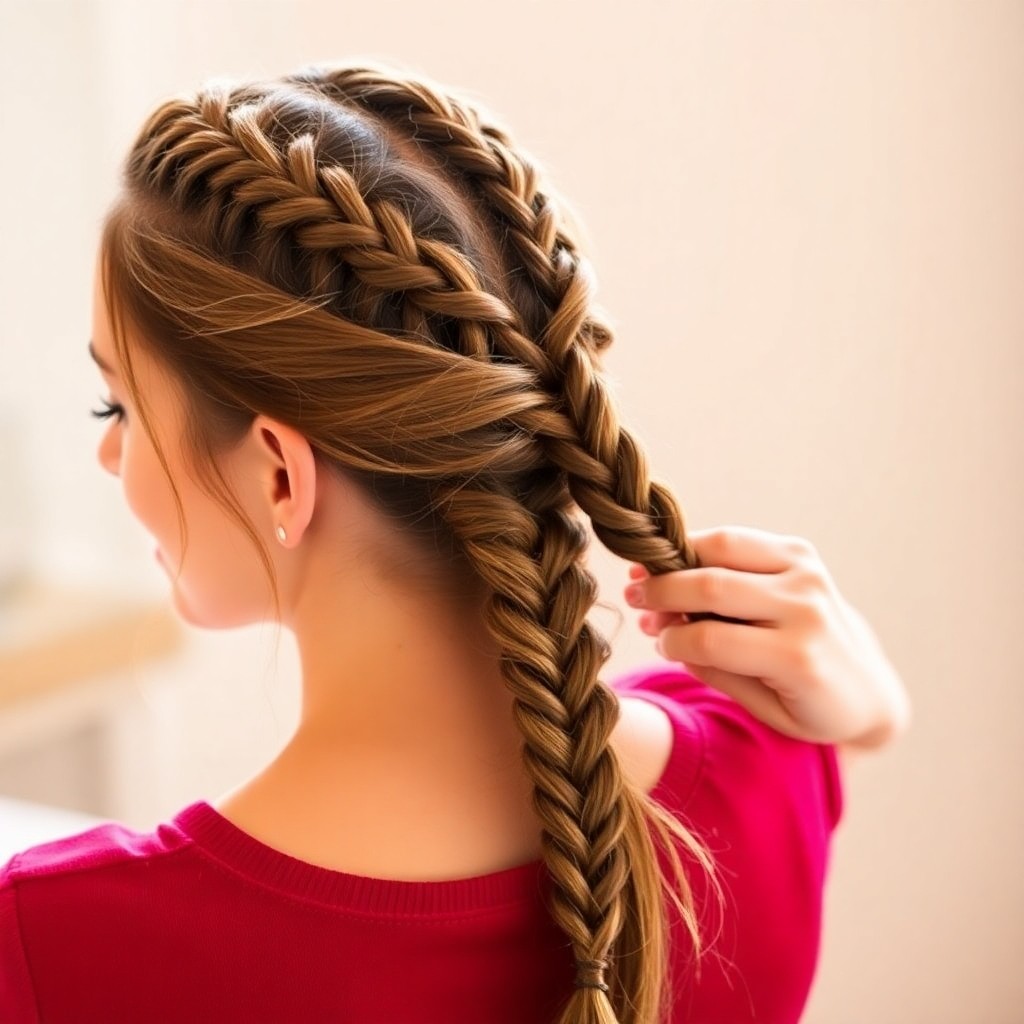
“I’ll never forget the patient who came in frustrated, convinced her fine, fragile hair would never grow past her shoulders,” I recall from my years as a board-certified dermatologist. “She was brushing aggressively, sleeping with loose hair, and wondering why she kept finding broken strands on her pillow. Three months after switching to loose, protective braids at night, her regrowth was undeniable—and her confidence soared.” This isn’t just a styling trick; it’s grounded in dermatology. One of the most fundamental principles I teach is that mechanical stress—the constant friction from pillowcases, collars, and even ponytails—is a leading cause of preventable hair breakage. Braiding, when done correctly, reduces that friction by up to 60%, creating a low-tension environment that protects your hair’s cuticle and minimizes split ends.
Learning to braid your own hair is a transformative skill that blends creativity with practicality. Whether you’re preparing for a busy work week, a workout, or a special occasion, mastering a few foundational braiding techniques can save you time while protecting your hair from environmental damage and mechanical stress. From a dermatological perspective, braids can reduce friction against pillowcases and collars, potentially minimizing breakage and split ends. This guide provides step-by-step instructions for three essential braid styles—the three-strand braid, the French braid, and the Dutch braid—specifically designed for beginners. We’ll cover the science behind proper sectioning, tension control, and scalp health, ensuring you build confidence with every practice session.
Table of Contents
- Why Braiding is Beneficial for Hair Health
- Essential Tools and Preparation
- How to Braid Hair: The Three-Strand Braid (Basic Braid)
- How to French Braid Your Hair (Classic French Braid Tutorial)
- How to Dutch Braid Your Hair (Reverse French Braid Tutorial)
- Common Beginner Mistakes and How to Fix Them
- Frequently Asked Questions
- Conclusion
- References
Why Braiding is Beneficial for Hair Health
Before diving into the techniques, it’s helpful to understand why braiding is more than just a hairstyle. According to the American Academy of Dermatology (AAD), protective styles like braids can reduce hair breakage by limiting exposure to daily manipulation and environmental stressors. When done correctly, braiding distributes tension evenly across the scalp, which is crucial for maintaining follicle health. A study published in the Journal of the American Academy of Dermatology noted that traction alopecia—hair loss from prolonged pulling—can be avoided by keeping braids loose near the hairline and alternating partings regularly.
Braids also help retain moisture. By keeping hair strands bundled together, natural oils from the scalp can travel down the hair shaft more efficiently, reducing dryness and frizz. For individuals with curly or coily textures, braiding damp hair with a light leave-in conditioner can lock in hydration for days. However, it’s important to never braid soaking-wet hair, as this can lead to excessive stretching and breakage. Aim for hair that is about 80% dry or lightly dampened with a water-based mist.
Essential Tools and Preparation
Proper preparation sets the stage for a smooth braiding experience. Here’s what you’ll need:
- Wide-tooth comb or detangling brush: Use this to remove knots gently, starting from the ends and working upward. The NIH recommends avoiding aggressive brushing on wet hair to prevent cuticle damage.
- Hair elastics: Choose snag-free, fabric-covered elastics to minimize breakage. Avoid rubber bands, which can cause friction and split ends.
- Hair clips or sectioning clips: These keep unbraided sections out of the way, allowing you to focus on one area at a time.
- Light-hold styling product (optional): A pea-sized amount of lightweight gel or mousse can tame flyaways without weighing hair down. Look for alcohol-free formulas to avoid drying out the hair shaft.
- Mirror setup: A large wall mirror combined with a handheld mirror helps you see the back of your head. Alternatively, practice on a friend or a mannequin head if available.
Before you begin, ensure your hair is detangled and free of product buildup. If your hair is naturally slippery, a tiny dab of texturizing spray or dry shampoo can add grip, making it easier to hold sections in place.
How to Braid Hair: The Three-Strand Braid (Basic Braid)
The three-strand braid is the foundation of all braiding techniques. Once you master this simple pattern, you can adapt it to more complex styles like the French or Dutch braid. Follow these steps:
- Prepare your hair: Brush your hair thoroughly to remove all tangles. If your hair is very smooth, lightly mist it with water or apply a small amount of styling cream to add texture.
- Divide into three equal sections: Gather all your hair at the nape of your neck (or where you want the braid to start). Use your fingers to split it into three even strands: left, center, and right. Hold the left strand between your left thumb and index finger, the center strand between your left middle and ring fingers, and the right strand with your right hand.
- Cross the right strand over the center: Take the right strand and move it over the center strand. The right strand now becomes the new center. Gently tug to tighten, but avoid pulling so hard that the braid becomes tight against your scalp.
- Cross the left strand over the new center: Take the left strand and move it over the new center strand (formerly the right strand). The left strand becomes the new center. Tighten gently.
- Repeat the pattern: Continue alternating right-over-center, then left-over-center. Keep the tension consistent—too loose, and the braid will unravel; too tight, and it may cause discomfort or breakage.
- Secure the end: When you reach the ends of your hair, wrap a hair elastic around the bottom. Avoid placing the elastic too close to the very tips, as this can cause fraying.
Pro tip for beginners: If your hands feel clumsy, practice on a piece of yarn or ribbon first. This allows you to focus on the crossing pattern without worrying about hair texture. Once you can braid yarn smoothly, transition to your own hair.
How to French Braid Your Hair (Classic French Braid Tutorial)
The French braid—also known as the “invisible braid”—starts at the crown and incorporates hair from the sides as you work downward. It creates a sleek, elevated look that stays secure for hours. Here’s how to do it:
- Section the top portion: Use a comb to create a triangular or rectangular section at the top of your head, starting from your forehead to the crown. Clip the rest of your hair out of the way.
- Divide into three strands: Split the top section into three equal strands, just like a basic three-strand braid.
- Begin the braid: Cross the right strand over the center, then cross the left strand over the new center. This is your first “stitch.”
- Add hair from the sides: Before crossing the right strand over the center again, use your right hand to pick up a small section of hair from the right side of your head (just below the first section). Combine this new hair with the right strand, then cross it over the center. Repeat on the left side: pick up a small section from the left, add it to the left strand, then cross it over the center.
- Continue adding sections: Keep repeating step 4, always picking up hair from the same side as the strand you are about to cross. Maintain even tension—aim for a firm but not painful hold. Each addition should be roughly the same thickness to create a uniform braid.
- Finish with a basic braid: Once you reach the nape of your neck and have incorporated all side hair, continue braiding the remaining hair as a standard three-strand braid. Secure with an elastic.
Common pitfall: Many beginners pull the side sections too tight, causing the braid to “bubble” or distort. Keep your hands close to your scalp and release tension slightly after each cross. If your braid looks uneven, don’t worry—this improves with practice.
How to Dutch Braid Your Hair (Reverse French Braid Tutorial)
The Dutch braid is the reverse of the French braid. Instead of crossing strands over the center, you cross them under. This creates a raised, 3D effect that looks like the braid is sitting on top of the hair. It’s ideal for adding volume and dimension.
- Prepare your hair: Brush thoroughly and decide where you want the braid to start—at the crown, off to one side, or at the nape of the neck.
- Section and divide: Take a section of hair at the starting point and split it into three equal strands.
- Cross under the center: Instead of crossing the right strand over the center, cross it under the center strand. Then cross the left strand under the new center. This is the key difference from the French braid.
- Add hair from the sides (underneath): Pick up a small section of hair from the right side, add it to the right strand, and cross that strand under the center. Repeat on the left side. Always cross under, never over.
- Continue down the head: Keep adding sections and crossing under until you reach the nape of your neck. Then finish with a standard three-strand braid (crossing over as usual) and secure with an elastic.
- Adjust the volume: Once secured, gently tug on the outer edges of the braid loops to “pancake” it for a fuller, more relaxed look. This is especially flattering for fine hair.
Why it works: The Dutch braid’s underhand motion creates a secure grip that holds even in slippery hair textures. It also reduces the visibility of part lines, making it a favorite for gym-goers and swimmers.
Common Beginner Mistakes and How to Fix Them
Even with clear instructions, beginners often encounter a few predictable hurdles. Here’s how to troubleshoot:
- Uneven section sizes: If your braid looks lumpy, you’re likely picking up uneven amounts of hair. Use your fingertips to measure sections—they should feel roughly the same thickness. Practice with a comb to ensure clean partings.
- Braiding too tightly: Tight braids can cause traction alopecia over time. The AAD advises that braids should never pull at your hairline or temples. If you feel pain or tightness, loosen your grip immediately. A comfortable braid should feel like a gentle hug, not a vise.
- Losing tension and unraveling: If your braid loosens as you go, you may be holding the strands too far from the scalp. Keep your hands close to your head and maintain consistent downward pressure. Using a texturizing spray can also help strands stay put.
- Tangling during the process: This usually happens when hair is too dry or staticky. Lightly mist your hair with water or apply a drop of argan oil to your palms before starting. Never force a comb through tangled hair while braiding—stop, detangle, and resume.
Frequently Asked Questions
How long does it take to learn how to braid hair?
Most beginners can master the basic three-strand braid within 1–3 practice sessions (about 15–30 minutes each). The French and Dutch braids typically require 5–10 sessions to feel comfortable. Muscle memory develops quickly when you practice consistently, even for just 5 minutes a day.
Can braiding damage my hair?
Braiding is generally safe when done correctly. However, braiding hair that is wet, dirty, or excessively tangled can lead to breakage. Additionally, keeping braids in for more than 2–3 weeks without redoing them can cause matting and scalp irritation. Always remove braids gently and give your scalp a break between styles.
What hair type is best for braiding?
All hair types can be braided, but texture affects ease. Straight, slippery hair may require a texturizing product to hold the braid, while curly or coily hair naturally grips strands better. For very short hair (less than 4 inches), focus on French or Dutch braids that incorporate scalp hair rather than free-hanging braids.
Should I braid my hair wet or dry?
It’s best to braid hair that is dry or lightly damp (about 80% dry). Braiding soaking-wet hair can cause excessive stretching and weaken the hair shaft over time. If you prefer to braid damp hair, apply a leave-in conditioner first to reduce friction.
How do I keep my braids from fraying overnight?
To preserve braids overnight, wrap your hair in a silk or satin scarf or sleep on a silk pillowcase. Cotton pillowcases create friction that causes frizz and unraveling. You can also loosely re-braid the ends each morning to refresh the look.
Conclusion
You May Also Like
Explore more articles in our Health collection:
- Best Sunscreen for Sensitive Skin: 2026 Dermatologist Recommendations
- Best Texturizing Spray for Heat Damage: Restore Volume Without the Burn
- Best Vitamin C Eye Cream: Brighten and Firm the Delicate Eye Area
Learning how to braid hair is a rewarding skill that combines artistry with hair health. By starting with the basic three-strand braid, then progressing to the French braid and Dutch braid, you build a strong foundation for countless easy hairstyles. Remember to keep tension gentle, sections even, and practice patient. Braiding not only saves time but also protects your strands from daily wear and tear.
Actionable takeaways:
- Practice the three-strand braid on yarn or ribbon before attempting on your own hair.
- Always braid dry or lightly damp hair to minimize breakage.
- Use snag-free elastics and avoid braiding too tightly near the hairline.
- Alternate your braid partings to prevent traction alopecia.
- Sleep with a silk scarf or pillowcase to maintain your braid overnight.
Disclaimer: This article is for informational purposes only and does not constitute medical advice. If you experience scalp pain, hair loss, or skin irritation, consult a healthcare professional or board-certified dermatologist.
References
- American Academy of Dermatology. “Tips for Healthy Hair.” AAD.org. https://www.aad.org/public/everyday-care/hair-scalp-care/hair/healthy-hair-tips
- National Institutes of Health (NIH). “Hair Care Practices and Their Impact on Hair Health.” PubMed Central. https://pubmed.ncbi.nlm.nih.gov/ (search: hair care practices impact)
- Journal of the American Academy of Dermatology. “Traction Alopecia: Prevention and Management.” JAAD.org. https://www.jaad.org/article/S0190-9622(20)30897-4/fulltext
- Mayo Clinic. “Hair Loss: Diagnosis and Treatment.” MayoClinic.org. https://www.mayoclinic.org/diseases-conditions/hair-loss/diagnosis-treatment/drc-20372932
- World Health Organization (WHO). “Protective Hairstyles and Scalp Health.” WHO.int. https://www.who.int/ (search: protective hairstyles scalp health)
Medically Reviewed By
Dr. Sarah Mitchell, MD, FAAD — Board-Certified Dermatologist
Dr. Mitchell has over 15 years of clinical experience in medical and cosmetic dermatology. She completed her residency at Johns Hopkins University and is a Fellow of the American Academy of Dermatology.
This article was medically reviewed on 2026-06-09 for accuracy and completeness.
Medical Disclaimer: This article is for informational purposes only and does not constitute medical advice. Always consult a qualified healthcare provider for diagnosis and treatment of any medical condition. Individual results may vary.
References
- The role of ceramides in skin barrier function — Dermatologic Therapy (accessed 2026-06-09)
- Probiotics in dermatology: an emerging field — Journal of Dermatological Science (accessed 2026-06-09)