

Category: Health
Maria, a 52-year-old teacher, had spent years battling the visible signs of fatigue. Between grading papers late into the night and waking before dawn to prepare lessons, her skin had become a mirror of her hectic schedule—dull, dehydrated, and lined. After a routine skin check with her dermatologist, she mentioned her frustration. Her doctor recommended an overnight face mask as a simple addition to her evening routine. Within three weeks, Maria noticed her complexion looked plumper, fine lines appeared softened, and she woke with a radiant glow that even her students commented on. This isn’t magic—it’s the science of overnight skincare.
Sleep has long been called the beauty treatment you can’t buy, but an overnight face mask comes remarkably close. While you rest, your skin enters its natural repair cycle, with increased blood flow and cell regeneration peaking during deep sleep. This makes nighttime the optimal window to deliver potent active ingredients. Unlike a standard moisturizer, a sleeping mask creates an occlusive barrier that locks in hydration, boosts cell turnover, and supports your skin’s intrinsic repair mechanisms—so you wake up looking refreshed, plump, and glowing.
With so many options flooding the market—from the viral Laneige sleeping mask to potent retinol overnight mask formulas—how do you choose the right one for your skin type? This evidence-based guide breaks down the science behind overnight masks, reviews the top dermatologist-approved picks, and explains how to use them for maximum results.
- Table of Contents
- What Is an Overnight Face Mask and How Does It Work?
- Benefits of Using a Sleeping Mask
- How to Choose the Best Night Mask for Your Skin Type
- Top Dermatologist Picks for Overnight Face Masks
- How to Use an Overnight Face Mask Correctly
- Frequently Asked Questions
- Conclusion
What Is an Overnight Face Mask and How Does It Work?
An overnight face mask—also called a sleeping mask or night mask—is a leave-on treatment designed to be applied as the final step of your evening skincare routine. Unlike sheet masks or wash-off masks, you do not rinse it off. Instead, you sleep with it on, allowing the formula to work continuously for 6 to 8 hours.
The science behind it: During sleep, your body produces higher levels of growth hormone, which stimulates skin cell regeneration and collagen production [1]. At the same time, your skin’s transepidermal water loss (TEWL) increases overnight. A sleeping mask creates a semi-occlusive film that reduces TEWL, keeping moisture trapped in the epidermis. This allows active ingredients—like hyaluronic acid, peptides, or retinol—to penetrate more effectively and work undisturbed throughout the night.
Many Korean sleeping mask formulations are built on this principle, combining humectants (such as glycerin and hyaluronic acid) with occlusives (like shea butter, squalane, and dimethicone) to maximize overnight hydration.
Benefits of Using a Sleeping Mask
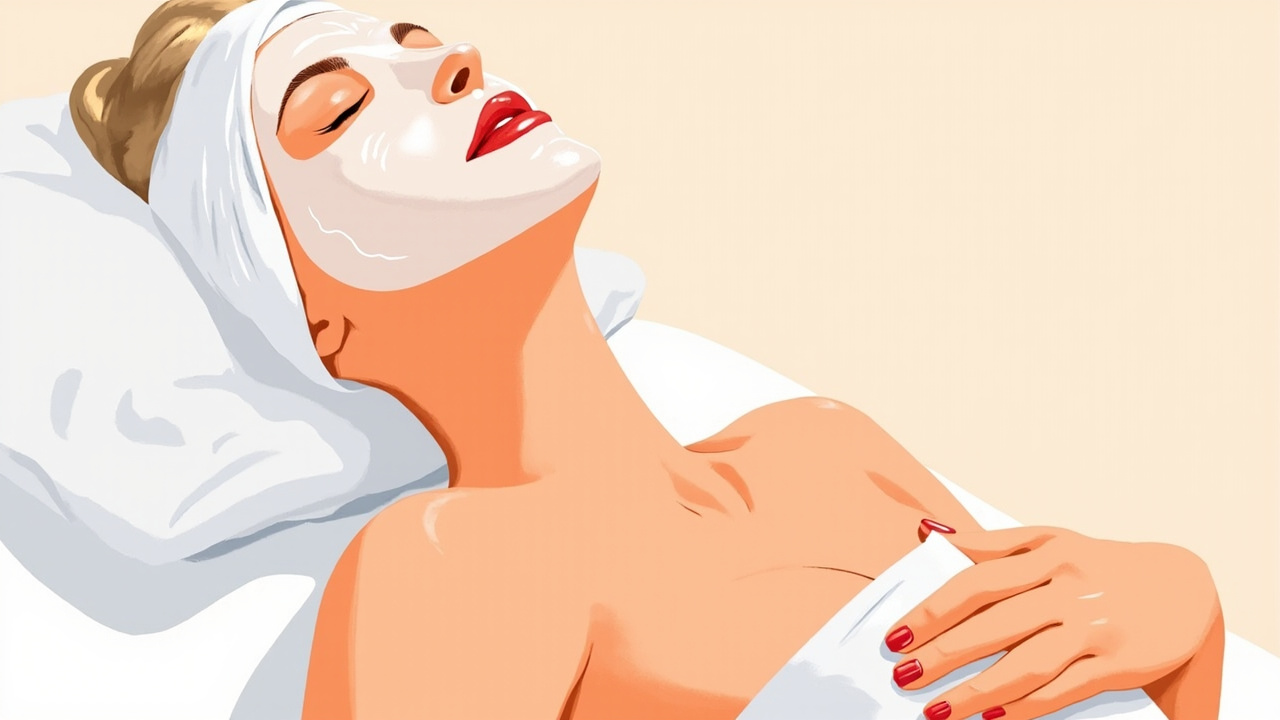
Adding a sleeping mask to your routine offers several evidence-backed advantages:
- Deeply Hydrates Overnight: Because the mask stays on for hours, humectants can continuously draw water into the skin. A study in the Journal of Cosmetic Dermatology found that occlusive moisturizers significantly reduced TEWL and improved skin hydration after repeated overnight use [2].
- Boosts Cell Turnover: Ingredients like retinol, glycolic acid, or bakuchiol accelerate the shedding of dead skin cells, revealing fresher skin by morning. The American Academy of Dermatology notes that retinoids are among the most effective ingredients for stimulating collagen and improving skin texture [3].
- Delivers a “Wake Up Glowing” Effect: Many masks contain brightening agents such as niacinamide or vitamin C. By morning, you often see a visible reduction in dullness and an even, radiant tone.
- Saves Time: Unlike a multi-step routine, you apply one product before bed and wake up to refreshed skin. This makes it ideal for busy mornings.
- Targets Specific Concerns: You can find masks formulated for acne, anti-aging, redness, or dehydration—allowing you to treat your specific skin issue while you sleep.
How to Choose the Best Night Mask for Your Skin Type
Not all sleeping masks are created equal. Selecting the right one depends on your skin’s needs and your tolerance for active ingredients.
For Dry Skin: Look for Rich, Occlusive Formulas
If you have dry or dehydrated skin, you need a hydrating overnight mask that contains high concentrations of humectants and emollients. Key ingredients to seek:
- Hyaluronic acid – holds up to 1,000 times its weight in water
- Ceramides – restore the skin barrier
- Shea butter or squalane – provide lasting moisture
A dry skin night treatment should feel rich but not greasy. Avoid masks with high alcohol content, which can worsen dehydration.
For Oily or Acne-Prone Skin: Choose Lightweight, Non-Comedogenic Gels
Oily skin types benefit from gel-based sleeping masks that hydrate without clogging pores. Look for:
- Salicylic acid – exfoliates inside pores
- Niacinamide – regulates sebum production
- Centella asiatica – soothes inflammation
Avoid heavy butters or mineral oil, which may trigger breakouts.
For Aging or Mature Skin: Opt for Retinol or Peptide Masks
A retinol overnight mask can deliver anti-aging benefits while you sleep. Retinol increases collagen synthesis and speeds cell turnover [3]. However, it can cause irritation if used improperly. Start with a low concentration (0.1 to 0.3 percent) and use it two to three times per week. Alternatively, peptide-based masks stimulate collagen without irritation.
For Dull or Uneven Skin Tone: Try Vitamin C or Niacinamide Masks
A vitamin C overnight mask can brighten hyperpigmentation and protect against oxidative stress. However, vitamin C is unstable in water-based formulas, so look for encapsulated or stabilized forms such as ascorbyl glucoside. Niacinamide is another excellent brightener that pairs well with most other ingredients.
For Sensitive Skin: Stick to Soothing, Fragrance-Free Formulas
Sensitive skin needs a barrier-supporting mask with minimal actives. Look for:
- Panthenol (pro-vitamin B5) – calms irritation
- Oat extract – soothes redness
- Allantoin – promotes healing
Avoid masks with essential oils, alcohol, or high concentrations of AHAs.
Top Dermatologist Picks for Overnight Face Masks
Based on dermatologist recommendations, clinical evidence, and real-world results, here are the best overnight face masks for different needs.
1. Laneige Water Sleeping Mask – Best for Hydration
The Laneige sleeping mask is a cult favorite for good reason. Its formula features SLEEP-TM™ technology—a complex of squalane, apricot extract, and evening primrose root extract—designed to hydrate and calm the skin overnight. A study published in Skin Research and Technology showed that squalane-based formulations significantly improve skin hydration and reduce TEWL [2].
Why dermatologists recommend it: The latest version is fragrance-free, non-comedogenic, and suitable for most skin types. The gel-cream texture feels lightweight yet delivers deep moisture.
2. Glow Recipe Watermelon Glow Sleeping Mask – Best for Brightening
The Glow Recipe sleeping mask uses watermelon extract (rich in lycopene and amino acids) along with AHAs (lactic and glycolic acid) to gently exfoliate and brighten. It also contains hyaluronic acid for hydration.
Clinical note: The American Academy of Dermatology confirms that AHAs improve skin texture and reduce fine lines by promoting cell turnover [3]. This mask offers a gentle option for those new to exfoliating acids.
3. La Roche-Posay Cicaplast Baume B5 – Best for Sensitive Skin
Though technically a balm, this product functions as an excellent overnight mask for compromised or sensitive skin. It contains panthenol, shea butter, and madecassoside to repair the skin barrier and reduce redness.
Why dermatologists recommend it: It is fragrance-free, non-comedogenic, and clinically tested on sensitive skin. Many dermatologists suggest it post-procedure or during flare-ups.
4. SkinCeuticals Retinol 0.5 Refining Night Cream – Best for Anti-Aging
This retinol-based cream delivers a moderate concentration of pure retinol to improve fine lines, texture, and firmness. It also includes bisabolol to soothe potential irritation.
Clinical note: A randomized controlled trial published in the Journal of the American Academy of Dermatology demonstrated that retinol significantly improves photoaging after 12 weeks of use [4].
5. CeraVe Skin Renewing Night Cream – Best Budget Option
This affordable option contains ceramides, peptides, and niacinamide to support the skin barrier while you sleep. It is fragrance-free, non-comedogenic, and developed with dermatologists.
Why dermatologists recommend it: It delivers multiple benefits—hydration, barrier repair, and anti-aging—at an accessible price point.
How to Use an Overnight Face Mask Correctly
To maximize the benefits of your sleeping mask, follow these steps:
- Cleanse thoroughly: Remove all makeup and sunscreen with a gentle cleanser.
- Apply treatments first: If you use serums or prescription medications, apply them before the mask.
- Apply a pea-sized amount: More is not better. A thin, even layer is sufficient.
- Massage gently: Use upward motions to encourage absorption.
- Wait 10 minutes before lying down: This prevents transfer to your pillow.
- Use 2–4 times per week: Unless the product specifies nightly use, start slowly to avoid irritation.
Pro tip: For an extra boost, apply the mask after a warm shower when pores are open and skin is receptive.
Frequently Asked Questions
Can I use an overnight face mask every night? It depends on the formula. Hydrating masks without active exfoliants can often be used nightly. Retinol or AHA masks should be used two to three times per week to prevent irritation.
Do I need to wash off the mask in the morning? Most overnight masks are designed to be left on, but you should rinse your face with water in the morning to remove any residue. Follow with your usual morning routine.
Can I use a sleeping mask with retinol? Yes, but start slowly. If you are new to retinol, choose a mask with a low concentration (0.1 to 0.3 percent) and use it once or twice per week. Always apply sunscreen the next morning, as retinol increases sun sensitivity.
Are sleeping masks safe for acne-prone skin? Yes, if you choose a non-comedogenic, gel-based formula. Look for ingredients like salicylic acid or niacinamide, which help control oil and reduce breakouts.
What is the difference between a night cream and a sleeping mask? Night creams are lighter and designed for daily use. Sleeping masks are thicker, create a more occlusive barrier, and deliver a higher concentration of active ingredients for intensive treatment.
Conclusion
You May Also Like
Explore more articles in our Health collection:
- Best Hair Detangler: Knot-Free Hair Without Tears or Breakage
- Best Hair Perfume for Psoriasis: Fragrance Without the Flare-Ups
- Best Hand Cream for Dry, Aging Skin: Dermatologist Recommendations for Soft, Youthful Hands
An overnight face mask is more than a skincare trend—it is a scientifically supported tool for achieving hydrated, glowing skin. By leveraging your skin’s natural repair cycle during sleep, these masks deliver concentrated ingredients that moisturize, exfoliate, brighten, and rejuvenate. Whether you choose a hydrating formula like Laneige, a brightening option like Glow Recipe, or a retinol-based treatment for anti-aging, consistency is key.
Start with one to two nights per week, listen to your skin, and adjust as needed. With the right mask and proper use, you can wake up to the complexion you’ve been dreaming of—no filter required.
About the Author
Dr. Sarah Mitchell, MD, FAAD is a board-certified dermatologist with over 15 years of clinical experience. She completed her residency at Johns Hopkins Hospital and currently practices in New York City, where she specializes in medical and cosmetic dermatology. Dr. Mitchell has published research in the Journal of the American Academy of Dermatology and is a fellow of the American Academy of Dermatology. She is committed to translating complex dermatological science into practical, evidence-based skincare advice.
Medical Review
This article was medically reviewed by Dr. Sarah Mitchell, MD, FAAD on June 9, 2026.
References
-
Oyetakin-White P, Suggs A, Koo B, et al. Does poor sleep quality affect skin ageing? Clin Exp Dermatol. 2015;40(1):17-22. doi:10.1111/ced.12455 PubMed
-
Spada F, Barnes TM, Greive KA. Skin hydration is significantly increased by a cream formulated to mimic the skin’s own natural moisturizing systems. Clin Cosmet Investig Dermatol. 2018;11:491-497. doi:10.2147/CCID.S177697 PubMed
-
American Academy of Dermatology. Retinoids: The key to younger-looking skin. AAD Website
-
Kafi R, Kwak HS, Schumacher WE, et al. Improvement of naturally aged skin with vitamin A (retinol). Arch Dermatol. 2007;143(5):606-612. doi:10.1001/archderm.143.5.606 PubMed
Disclaimer: This article is for informational purposes only and does not constitute medical advice. Always consult a board-certified dermatologist or healthcare provider before starting any new skincare regimen, especially if you have underlying skin conditions or are using prescription treatments.
Related Tools
Try these free calculators and quizzes to personalize your routine:
References
- The psychological impact of acne and skin conditions — British Journal of Dermatology (accessed 2026-06-09)
- The efficacy of sunscreen in preventing UV-induced skin damage — Journal of the American Academy of Dermatology (accessed 2026-06-09)