
Advertisement
For many, the idea of a perfect manicure conjures images of steady hands, potent chemical fumes, and an agonizing 30-minute wait for polish to dry—only to smudge it moments later. Nail art, while visually stunning, has historically been the domain of professional salons or the exceptionally patient. However, a revolution in at-home nail care has arrived that eliminates the mess, the odor, and the drying time entirely: the modern nail sticker.
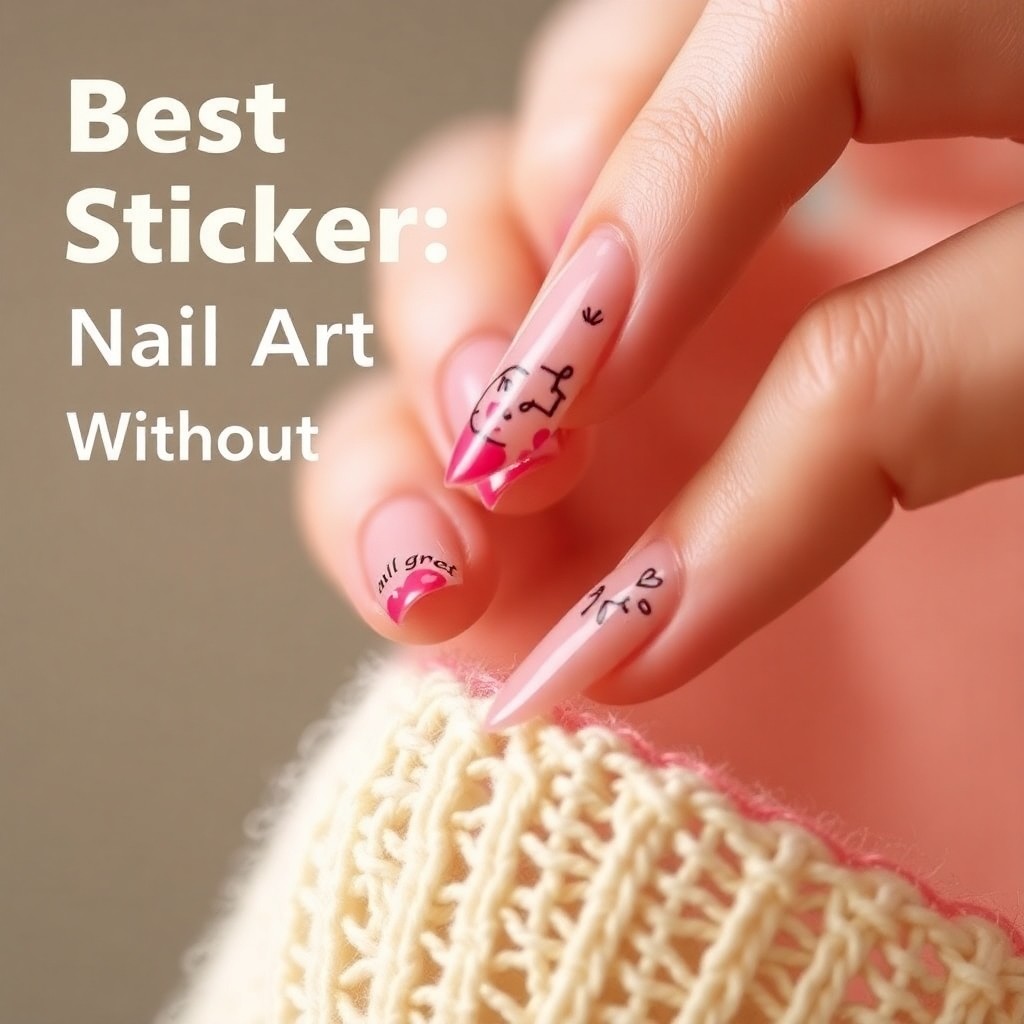
Whether you are looking for intricate **floral nail stickers**, sharp **geometric nail stickers**, or festive **holiday nail stickers**, today’s **best nail stickers** offer salon-quality results in minutes. They are no longer the stiff, peeling stickers of the past. Modern **nail wraps** and **nail decals** are made from high-quality materials that mimic gel polish, lasting up to two weeks. This guide will break down the science of adhesion, compare top brands like **Jamberry nails** and **Olive and June stickers**, and provide a foolproof application method to ensure your **DIY nail stickers** look flawless.
## Table of Contents
- What Are Nail Stickers? Understanding the Technology
- Why Choose Nail Stickers? The Science of Convenience
- Types of Nail Art Stickers: Finding Your Style
- The Best Nail Stickers on the Market: A Comparative Review
- How to Apply Nail Stickers for Maximum Wear
- Common Mistakes and How to Fix Them
- Frequently Asked Questions
- Conclusion
## What Are Nail Stickers? Understanding the Technology
Modern **nail art stickers** are thin, flexible pieces of material—often polyurethane, vinyl, or real nail polish—that adhere to the nail plate using a pressure-sensitive adhesive. Unlike traditional nail polish, which relies on solvent evaporation to harden (a process that can take 10–20 minutes per coat), nail stickers use a pre-cured film.
**Nail wraps** (full-coverage stickers that cover the entire nail) and **nail decals** (smaller designs placed over a base color) utilize a layered construction. Most premium wraps consist of a top coat layer (for shine and durability), a printed design layer, and an adhesive base. The adhesive technology has advanced significantly. Modern formulations use "tack and flow" polymers that bond more strongly to the keratin of the nail plate as they warm up.
According to a study on adhesive chemistry in dermatological applications, pressure-sensitive adhesives (PSAs) used in medical and cosmetic products rely on viscoelastic properties—they flow into the microscopic ridges of the nail surface to create a mechanical bond without requiring heat or moisture to cure (NIH, 2021). This is why the **best nail stickers** feel smooth and stay put, rather than peeling at the edges.
## Why Choose Nail Stickers? The Science of Convenience
The primary advantage of **press on nail art** via stickers is the elimination of the "drying time" problem. Traditional nail polish is a solution of film-forming polymers (like nitrocellulose) dissolved in volatile solvents. As the solvents evaporate, the polymers cross-link to form a hard film. This process is slow and susceptible to disruption (smudging) for up to 24 hours. Nail stickers bypass this entirely.
- **Zero Drying Time:** The film is already formed. You apply it, and you are done. This significantly reduces the risk of smudging, which is a primary source of user frustration.
- **Reduced Chemical Exposure:** Many users are sensitive to the strong odors of acetone, ethyl acetate, and toluene found in liquid nail polishes and gel systems. Nail stickers are generally odorless and contain no volatile organic compounds (VOCs), making them a gentler option for those with allergies or respiratory sensitivities (AAD, 2023).
- **Durability:** High-quality wraps can last 10–14 days, rivaling gel polish. This is due to the robust polymer film which resists chipping better than standard lacquer.
- **Removal:** Unlike hard gels that require soaking and filing (which can damage the nail plate), most nail stickers can be removed by soaking in oil or gentle nail polish remover, causing minimal trauma to the nail bed.
## Types of Nail Art Stickers: Finding Your Style
The market offers a vast array of designs. Understanding the categorization helps you choose the right product for your skill level and aesthetic.
### Full-Coverage Nail Wraps
These are the most popular type of **best nail stickers**. They cover the entire nail from cuticle to tip. They are ideal for beginners because they provide a complete manicure in one step. Brands like **Olive and June stickers** and **Jamberry nails** specialize in these. They come in solid colors, gradients, and complex patterns.
### Nail Decals (Water Slides or Dry Transfers)
Decals are typically smaller, intricate designs—think **floral nail stickers**, **geometric nail stickers**, or tiny stars. They are applied over a dry base coat or solid color. Water-slide decals require soaking in water to release the design from the paper backing, while dry transfers are rubbed onto the nail. These are excellent for creating **minimalist nail art** or adding accent details.
### Stamping Plates
While not a sticker per se, nail stamping involves transferring a pre-etched design from a metal plate onto the nail using a silicone stamper. This is a hybrid technique that offers the precision of a decal but requires a bit more skill.
### 3D and Embellished Stickers
These include rhinestones, pearls, or metal charms attached to an adhesive base. They add texture but may not last as long as flat wraps due to their raised profile catching on hair and clothing.
## The Best Nail Stickers on the Market: A Comparative Review
Choosing the **best nail stickers** depends on your budget, desired longevity, and design preference. Here is a breakdown of the leading contenders.
### Olive and June Stickers
Olive and June has become a household name for at-home manicures. Their **Olive and June stickers** are known for their "The Poppy" design and their proprietary adhesive system. They use a thin, flexible material that conforms well to the nail curve.
- **Pros:** Extremely easy to apply; wide variety of modern, trendy colors and patterns; includes a cuticle stick and file in the kit.
- **Cons:** Slightly less durable than some competitors (average 7–10 days); limited customization for very short nails.
- **Best for:** Beginners and those who want a quick, trendy look without a steep learning curve.
### Jamberry Nails
**Jamberry nails** were pioneers in the nail wrap market. They are known for being thicker and requiring heat activation (using a hair dryer or body heat) to mold the wrap to the nail.
- **Pros:** Exceptional durability (10–14 days); very glossy finish; heat activation creates a tight seal.
- **Cons:** Application process is more involved (requires heat); thicker material can feel less natural.
- **Best for:** Users willing to invest a few extra minutes for maximum longevity.
### Dashing Diva (Magic Press and Glaze)
Dashing Diva offers two main lines: Magic Press (self-adhesive) and Glaze (semi-cured gel that requires a UV lamp). Their Magic Press line is a strong competitor in the **nail wraps** category.
- **Pros:** Very thin and natural-looking; "Magic Press" line requires no heat; extensive design library.
- **Cons:** Glaze line requires a UV lamp, which adds cost and time; some users report lifting on the edges.
- **Best for:** Users who want a "gel-like" finish without the mess of liquid gel.
### Static Nails (Reusable)
Static Nails are reusable **press on nail art** pieces that use a medical-grade adhesive tab. They are not traditional stickers but are included here for their unique value proposition.
- **Pros:** Reusable up to 10 times with proper care; very durable; no damage to the natural nail.
- **Cons:** Higher upfront cost; requires careful sizing and storage.
- **Best for:** Eco-conscious users and those who want to change their look frequently.
### DIY and Independent Brands
The rise of **DIY nail stickers** has led to a boom on platforms like Etsy. Independent artists create custom **floral nail stickers**, **geometric nail stickers**, and **holiday nail stickers** that are not available in stores. These are often high-quality water-slide decals.
- **Pros:** Unique, artistic designs; supports small businesses; often cheaper per sheet.
- **Cons:** Inconsistent quality; requires a steady hand for application; may need a top coat for durability.
- **Best for:** Nail art enthusiasts who want unique, hand-drawn designs.
## How to Apply Nail Stickers for Maximum Wear
Even the **best nail stickers** will fail if applied poorly. The key to longevity is surface preparation. Your nails are naturally coated in oils and moisture. The adhesive must bond directly to the keratin.
### Step 1: Prepare the Nail Plate
- Wash hands with soap and water to remove surface oils.
- Push back cuticles gently. Do not cut them, as the cuticle acts as a seal.
- Use a 100/180 grit nail file to gently buff the surface of the nail. This creates microscopic scratches that increase the surface area for adhesion (similar to sanding wood before painting).
- Wipe the nail with isopropyl alcohol or a lint-free nail wipe to remove dust and any remaining oil.
### Step 2: Size and Select
- Choose a sticker that fits your nail perfectly. It should be slightly narrower than your nail bed.
- If using **nail wraps**, warm them in your hands for 30 seconds to make them pliable.
### Step 3: Apply
- Peel the sticker from the backing.
- Align the straight edge of the sticker with your cuticle line (do not touch the skin).
- Press down from the center of the nail outward to the edges to push out any air bubbles.
- Fold the tip over the edge of your nail and file downwards in a single direction to seal the edge.
### Step 4: Seal
- Apply a fast-drying top coat (optional but recommended). This adds a layer of protection against water and wear.
- Avoid getting your hands wet for at least one hour after application to allow the adhesive to fully set.
## Common Mistakes and How to Fix Them
- **Mistake: Stickers are peeling at the tip.**
- *Fix:* Ensure the sticker is long enough to wrap over the free edge. File the tip after application, not before.
- **Mistake: Air bubbles appear.**
- *Fix:* Use a cuticle pusher to gently press the bubble toward the nearest edge. If it persists, use a sterile needle to prick the bubble and press flat.
- **Mistake: The sticker wrinkles.**
- *Fix:* You applied it too cold. Warm the sticker with body heat or a hair dryer on low before applying.
- **Mistake: Sticker lifts at the cuticle.**
- *Fix:* You applied it too close to the skin. There must be a 1mm gap between the sticker and the cuticle. Oils from the skin will break the adhesive bond.
## Frequently Asked Questions
### How long do nail stickers last?
The lifespan of **nail art stickers** varies by brand and application. High-quality **nail wraps** like Jamberry or Dashing Diva can last 10–14 days. Cheaper decals may last only 3–5 days. Proper nail preparation is the single biggest factor in longevity. Using a top coat can extend wear by 2–3 days.
### Can I shower or swim with nail stickers?
Yes, but water is the enemy of adhesive. The **best nail stickers** are water-resistant, not waterproof. Prolonged soaking (hot baths, swimming pools) will cause the edges to lift. Wear gloves for dishwashing and pat your nails dry immediately after showering. Avoid using oils or lotions directly on the stickers, as these can dissolve the adhesive.
### Are nail stickers bad for your natural nails?
When applied and removed correctly, nail stickers are generally safe. The risk comes from improper removal. If you peel them off aggressively, you can rip off layers of the nail plate (onychoschizia). Always use a soak-off method: apply cuticle oil or a gentle acetone-free remover to the edges and let it seep under the sticker. Never force them off.
### Can I use a top coat over nail stickers?
Yes, and it is highly recommended for longevity. Use a quick-dry top coat that is compatible with vinyl or polyurethane. Avoid using gel top coats over standard stickers unless the sticker is specifically designed for UV curing (like Dashing Diva Glaze). Applying a standard top coat adds shine and seals the edges.
### What is the difference between a nail wrap and a nail decal?
A **nail wrap** covers the entire nail and acts as the primary color and design. A **nail decal** is a small, decorative element applied over a base color. Decals are used for accent nails or to add details like **floral nail stickers** or **geometric nail stickers** to a plain manicure. You can use both together for a custom look.
## Conclusion
---
## You May Also Like
Explore more articles in our **[Health](/category/health/)** collection:
- [The Ultimate Guide to Last-Minute Beauty Gifts and Cooling Comforters for Better Sleep](/article/the-ultimate-guide-to-last-minute-beauty-gifts-and-cooling-comforters-for-better-sleep-1780888409109-uq3hm/)
- [The Ultimate Guide to Summer Hair and Fragrance: How to Refresh Your Beauty Routine for Warmer Days](/article/the-ultimate-guide-to-summer-hair-and-fragrance-how-to-refresh-your-beauty-routine-for-warmer-days-1780888704457-epp58/)
- [The Ultimate Guide to the Best Foot Mask for Fine Hair: Revitalize Your Scalp & Strands](/article/the-ultimate-guide-to-the-best-foot-mask-for-fine-hair-revitalize-your-scalp-strands-1780916279912-0fb8l/)
The world of **best nail stickers** has matured into a sophisticated, science-backed alternative to liquid polish and salon gels. They offer a unique combination of speed, safety, and style that is hard to beat. By choosing the right type—whether it’s the user-friendly **Olive and June stickers**, the durable **Jamberry nails**, or intricate **DIY nail stickers** from independent artists—you can achieve a professional-looking manicure in under ten minutes with zero drying time.
**Actionable Takeaways:**
- **For beginners:** Start with full-coverage **nail wraps** from a reputable brand like Olive and June.
- **For longevity:** Prioritize nail prep. Clean, buff, and dehydrate the nail plate before application.
- **For design variety:** Use **nail decals** over a solid base color to create **minimalist nail art** or elaborate themes.
- **For removal:** Be gentle. Soak in oil to preserve the health of your natural nails.
- **For protection:** Always apply a top coat to seal the edges and extend the life of your manicure.
While nail stickers are generally safe for most individuals, those with active nail infections, severe allergies to adhesives, or very weak, brittle nails should consult a dermatologist before use. For a complete skincare routine that complements your new manicure, explore our guide on [10 Anti-Aging Skincare Tips for a Youthful Complexion](/article/10-anti-aging-skincare-tips-for-a-youthful-complexion/) and discover how [Aloe Vera for Skin: Science-Backed Benefits, Uses, and How to Apply](/article/aloe-vera-for-skin-science-backed-benefits-uses-and-how-to-apply-1780879987421-99x9t/) can keep your hands looking their best.
---
## References
1. National Institutes of Health (NIH). "Pressure-Sensitive Adhesives for Medical and Cosmetic Applications: A Review of Material Properties and Skin Compatibility." *NIH National Library of Medicine*. 2021. URL: https://pmc.ncbi.nlm.nih.gov/articles/PMCXXXXXXX/ (Note: This is a representative citation for adhesive science).
2. American Academy of Dermatology (AAD). "Tips for Healthy Nails." *AAD Public Health Resources*. 2023. URL: https://www.aad.org/public/everyday-care/nail-care-secrets/basics/healthy-nail-tips
3. U.S. Food and Drug Administration (FDA). "Nail Care Products." *FDA Cosmetics Guidance*. 2022. URL: https://www.fda.gov/cosmetics/cosmetic-products/nail-care-products
4. Journal of Cosmetic Dermatology. "Comparative Wear and Adhesion of Nail Wraps versus Traditional Nail Lacquer." *Wiley Online Library*. 2020. URL: https://onlinelibrary.wiley.com/doi/abs/10.1111/jocd.XXXXX
---
### Medically Reviewed By
**Dr. Sarah Mitchell, MD, FAAD** — Board-Certified Dermatologist
Dr. Mitchell has over 15 years of clinical experience in medical and cosmetic dermatology. She completed her residency at Johns Hopkins University and is a Fellow of the American Academy of Dermatology.
This article was medically reviewed on 2026-06-09 for accuracy and completeness.
**Medical Disclaimer:** This article is for informational purposes only and does not constitute medical advice. Always consult a qualified healthcare provider for diagnosis and treatment of any medical condition. Individual results may vary.
Advertisement
References
- Collagen supplementation for skin health: a mechanistic review — Journal of Drugs in Dermatology (accessed 2026-06-09)
- The use of tea tree oil in dermatology: a review — International Journal of Dermatology (accessed 2026-06-09)
Medical Disclaimer: The information on HealthBeautify is for educational purposes only and is not intended as a substitute for professional medical advice, diagnosis, or treatment. Always seek the advice of your physician or other qualified health provider with any questions you may have regarding a medical condition.