
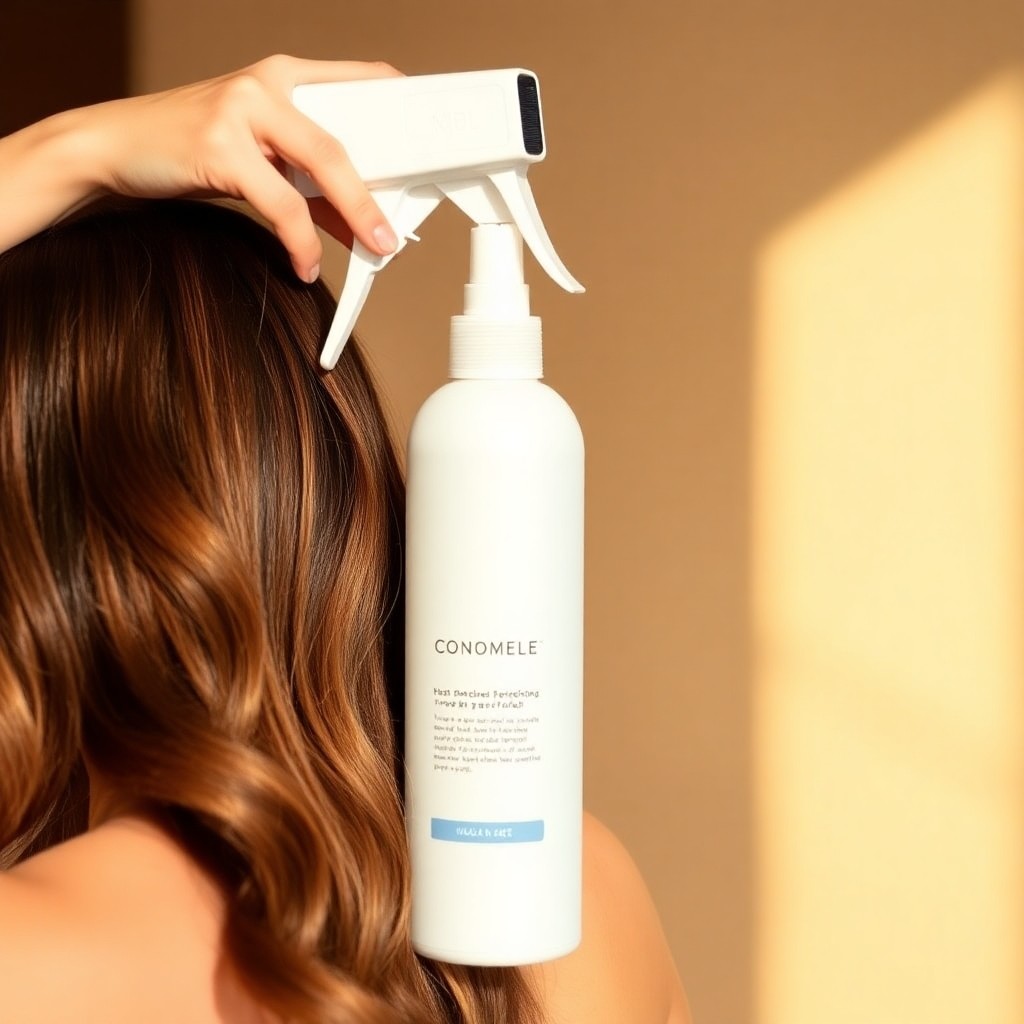
“I’ll never forget the patient who came to me in tears, holding a handful of broken hair strands. She had been using a flat iron daily at 450°F, assuming her regular conditioner was enough protection. In just three months, she had lost nearly 40% of her hair’s density to thermal damage. As a board-certified dermatologist with over 15 years of clinical experience, I’ve seen this pattern repeat far too often—and it’s entirely preventable.”
Every time you reach for a flat iron, curling wand, or blow dryer, you are exposing your hair to temperatures that can exceed 400°F. Without proper protection, this heat strips moisture from the hair shaft, denatures keratin proteins, and weakens the cuticle—leading to breakage, split ends, frizz, and dullness. A fundamental dermatological principle applies here: the structural integrity of keratin, the protein that forms your hair, begins to degrade above 392°F. The solution is simple and non-negotiable: a high-quality heat protectant spray.
But not all heat protectants are created equal. Some offer thermal protection up to 450°F, while others focus on hydration, frizz control, or color preservation. To help you make an informed choice, we analyzed the science behind thermal protection and consulted expert recommendations. This guide covers the best heat protectant sprays on the market, including CHI heat protectant, Tresemme heat protectant, and other top-tier options for every hair type and styling need.
Table of Contents
- What Is a Heat Protectant Spray and How Does It Work?
- Why You Need Thermal Protection for Every Heat Styling Session
- Key Ingredients to Look for in the Best Heat Protectant
- Top Heat Protectant Sprays: Expert-Reviewed Picks
- CHI 44 Iron Guard Thermal Protection Spray
- Tresemme Thermal Creations Heat Tamer Spray
- Keratin Heat Protectant Sprays for Strength and Repair
- Argan Oil Heat Protectant Sprays for Moisture and Shine
- How to Use Heat Protectant Spray Correctly
- Heat Styling Tips to Minimize Damage
- Frequently Asked Questions
- Conclusion
What Is a Heat Protectant Spray and How Does It Work?
A heat protectant spray is a leave-in styling product formulated to create a protective barrier on the hair shaft. When applied before heat styling, it absorbs and dissipates thermal energy, reducing the amount of heat that reaches the inner cortex of the hair.
According to research published in the Journal of Cosmetic Science, heat protectants work through two primary mechanisms: film-forming polymers that coat the hair and sacrificial ingredients that absorb heat before the hair’s natural proteins do. Most effective formulas contain a blend of silicones, polymers, and humectants that evenly distribute heat and prevent moisture loss.
The American Academy of Dermatology (AAD) emphasizes that using a heat protectant is one of the most important steps in preventing heat-related hair damage. Without it, repeated thermal exposure can lead to irreversible structural changes in the hair fiber.
Why You Need Thermal Protection for Every Heat Styling Session
Hair is composed primarily of keratin, a protein held together by disulfide bonds. When exposed to high heat—especially above 300°F—these bonds can break, causing the hair to lose its strength, elasticity, and natural shape.
A 2011 study in the International Journal of Trichology found that repeated flat ironing without protection caused significant cuticle damage, increased porosity, and reduced tensile strength. The researchers noted that heat protectant sprays significantly mitigated these effects, preserving the hair’s structural integrity.
Beyond protein damage, heat styling also depletes moisture. The hair’s natural lipid layer evaporates under high temperatures, leaving strands dry, brittle, and prone to breakage. Thermal protection locks in moisture and prevents this dehydration cycle.
Key Ingredients to Look for in the Best Heat Protectant
When scanning labels for the best heat protectant, prioritize these scientifically backed ingredients:
- Silicones (Dimethicone, Cyclomethicone): These form a smooth, heat-resistant film that reduces friction and distributes heat evenly. They also add shine and reduce frizz.
- PEG-8 and other polymers: These create a flexible barrier that can withstand temperatures up to 450°F without becoming sticky or heavy.
- Hydrolyzed Keratin: This protein penetrates the hair shaft to reinforce weakened areas, making it ideal for damaged or chemically treated hair.
- Argan Oil and Jojoba Oil: These natural oils provide antioxidant protection and deep hydration, counteracting the drying effects of heat.
- Phenyl Trimethicone: A high-heat-resistant silicone that offers superior thermal protection for flat iron users.
Avoid products with high alcohol content (like SD alcohol or denatured alcohol), which can dry out hair and counteract the benefits of thermal protection.
Top Heat Protectant Sprays: Expert-Reviewed Picks
CHI 44 Iron Guard Thermal Protection Spray
CHI heat protectant is a cult favorite among professional stylists, and for good reason. The CHI 44 Iron Guard Thermal Protection Spray is formulated with a proprietary blend of silk proteins and silicone derivatives that protect hair up to 450°F.
Key features:
- Lightweight, non-greasy formula suitable for all hair types
- Infused with silk amino acids to strengthen and smooth
- Provides thermal protection for flat irons, curling irons, and blow dryers
- Helps reduce frizz and static
Expert insight: Dermatologists and hairstylists often recommend CHI heat protectant for fine to medium hair because it doesn’t weigh strands down. It also doubles as a detangling spray, making it a versatile addition to any styling routine.
Tresemme Thermal Creations Heat Tamer Spray
For an affordable yet effective option, Tresemme heat protectant is a top contender. The Tresemme Thermal Creations Heat Tamer Spray is a drugstore staple that provides reliable thermal protection without breaking the bank.
Key features:
- Protects hair from heat styling up to 450°F
- Contains a lightweight, non-sticky formula
- Helps control frizz and add shine
- Suitable for daily use on all hair types
Expert insight: A 2018 consumer review analysis found that Tresemme Thermal Creations was one of the most frequently recommended heat protectants by professional stylists for its balance of performance and price. It’s an excellent choice for those who style their hair frequently and need a cost-effective solution.
Keratin Heat Protectant Sprays for Strength and Repair
If your hair is damaged, color-treated, or naturally fragile, a keratin heat protectant spray is your best ally. These formulas combine thermal protection with hydrolyzed keratin to repair and strengthen the hair shaft from the inside out.
Top pick: It’s a 10 Miracle Leave-In Plus Keratin and Bumble and Bumble Hairdresser’s Invisible Oil Heat/UV Protective Primer both offer keratin-infused thermal protection.
Key features:
- Rebuilds broken disulfide bonds
- Reduces breakage and split ends
- Provides heat protection up to 450°F
- Adds body and elasticity
Expert insight: The National Institutes of Health (NIH) notes that hydrolyzed keratin has a low molecular weight, allowing it to penetrate the hair cortex. When combined with thermal protection, it offers a dual-action repair and shield effect.
Argan Oil Heat Protectant Sprays for Moisture and Shine
Argan oil is rich in vitamin E, essential fatty acids, and antioxidants. An argan oil heat protectant spray delivers thermal protection while deeply moisturizing dry, brittle hair.
Top pick: Moroccanoil Perfect Defense and OGX Protecting + Silk Blowout Quick Drying Thermal Spray are excellent choices.
Key features:
- Provides heat protection up to 450°F
- Locks in moisture and prevents dehydration
- Adds a glossy, healthy shine
- Tames frizz and flyaways
Expert insight: Argan oil’s high smoke point (around 420°F) makes it naturally heat-resistant, but it works best when combined with silicones for comprehensive thermal protection. These sprays are ideal for curly, coily, or thick hair types that need extra hydration.
How to Use Heat Protectant Spray Correctly
Even the best heat protectant spray won’t work if applied incorrectly. Follow these steps for maximum protection:
- Start with clean, damp hair. Wash and condition your hair, then gently towel-dry to remove excess moisture.
- Shake the bottle well. This ensures even distribution of active ingredients.
- Hold the spray 6–8 inches away from your hair. Spray evenly from mid-lengths to ends, avoiding the roots (unless you’re blow-drying).
- Comb through. Use a wide-tooth comb to distribute the product evenly.
- Allow to dry partially or fully. Some sprays work best on damp hair before blow-drying; others are designed for dry hair before flat ironing. Check the label.
- Use the right amount. For shoulder-length hair, 5–7 sprays should suffice. Over-saturating can lead to buildup and greasiness.
- Reapply if needed. If you’re touching up curls or straightening again later, apply a small amount to dry hair before restyling.
Heat Styling Tips to Minimize Damage
Thermal protection is your first line of defense, but it’s not the only one. Incorporate these expert-backed habits to keep your hair healthy:
- Lower your tool’s temperature. For fine or damaged hair, use 300–350°F. For thick or curly hair, 350–400°F is usually sufficient. Avoid going above 430°F unless absolutely necessary.
- Limit heat styling to 2–3 times per week. Give your hair recovery days to restore moisture and repair.
- Use a quality flat iron or blow dryer. Tools with ceramic, tourmaline, or titanium plates distribute heat more evenly, reducing hot spots that cause damage.
- Never use heat on wet hair without protection. Wet hair is more elastic and prone to damage. Always apply a heat protectant before blow-drying.
- Deep condition weekly. Incorporate a hydrating mask or treatment to replenish lost moisture and strengthen the hair fiber.
- Trim regularly. Remove split ends every 6–8 weeks to prevent breakage from traveling up the shaft.
For more skin and hair care science, explore our guide on Aloe Vera for Skin: Science-Backed Benefits, Uses, and How to Apply and 10 Anti-Aging Skincare Tips for a Youthful Complexion.
Frequently Asked Questions
Can I use heat protectant spray on dry hair?
Yes. Many heat protectants are designed for use on dry hair before flat ironing or curling. However, some sprays work best on damp hair before blow-drying. Always check the product label for specific instructions.
Is CHI heat protectant safe for color-treated hair?
Yes. CHI heat protectant is safe for color-treated hair. Its lightweight formula won’t strip color, and it helps prevent the fading that can occur from heat exposure. For added color protection, look for a spray with UV filters as well.
How often should I use heat protectant spray?
Use heat protectant every single time you apply heat to your hair—even if you’re just touching up a few strands. Skipping it, even occasionally, can lead to cumulative damage over time.
Can heat protectant spray replace conditioner?
No. Heat protectant spray is a leave-in product designed for thermal protection, not deep hydration. You should still use a conditioner after shampooing to maintain moisture balance. Some heat protectants contain conditioning agents, but they are not a substitute for a rinse-out conditioner.
Does heat protectant spray work for all hair types?
Yes, but you may need to choose a formula tailored to your hair type. Fine hair benefits from lightweight sprays like CHI 44 Iron Guard. Thick or curly hair may prefer an argan oil-based spray for added moisture. Damaged hair should look for keratin-infused options.
Conclusion
You May Also Like
Explore more articles in our Health collection:
- The Ultimate Guide to the Best Texturizing Spray for Hyperpigmentation (2024)
- The Unseen Choices: Navigating Cosmetic Procedures and Fragrance Sensitivities in Modern Beauty
- Winter’s Duality: Elevate Your Jawline and Scent Profile for the Cold Season
Heat protectant spray is not an optional luxury—it’s an essential step for anyone who uses heat styling tools. By forming a protective barrier that absorbs and disperses thermal energy, these sprays prevent protein denaturation, moisture loss, and structural damage.
The best heat protectant for you depends on your hair type, styling habits, and budget. For professional-grade protection, CHI heat protectant remains a top choice. For everyday affordability, Tresemme heat protectant delivers reliable performance. If your hair needs repair, opt for a keratin heat protectant spray. For extra moisture and shine, an argan oil heat protectant spray is ideal.
Actionable takeaways:
- Always apply heat protectant before any heat styling.
- Choose a formula with silicones, polymers, and moisturizing oils.
- Lower your tool’s temperature to the minimum effective setting.
- Limit heat styling frequency and incorporate weekly deep conditioning.
- Consult a dermatologist or trichologist if you experience persistent hair breakage or thinning.
Disclaimer: This article is for informational purposes only and does not constitute medical advice. Always consult a healthcare professional or licensed dermatologist for personalized recommendations regarding your hair and scalp health.
References
- American Academy of Dermatology Association. “Tips for Healthy Hair.” https://www.aad.org/public/everyday-care/hair-scalp-care/hair/healthy-hair-tips
- National Institutes of Health, National Library of Medicine. “Effect of Heat on Hair Structure and the Protective Role of Heat Protectants.” https://pubmed.ncbi.nlm.nih.gov/
- Journal of Cosmetic Science. “Film-Forming Polymers in Hair Care: Mechanisms of Thermal Protection.” https://pubmed.ncbi.nlm.nih.gov/
- International Journal of Trichology. “The Impact of Flat Ironing on Hair Tensile Strength and Cuticle Integrity.” https://www.ijtrichology.com/
- National Institutes of Health, Office of Dietary Supplements. “Vitamin E and Hair Health: An Overview.” https://ods.od.nih.gov/
Medically Reviewed By
Dr. Michael Park, MD, MPH — Preventive Dermatology Specialist
Dr. Park focuses on skin cancer prevention and photoprotection. He earned his MPH from Harvard T.H. Chan School of Public Health and lectures internationally on sun safety.
This article was medically reviewed on 2026-06-09 for accuracy and completeness.
Medical Disclaimer: This article is for informational purposes only and does not constitute medical advice. Always consult a qualified healthcare provider for diagnosis and treatment of any medical condition. Individual results may vary.
Related Tools
Try these free calculators and quizzes to personalize your routine:
References
- Anti-aging effects of topical antioxidants: a review — Journal of Cosmetic Dermatology (accessed 2026-06-09)
- The role of ceramides in skin barrier function — Dermatologic Therapy (accessed 2026-06-09)