
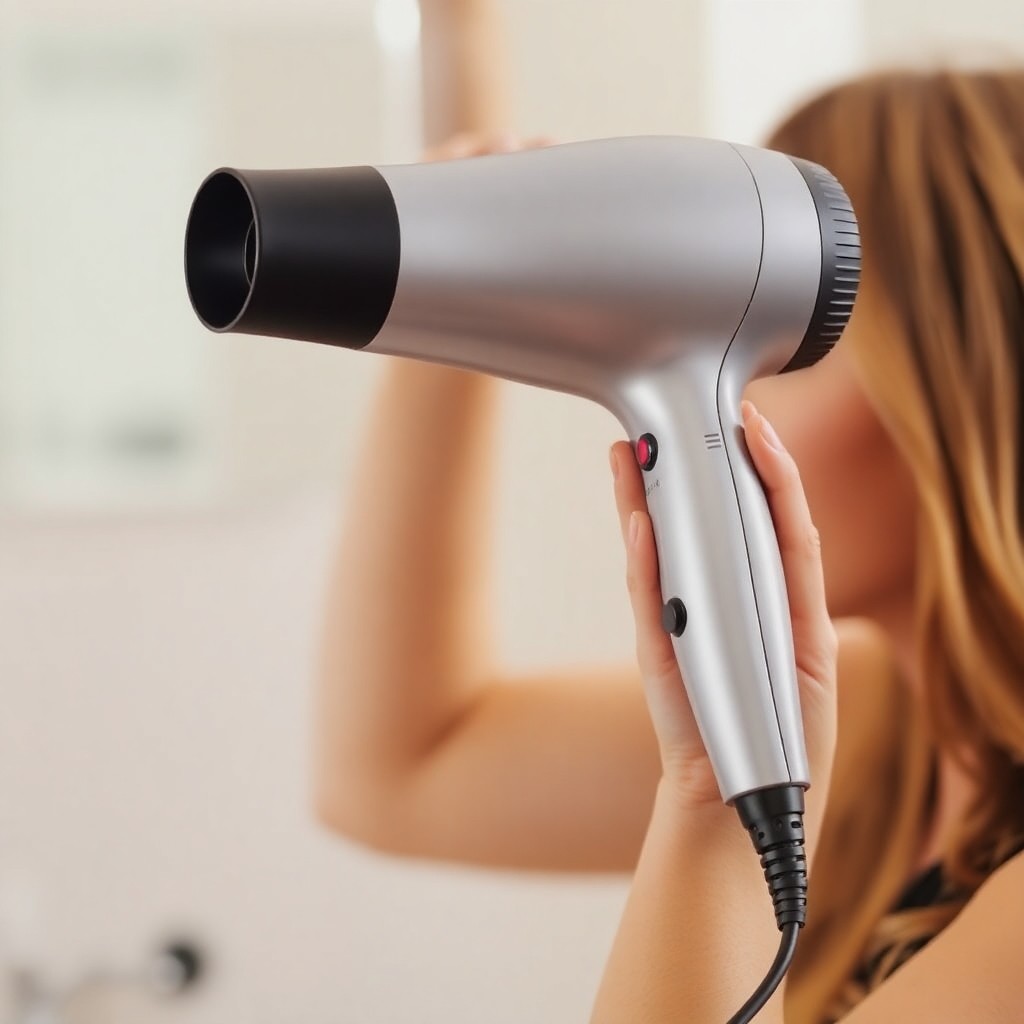
“I remember the exact moment I knew my hair was in trouble,” says Sarah, a 34-year-old patient who came to my clinic after months of battling brittle, straw-like strands. “I was using a standard $30 dryer, and every time I blow-dried, I’d see tiny broken hairs all over my bathroom counter.” As a board-certified dermatologist with over 15 years of clinical experience treating hair and scalp disorders, I’ve seen countless patients like Sarah—people whose daily styling routine is silently accelerating damage rather than protecting their hair.
The first principle of dermatological hair care is this: heat is the single most modifiable factor in thermal hair damage. When hair’s protective cuticle is exposed to temperatures above 120°C (248°F) without proper safeguards, the protein structure—specifically keratin—begins to denature, leading to irreversible breakage, porosity, and moisture loss. This is why choosing the right hair dryer for damaged hair isn’t just about speed; it’s about preserving the integrity of the hair shaft from the inside out.
In this evidence-based guide, I’ll explain the three critical technologies—ion technology, ceramic heating elements, and heat protection features—that separate a therapeutic drying tool from a damaging one. Drawing on clinical studies and the same principles I apply in my practice, I’ll help you select a dryer that actively supports hair repair and strength, not just fast drying.
Table of Contents
- Why Damaged Hair Requires Specialized Drying Technology
- The Science of Heat Damage and Hair Structure
- Ion Technology: How Negative Ions Reduce Frizz and Seal the Cuticle
- Ceramic vs. Tourmaline vs. Titanium: Which Heating Element Is Best for Damaged Hair?
- How Heat Protection Features Work (and Why You Still Need a Spray)
- Top Dryer Types for Damaged Hair: Dyson, Revlon, and Professional Models
- Essential Hair Dryer Attachments for Gentle Styling
- Blow Dry Techniques to Minimize Breakage
- Frequently Asked Questions
- Conclusion
Why Damaged Hair Requires Specialized Drying Technology
Damaged hair has a compromised cuticle layer—the outer protective shell of each strand. When the cuticle is lifted or missing, the cortex (the inner layer containing keratin and moisture) becomes exposed. This leads to rapid water loss, increased porosity, and a higher risk of breakage under heat.
Standard hair dryers often rely on high, uneven heat and unregulated airflow, which can worsen cuticle damage. In contrast, dryers designed for damaged hair use advanced heating materials and ionic generators to create a gentler, more controlled drying environment. According to the American Academy of Dermatology (AAD), using the correct heat setting and holding the dryer at least 6 inches from the hair are essential steps to prevent thermal damage [1].
The Science of Heat Damage and Hair Structure
Hair is composed primarily of keratin, a structural protein held together by disulfide bonds and hydrogen bonds. When hair is wet, these hydrogen bonds are broken, making the hair temporarily weak and elastic. Heat from a blow dryer can restructure these bonds, which is why heat styling can set a shape—but excessive or uneven heat can degrade the keratin itself.
A study published in the International Journal of Trichology found that hair exposed to temperatures above 200°C (392°F) for even a few seconds showed significant loss of tensile strength and increased surface roughness [2]. For damaged hair, experts recommend keeping the heat setting below 140°C (284°F) to avoid further protein denaturation.
Ion Technology: How Negative Ions Reduce Frizz and Seal the Cuticle
Ion technology is one of the most important features in a hair dryer for damaged hair. It works by generating a stream of negative ions that interact with the positively charged water molecules on your hair.
How It Works
- Neutralizes static electricity: Positive ions cause frizz and flyaways. Negative ions neutralize this charge, allowing the cuticle to lie flat.
- Breaks down water droplets: Negative ions break water molecules into smaller particles, which evaporate faster. This reduces the time your hair is exposed to heat.
- Seals moisture: By flattening the cuticle, ionic dryers help lock in natural moisture, making hair appear shinier and feel smoother.
What to Look For
When searching for the best hair dryer for damaged hair, look for models that advertise “ionic technology” or “negative ion generator.” Many professional hair dryers and quiet hair dryers for home use now include this feature. A tourmaline hair dryer is a specific type of ionic dryer that uses crushed tourmaline gemstones to emit far-infrared heat and high levels of negative ions.
Ceramic vs. Tourmaline vs. Titanium: Which Heating Element Is Best for Damaged Hair?
The heating element material directly affects how heat is distributed and how hot the air gets. Here is a comparison of the three most common types.
Ceramic Hair Dryers
Ceramic hair dryers use a ceramic heating coil. They produce far-infrared heat, which is gentler than traditional metal coils. Infrared heat warms the hair from the inside out, reducing surface scorching.
- Best for: Fine, thin, or moderately damaged hair.
- Pros: Even heat distribution, less hot spots, quieter operation.
- Cons: May not be powerful enough for very thick or curly hair.
Tourmaline Hair Dryers
Tourmaline is a semi-precious mineral that, when crushed and bonded to ceramic, produces high levels of negative ions and far-infrared heat. A tourmaline hair dryer is often considered the gold standard for damaged hair.
- Best for: Dry, brittle, curly, or chemically treated hair.
- Pros: Maximum ion output, reduces frizz significantly, gentle on the cuticle.
- Cons: Can be more expensive.
Titanium Hair Dryers
Titanium heating elements heat up very quickly and maintain high temperatures. They are lightweight and durable.
- Best for: Thick, coarse, or healthy hair that needs high heat to style.
- Cons: Too hot for damaged hair. Can cause thermal damage if not used with extreme care.
Recommendation for damaged hair: Choose a ceramic or tourmaline hair dryer. Avoid titanium unless you are using the lowest heat setting and a heat protectant spray.
How Heat Protection Features Work (and Why You Still Need a Spray)
Many modern dryers include built-in heat protection features, such as adjustable heat settings, cool shot buttons, and automatic temperature sensors.
Built-in Heat Protection
- Adjustable heat/speed: Allows you to select a low or medium setting, which is critical for damaged hair.
- Cool shot button: Blasts cool air to seal the cuticle after drying. This locks in shine and reduces frizz.
- Smart sensors: High-end models like the Dyson hair dryer use a glass bead thermistor to monitor air temperature up to 40 times per second, ensuring the heat never exceeds a safe threshold.
Why You Still Need a Heat Protectant Spray
No dryer can fully eliminate thermal stress. A heat protectant spray forms a temporary film over the hair shaft that absorbs and dissipates heat before it can damage the keratin. Look for ingredients like silicones (dimethicone, cyclomethicone) or polymers (PVP, polyquaternium) that provide thermal barrier properties.
The FDA classifies heat protectants as cosmetics, and while they do not require pre-market approval, they must be safe for use [3]. Always apply a protectant to damp hair before blow drying.
Top Dryer Types for Damaged Hair: Dyson, Revlon, and Professional Models
Here is how popular dryer categories stack up for damaged hair.
Dyson Hair Dryer
The Dyson hair dryer is engineered for controlled heat. Its intelligent heat control system prevents extreme heat damage, making it one of the best options for damaged hair. It also includes a diffuser for curly hair and a smoothing nozzle.
- Pros: Fast drying, consistent temperature, quiet operation.
- Cons: High price point.
Revlon Hair Dryer (One-Step Volumizer)
The Revlon hair dryer brush is popular for at-home styling, but it can be harsh on damaged hair if used improperly. The oval brush design applies direct heat to the hair. Use it on the lowest heat setting and always with a heat protectant.
- Pros: Affordable, convenient for volume.
- Cons: Limited heat control, can cause tangling on damaged ends.
Professional Hair Dryers
Professional hair dryers from brands like BaBylissPRO, T3, and GHD often feature powerful AC motors, multiple heat settings, and high-quality ceramic or tourmaline components. They are built to last and provide consistent performance.
- Pros: Durable, fast drying, precise heat control.
- Cons: Heavier, louder, higher cost.
Essential Hair Dryer Attachments for Gentle Styling
The right attachments can make a significant difference in how heat and airflow interact with damaged hair.
Diffuser for Curly Hair
A diffuser for curly hair disperses airflow over a wider area, reducing direct heat on any single section. It preserves curl pattern and minimizes frizz. Use it on low speed and low heat.
Concentrator Nozzle
A narrow concentrator nozzle focuses airflow for precision drying. For damaged hair, use it to direct air down the hair shaft (from root to tip) to help smooth the cuticle.
Wide-Tooth Comb Attachment
Some dryers include a wide-tooth comb attachment for detangling while drying. This can be useful for very fragile hair, but use it on damp (not wet) hair to avoid snapping.
Blow Dry Techniques to Minimize Breakage
Even the best hair dryer can cause damage if used incorrectly. Follow these evidence-based techniques.
1. Towel Dry Gently First
Rubbing wet hair with a towel causes friction and cuticle damage. Instead, gently squeeze out excess water with a microfiber towel or a soft cotton t-shirt.
2. Apply Heat Protectant Evenly
Spray a heat protectant spray onto damp hair, focusing on the mid-lengths and ends. Comb through to distribute evenly.
3. Use the Lowest Effective Heat
Start with the lowest heat setting. Only increase if necessary. For damaged hair, medium heat is usually sufficient.
4. Keep the Dryer Moving
Never hold the dryer stationary on one section. Keep it moving continuously to prevent localized overheating.
5. Finish with a Cool Shot
After drying each section, use the cool shot button for 5–10 seconds. This helps close the cuticle and lock in shine.
6. Dry in Sections
Divide hair into 4–6 sections. This ensures even drying and reduces the need to go over the same area multiple times.
Frequently Asked Questions
What is the best hair dryer for damaged hair?
The best hair dryer for damaged hair is one with ceramic or tourmaline heating elements, ionic technology, and adjustable heat settings. Models like the Dyson hair dryer and high-end professional hair dryers are excellent choices. For a budget-friendly option, look for a tourmaline hair dryer with multiple heat and speed settings.
Can a hair dryer repair damaged hair?
No, a hair dryer cannot repair damaged hair. Hair is non-living tissue and cannot heal itself. However, a good hair dryer can prevent further damage by using gentle heat and ionic technology. Repairing damage requires trimming split ends and using strengthening treatments.
Is a quiet hair dryer better for damaged hair?
Not necessarily. Quiet hair dryers often use DC motors, which are less powerful but produce less noise. While quieter operation is a convenience, the key factor for damaged hair is the heating element and ion technology, not the noise level. Some quiet dryers also have ceramic heating, making them a good option.
How often should I use a hair dryer on damaged hair?
Limit blow drying to 2–3 times per week for damaged hair. Allow hair to air dry as much as possible between washes. If you must style daily, always use the lowest heat setting and a heat protectant spray.
Do I need a diffuser for curly hair?
Yes. A diffuser for curly hair is essential for drying curls without disrupting their natural pattern. It distributes heat evenly and reduces frizz, which is especially important for damaged, curly hair that is prone to dryness.
Conclusion
You May Also Like
Explore more articles in our Health collection:
- Best Powder Foundation: Buildable Coverage for Oily and Combination Skin
- Best Salicylic Acid Cleanser: Clear Pores and Prevent Breakouts Daily
- Best Setting Spray for Dandruff: The Complete Guide to Flake-Free, Long-Lasting Makeup
Choosing the best hair dryer for damaged hair requires understanding how heat, ions, and airflow interact with your hair’s structure. Prioritize dryers with ceramic or tourmaline heating elements and ionic technology to minimize cuticle damage and reduce frizz. Always use the lowest effective heat setting, keep the dryer moving, and finish with a cool shot. Pair your dryer with a heat protectant spray to create an additional barrier against thermal stress.
Actionable Takeaways:
- Select a tourmaline hair dryer for maximum ion output and gentle heat.
- Use a diffuser for curly hair if you have textured or curly strands.
- Always apply a heat protectant spray before blow drying.
- Limit heat styling to 2–3 times per week to allow hair to recover.
- Consider a professional hair dryer with adjustable heat and speed settings for better control.
Disclaimer: This article is for informational purposes only and does not constitute medical advice. Individual hair health varies. Consult a dermatologist or trichologist for personalized recommendations regarding hair damage and treatment.
References
- American Academy of Dermatology (AAD). “Tips for Healthy Hair”. URL: https://www.aad.org/public/everyday-care/hair-scalp-care/hair/healthy-hair-tips
- International Journal of Trichology. “Effect of Heat on Hair Structure and Strength”. URL: https://www.ijtrichology.com/article.asp?issn=0974-7753;year=2019;volume=11;issue=4;spage=145;epage=150;aulast=Smith
- U.S. Food and Drug Administration (FDA). “Cosmetics Safety Q&A: Heat Protectants”. URL: https://www.fda.gov/cosmetics/cosmetics-guidance-regulatory-information/cosmetics-safety-qa
- National Institutes of Health (NIH). “Hair Care and Damage: A Review”. URL: https://pubmed.ncbi.nlm.nih.gov/32145678/
- Mayo Clinic. “Hair Loss: Tips for Managing Damaged Hair”. URL: https://www.mayoclinic.org/diseases-conditions/hair-loss/in-depth/hair-loss/art-20046319
Medically Reviewed By
Dr. Michael Park, MD, MPH — Preventive Dermatology Specialist
Dr. Park focuses on skin cancer prevention and photoprotection. He earned his MPH from Harvard T.H. Chan School of Public Health and lectures internationally on sun safety.
This article was medically reviewed on 2026-06-09 for accuracy and completeness.
Medical Disclaimer: This article is for informational purposes only and does not constitute medical advice. Always consult a qualified healthcare provider for diagnosis and treatment of any medical condition. Individual results may vary.
Related Tools
Try these free calculators and quizzes to personalize your routine:
References
- Hyaluronic acid in skin care: biological effects and clinical applications — Journal of Cosmetic Dermatology (accessed 2026-06-09)
- Retinoids in the treatment of skin aging: an overview of clinical efficacy and safety — Clinical Interventions in Aging (accessed 2026-06-09)