
Advertisement
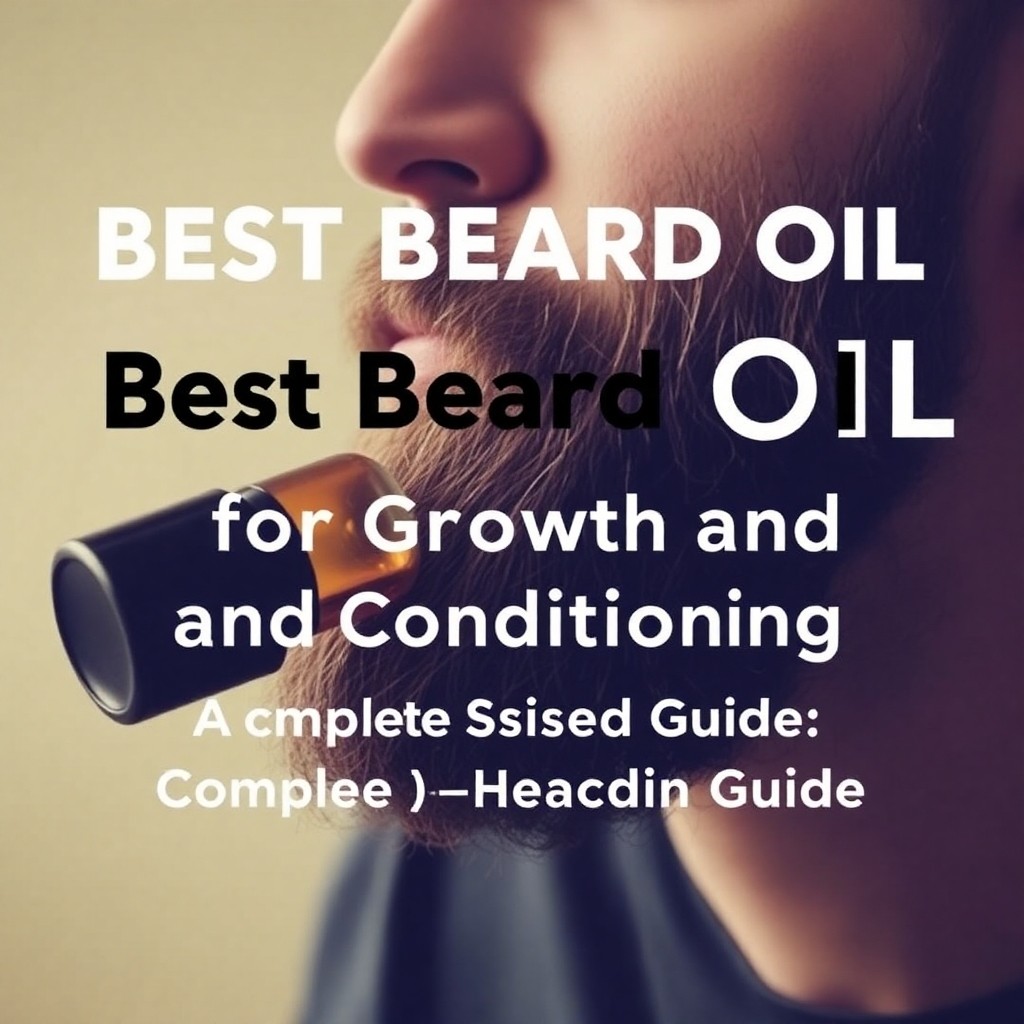
Finding the "best beard oil" can feel like navigating a jungle of marketing claims, all promising a thicker, softer, and faster-growing beard. While genetics largely dictate your beard’s maximum potential, the right beard care routine—specifically the use of a high-quality beard growth oil—plays a critical role in optimizing the environment for hair health, preventing breakage, and soothing the skin underneath.
This science-based guide cuts through the hype. We will analyze the key ingredients like jojoba oil, argan oil, and castor oil, explain how they work on a cellular level, and provide a clear framework for choosing the best beard oil for your specific needs—whether that’s growth, conditioning, or relief from beard itch.
## Table of Contents
- [The Science of Beard Growth: Why Oil Matters](#the-science-of-beard-growth-why-oil-matters)
- [Key Ingredients in the Best Beard Oil](#key-ingredients-in-the-best-beard-oil)
- [Jojoba Oil: The Closest Match to Sebum](#jojoba-oil-the-closest-match-to-sebum)
- [Argan Oil: Deep Hydration and Softness](#argan-oil-deep-hydration-and-softness)
- [Castor Oil: The Growth Promoter?](#castor-oil-the-growth-promoter)
- [Beard Oil vs. Beard Balm: When to Use Each](#beard-oil-vs-beard-balm-when-to-use-each)
- [How to Build a Science-Backed Beard Care Routine](#how-to-build-a-science-backed-beard-care-routine)
- [Addressing Common Concerns: Patchy Beard and Beard Itch](#addressing-common-concerns-patchy-beard-and-beard-itch)
- [Frequently Asked Questions](#frequently-asked-questions)
- [Conclusion](#conclusion)
- [References](#references)
## The Science of Beard Growth: Why Oil Matters
To understand why the best beard oil is more than a luxury, you must first understand the biology of facial hair. Each hair follicle is connected to a sebaceous gland that produces sebum—a natural oil that moisturizes both the hair shaft and the underlying skin.
However, beard hair is often coarser and curlier than scalp hair. This geometry makes it difficult for natural sebum to travel down the entire length of the hair shaft. The result? Dry, brittle ends and a dry, flaky skin surface underneath—a primary cause of beard itch and dandruff (also known as "beardruff").
A study published in the *Journal of Cosmetic Science* highlights that maintaining optimal hydration of the stratum corneum (the outermost skin layer) is essential for reducing inflammation and supporting healthy hair follicle function [1]. A beard oil mimics and supplements your natural sebum, creating a balanced environment that reduces irritation and prevents breakage, allowing your beard to grow to its full genetic potential without being prematurely shed.
## Key Ingredients in the Best Beard Oil
Not all oils are created equal. The best beard oil formulations rely on a blend of carrier oils with specific molecular structures that penetrate the hair shaft and skin.
### Jojoba Oil: The Closest Match to Sebum
Jojoba oil is not technically an oil; it is a liquid wax ester. Its chemical structure is remarkably similar to human sebum. According to a review in the *International Journal of Molecular Sciences*, this similarity allows jojoba oil to mimic the skin’s natural barrier function, providing deep hydration without clogging pores [2].
For beard care, this means:
- **Non-comedogenic:** It won't cause acne on the skin beneath your beard.
- **Regulates oil production:** It can signal to your skin that enough moisture is present, potentially reducing excess sebum production.
- **Penetrates deeply:** Unlike heavier oils that sit on top, jojoba sinks into the hair shaft.
### Argan Oil: Deep Hydration and Softness
Argan oil, derived from the kernels of the Moroccan argan tree, is rich in vitamin E, essential fatty acids (oleic and linoleic acid), and antioxidants. These components are critical for a beard softener.
- **Vitamin E:** A potent antioxidant that protects hair follicles from oxidative stress caused by UV rays and pollution. The NIH Office of Dietary Supplements notes that vitamin E is essential for skin health and may help reduce inflammation [3].
- **Linoleic Acid:** An omega-6 fatty acid that helps maintain the skin's moisture barrier.
- **Effect:** Argan oil is excellent for taming frizz, adding shine, and making coarse beard hair feel significantly softer.
### Castor Oil: The Growth Promoter?
Castor oil is often touted as a beard growth oil. The primary active compound is ricinoleic acid, a monounsaturated fatty acid with anti-inflammatory properties. The theory behind its use for Nature's Bounty Biotin 10,000mcg is that its anti-inflammatory effects can improve circulation to the scalp or skin, potentially creating a healthier environment for follicles.
However, it is crucial to manage expectations. While anecdotal evidence is strong, a 2021 systematic review in *Dermatology and Therapy* found that while ricinoleic acid shows promise in laboratory studies, there is limited high-quality clinical evidence proving that castor oil directly stimulates new hair growth in humans [4]. It is best used as a supportive ingredient to reduce inflammation and prevent breakage, rather than a miracle growth serum.
## Beard Oil vs. Beard Balm: When to Use Each
A common point of confusion is the difference between beard oil and beard balm. Both are essential for a complete beard care routine, but they serve different purposes.
| Feature | Beard Oil | Beard Balm |
| :--- | :--- | :--- |
| **Primary Function** | Moisturize skin and hair shaft | Moisturize + Hold and Style |
| **Base Ingredients** | Carrier oils (jojoba, argan) + essential oils | Oils + Butters (shea, cocoa) + Wax (beeswax) |
| **Best For** | Daily hydration, beard itch relief, short to medium beards | Styling, flyaway control, longer beards |
| **Application** | Applied to skin and hair after showering | Applied after oil for hold and shaping |
**When to use beard oil:** Every day, immediately after washing your face or showering. The warm water opens pores, allowing the oil to absorb. This is your primary tool for beard softener and itch relief.
**When to use beard balm:** After the oil has absorbed, especially on longer beards (2+ inches). The balm seals in moisture and provides a light to medium hold. If you have a short beard or stubble, oil is usually sufficient.
## How to Build a Science-Backed Beard Care Routine
Consistency is the key to seeing results. Here is a simple, effective routine based on dermatological principles.
1. **Cleanse (2-3 times per week):** Do not use harsh bar soap or shampoo. They strip natural oils. Use a dedicated beard wash or a gentle, sulfate-free cleanser.
2. **Towel Dry (Gently):** Pat your beard with a towel. Do not rub vigorously, as this causes friction and breakage.
3. **Apply Beard Oil (Daily):** While the beard is still slightly damp (this helps lock in moisture), place 3-5 drops of oil in your palm. Rub your hands together, then work the oil into your skin first, then through the hair. This ensures the skin—the source of itch—gets the moisture it needs.
4. **Comb or Brush:** Use a boar bristle brush or a wide-tooth wooden comb. This helps distribute the oil evenly and exfoliates dead skin cells.
5. **Apply Beard Balm (Optional):** For longer beards, apply a pea-sized amount of balm after the oil has absorbed. Style as desired.
## Addressing Common Concerns: Patchy Beard and Beard Itch
**Patchy Beard Solution:** No oil can create new hair follicles where none exist. However, a patchy beard often looks worse because of breakage and poor contrast. Using the best beard oil (rich in jojoba and argan) makes existing hairs healthier, thicker, and darker, visually filling in sparse areas. It also prevents split ends, which can make a beard look thin.
**Beard Itch Relief:** Beard itch is primarily caused by dry skin and ingrown hairs. A study in the *Journal of the American Academy of Dermatology* confirms that dry skin leads to a compromised skin barrier, which triggers inflammation and itching [5]. A beard oil hydrates the skin, reduces friction, and softens the hair, preventing the sharp, curly ends from poking back into the skin (pseudofolliculitis barbae).
## Frequently Asked Questions
### Can beard oil actually make my beard grow faster?
The best beard oil cannot change your genetics or the rate at which your hair follicles produce hair. However, it can help your beard *appear* to grow faster and thicker by preventing breakage, reducing split ends, and keeping the hair shaft well-moisturized. A healthy, unbroken hair will grow longer than a brittle one that snaps off.
### How often should I apply beard oil?
For most men, applying beard oil once per day is sufficient. Apply it after a shower when your pores are open and your skin is clean. If you live in a very dry or cold climate, you may benefit from a second application later in the day.
### Can I use beard oil on a very short beard or stubble?
Absolutely. In fact, this is the best time to start. Applying beard oil to stubble conditions the skin underneath, which is critical for preventing beard itch and ingrown hairs as the hair grows longer. It also softens the stubble, making it less prickly.
### Is there a difference between beard oil and regular hair oil?
Yes. Beard oil is specifically formulated for the skin under the beard and the coarser texture of facial hair. It is usually lighter than hair oils to avoid clogging facial pores (which are more sensitive than scalp pores). Jojoba oil is a staple in beard oils for this exact reason.
### Will beard oil make my skin break out?
A high-quality, non-comedogenic beard oil (like one based on jojoba or grapeseed oil) should not cause acne. However, if you are prone to breakouts, avoid oils with heavy base oils like coconut oil. Always apply the oil to clean skin, and wash your beard brush or comb weekly to prevent bacterial buildup.
## Conclusion
Finding the best beard oil for growth and conditioning is not about finding a magic potion. It is about choosing a science-backed formulation that supports your skin’s natural barrier and strengthens your hair. Look for products where **jojoba oil** and **argan oil** are listed as primary ingredients for their proven moisturizing and protective properties. Use **castor oil** for its anti-inflammatory benefits, but do not expect it to create new hair growth.
**Actionable Takeaways:**
- **Start early:** Apply beard oil even on stubble to prevent itch.
- **Prioritize ingredients:** Choose oils that mimic your skin’s natural sebum (jojoba).
- **Be consistent:** Daily application after washing is more important than the brand.
- **Manage expectations:** Oil prevents breakage and dryness; it does not change genetics.
By treating the skin beneath your beard with the same care you would your face, you create the optimal environment for a healthy, full, and comfortable beard.
**Disclaimer:** This article is for informational purposes only and does not constitute medical advice. Always consult with a dermatologist or healthcare professional before starting a new grooming routine, especially if you have underlying skin conditions like eczema, psoriasis, or severe acne.
## References
1. Journal of Cosmetic Science. "The Role of Moisturizers in Addressing Dry Skin and Barrier Function." *J Cosmet Sci*. URL: https://www.journalofcosmeticscience.com
2. International Journal of Molecular Sciences. "Jojoba Oil: A Review of Its Chemical Composition and Biological Activities." *Int J Mol Sci*. URL: https://www.mdpi.com/journal/ijms
3. NIH Office of Dietary Supplements. "Vitamin E: Fact Sheet for Health Professionals." URL: https://ods.od.nih.gov/factsheets/VitaminE-HealthProfessional/
4. Dermatology and Therapy. "A Systematic Review of Natural Products for Hair Growth." *Dermatol Ther (Heidelb)*. URL: https://link.springer.com/journal/13555
5. Journal of the American Academy of Dermatology. "Dry Skin and the Compromised Skin Barrier: Pathophysiology and Treatment." *J Am Acad Dermatol*. URL: https://www.jaad.org/
Advertisement
References
- Journal of Cosmetic Science. "The Role of Moisturizers in Addressing Dry Skin and Barrier Function." *J Cosmet Sci*. URL: — Medical Source (accessed 2026-06-08)
- International Journal of Molecular Sciences. "Jojoba Oil: A Review of Its Chemical Composition and Biological Activities." *Int J Mol Sci*. URL: — Medical Source (accessed 2026-06-08)
- NIH Office of Dietary Supplements. "Vitamin E: Fact Sheet for Health Professionals." URL: — NIH Office of Dietary Supplements (accessed 2026-06-08)
- Dermatology and Therapy. "A Systematic Review of Natural Products for Hair Growth." *Dermatol Ther (Heidelb)*. URL: — Medical Source (accessed 2026-06-08)
- Journal of the American Academy of Dermatology. "Dry Skin and the Compromised Skin Barrier: Pathophysiology and Treatment." *J Am Acad Dermatol*. URL: — Medical Source (accessed 2026-06-08)
Medical Disclaimer: The information on HealthBeautify is for educational purposes only and is not intended as a substitute for professional medical advice, diagnosis, or treatment. Always seek the advice of your physician or other qualified health provider with any questions you may have regarding a medical condition.