Best Nail File: Shape Nails Without Damage or Splitting

“I used to think any nail file would do,” Sarah, a 42-year-old patient, told me in my clinic last month, holding out her hands. Her nails were paper-thin, peeling in layers, with ragged edges that snagged on everything. “I just grabbed whatever was at the drugstore.” After six years of treating patients with brittle, splitting nails, I’ve seen this story countless times. The truth is, choosing the right nail file is one of the most overlooked steps in nail care—yet it directly determines whether your nails remain strong, flexible, and free from damage.
A foundational principle in dermatology is that the nail plate is composed of layered keratin, much like the skin’s stratum corneum. When you use a coarse or abrasive file, you create microscopic cracks that propagate through these layers, weakening the nail’s structural integrity over time. This is why the American Academy of Dermatology recommends using a fine-grit file (240 grit or higher) and filing in one direction only—not a back-and-forth sawing motion—to minimize trauma.
This guide reviews the best nail file options based on grit, material, and nail type, so you can shape your nails without causing damage or splitting. Whether you have brittle, weak nails like Sarah’s or strong, healthy ones, the right file makes all the difference.
Table of Contents
- What Makes a Nail File “Best” for Your Nails?
- Understanding Grit: The Key to Damage-Free Filing
- Types of Nail Files and Their Best Uses
- Glass Nail Files (Crystal Nail Files)
- Emery Boards
- Metal Nail Files
- Fine Grit Nail Files
- Professional Nail Files
- Nail File Shapes and Their Purposes
- Nail Filing Technique: How to File Without Damage
- Best Nail File for Weak, Brittle, or Splitting Nails
- Travel Nail Files: Portable Protection for Your Nails
- Reusable Nail Files: Sustainability and Hygiene
- Frequently Asked Questions
- Conclusion
- References
What Makes a Nail File “Best” for Your Nails?
!What Makes a Nail File “Best” for Your Nails?
A truly “best nail file” does more than shape—it preserves the integrity of the keratin layers that make up your nail plate. According to the American Academy of Dermatology (AAD), improper filing is a leading cause of nail splitting and peeling. The ideal file should:
- Have a fine or extra-fine grit (240–400+)
- Seal the nail edge rather than tear it
- Be gentle enough for natural nails, especially if they are thin or brittle
- Be easy to clean and reuse without losing abrasiveness
- Allow precise control over shape and length
When evaluating any nail file, consider the material, grit number, and whether it is designed for natural nails or artificial enhancements. The wrong combination can cause irreversible damage, including onychoschizia (horizontal splitting of the nail plate) [1].
Understanding Grit: The Key to Damage-Free Filing
!Understanding Grit: The Key to Damage-Free Filing
Grit refers to the coarseness of the abrasive surface. The higher the number, the finer the grit. For natural nails, coarser grits (80–100) are only suitable for acrylics or gel extensions. For your natural nail plate, always choose a file with at least 180 grit for shaping and 240–400+ grit for smoothing and sealing.
Grit Guide for Natural Nails:| Grit Range | Use Case | Risk Level |
|------------|----------|------------|
| 80–100 | Artificial nails only | High for natural nails |
| 150–180 | Shaping thicker natural nails | Moderate |
| 240–320 | Shaping and smoothing | Low |
| 400–600 | Buffing and sealing edges | Very low |
| 1000+ | Polishing and shine | Minimal |
Using a grit below 180 on natural nails creates rough edges that catch on fabrics and lead to peeling. A fine grit nail file (240+) gently abrades the keratin, creating a smooth, sealed edge that resists splitting [2].
Types of Nail Files and Their Best Uses
Glass Nail Files (Crystal Nail Files)
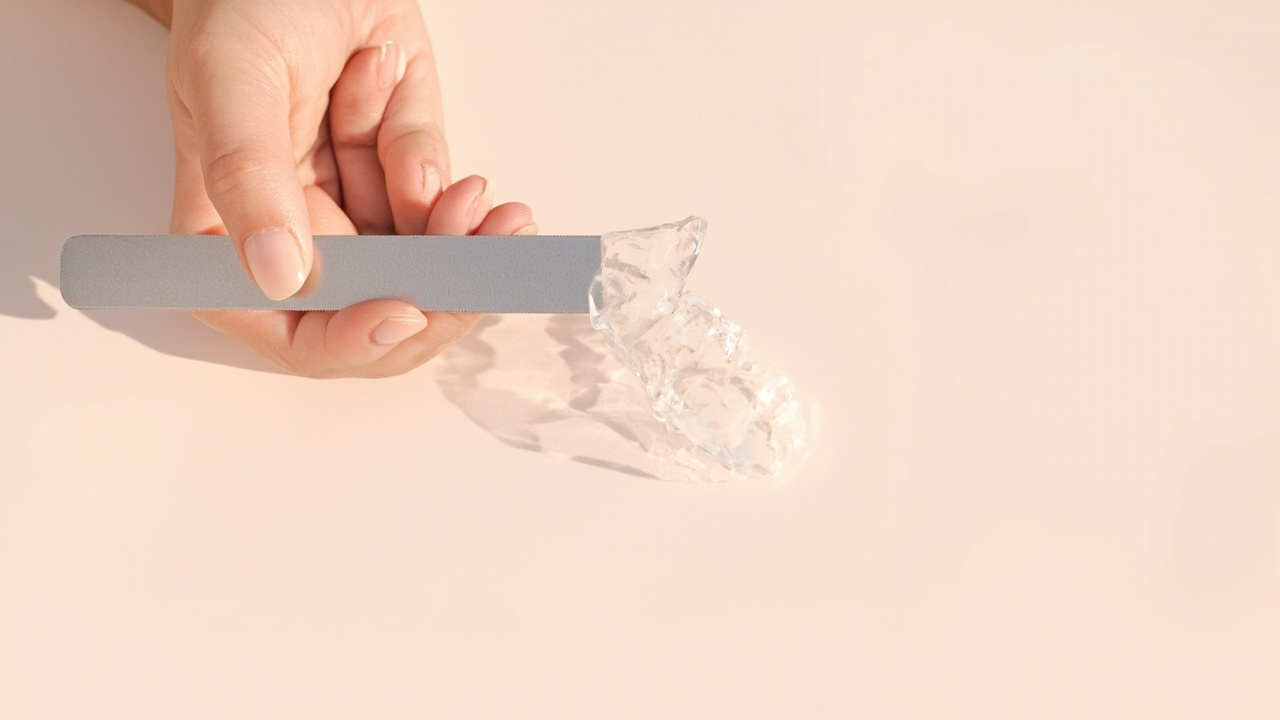
Glass nail files, often called crystal nail files, are made from tempered glass etched with a fine grit. They are widely considered the best nail file for natural nails because they create a micro-smooth seal on the nail edge.
Advantages:- Extremely fine grit (usually 240–400)
- Does not wear down over time
- Non-porous and easy to sanitize
- Gentle on weak or splitting nails
- More expensive than emery boards
- Can break if dropped on a hard surface
A 2020 review of nail care tools in the Journal of Cosmetic Dermatology noted that glass files produce less friction and heat than metal files, reducing the risk of delamination [3]. For anyone with brittle or peeling nails, a glass nail file is the most damage-free option.
Emery Boards
Emery boards are the classic nail file—a cardboard base coated with abrasive material. They are inexpensive and widely available, but quality varies dramatically.
When to use: Emery boards with a grit of 180–240 are acceptable for shaping thicker natural nails. However, they lose abrasiveness quickly and can harbor bacteria if not replaced regularly. Limitations:- Coarse emery boards (under 180 grit) can tear the nail edge
- Not reusable—must be discarded after a few uses
- Can cause roughness if used in a sawing motion
For occasional use, a fine-grit emery board is acceptable, but for regular maintenance, a glass or ceramic file is superior.
Metal Nail Files
Metal nail files are common in drugstores but are the least recommended for natural nails. The coarse, etched metal surface creates a rough, jagged edge that promotes splitting and peeling.
Why avoid metal files:- Grit is too coarse for natural nails (often equivalent to 80–100)
- Creates micro-fractures in the nail plate
- Cannot be effectively sanitized between uses
According to dermatologists at the Mayo Clinic, metal files should only be used for artificial nails or calluses, never on the natural nail plate [4].
Fine Grit Nail Files
A fine grit nail file refers to any file with a grit of 240 or higher. These are designed specifically for natural nails and are essential for anyone prone to splitting.
Best applications:- Shaping weak or thin nails
- Smoothing edges after using a coarser file
- Preparing nails for polish or gel
Fine grit files are available in glass, ceramic, and high-quality emery board forms. For maximum safety, choose a file labeled “extra-fine” or “400 grit.”
Professional Nail Files
Professional nail files are typically made from high-quality materials like ceramic, glass, or cushioned emery with multiple grit zones. They are designed for frequent use and precise shaping.
Features to look for:- Multiple grit sides (e.g., 180 on one side, 240 on the other)
- Ergonomic shape for control
- Durable construction that resists wear
A professional nail file often costs more upfront but lasts significantly longer than disposable alternatives. Many salon professionals prefer glass or ceramic files for their consistency and hygiene.
Nail File Shapes and Their Purposes
The shape of a nail file influences how easily you can shape your nails, especially around the cuticle area.
| Shape | Best For |
|-------|----------|
| Straight/Flat | General shaping and shortening |
| Curved (Crescent) | Following the natural nail curve |
| Tapered (Pointed) | Reaching under the nail and cleaning edges |
| Double-sided | Combining coarse and fine grit in one tool |
For most people, a straight or slightly curved glass nail file is the most versatile option. Tapered files are helpful for detailed work but require careful handling to avoid nicking the skin.
Nail Filing Technique: How to File Without Damage
Even the best nail file can cause damage if used incorrectly. Follow these steps to protect your nails:
A 2018 study in Dermatology Practical & Conceptual found that proper filing technique significantly reduced the incidence of onychoschizia compared to improper sawing motions [5].
Best Nail File for Weak, Brittle, or Splitting Nails
If your nails are prone to peeling, splitting, or breaking, the best nail file is a glass or crystal nail file with a grit of 400 or higher. These files create the smoothest edge and generate minimal heat.
Why glass files are superior for weak nails:- The fine grit seals the keratin layers rather than roughing them up
- No metal particles or dust that can irritate the nail bed
- Easy to clean with soap and water, preventing bacterial buildup
Avoid emery boards and metal files entirely if your nails are brittle. Also consider pairing your file with a nail hardener or biotin supplement, but consult a dermatologist before starting any supplement regimen.
Travel Nail Files: Portable Protection for Your Nails
A travel nail file should be compact, durable, and gentle enough for touch-ups on the go. Glass nail files are excellent travel companions because they do not lose grit and can be wiped clean easily.
What to look for in a travel nail file:- Protective case to prevent breakage
- Fine grit (240–400) for safe use anywhere
- Non-slip grip for use in less-than-ideal conditions
Avoid metal travel files, which are common in compact manicure kits but damaging to natural nails. A small glass file in a sleeve is the safest and most effective option.
Reusable Nail Files: Sustainability and Hygiene
Reusable nail files, particularly glass and ceramic varieties, are more sustainable than disposable emery boards. They can be cleaned with soap and water or soaked in rubbing alcohol to disinfect.
How to clean reusable nail files:- Rinse with warm water and mild soap after each use
- Scrub gently with a soft brush to remove debris
- Dry completely before storing
- For glass files, occasional sterilization with boiling water or alcohol is safe
Disposable emery boards should be replaced every 2–3 uses or if they show signs of wear. Reusing a worn emery board increases the risk of tearing the nail.
Frequently Asked Questions
What is the best nail file for natural nails?The best nail file for natural nails is a glass or crystal nail file with a grit of 240–400. It creates the smoothest edge, generates minimal heat, and lasts indefinitely with proper care.
Can I use a metal nail file on my natural nails?No. Metal nail files are too coarse for natural nails and create rough, jagged edges that lead to splitting and peeling. They are only suitable for acrylics or artificial nails.
How often should I replace my nail file?Glass and ceramic files can last for years if cleaned regularly. Emery boards should be replaced after 2–3 uses or when the abrasive surface becomes smooth.
What grit nail file should I use for weak or splitting nails?Use a fine grit nail file of 400 or higher. This grit is gentle enough to shape without further damaging the nail plate.
Is it better to file nails wet or dry?Always file dry nails. Wet nails are more flexible and prone to tearing. Filing dry nails allows for cleaner, more controlled shaping.
Conclusion
You May Also Like
Explore more articles in our Health collection:
- The Ultimate Guide to Science-Backed Skincare and Quick-Tanning Innovations: Maximize Your Beauty Routine
- The Ultimate Guide to the Best Bronzer for Dark Circles: Brighten, Conceal, and Lift
- The Ultimate Guide to the Best Lipstick for Dandruff: What You Need to Know
The best nail file for healthy, damage-free nails is a glass or crystal file with a fine grit of 240–400. It seals the nail edge, reduces the risk of splitting, and can be reused indefinitely with proper cleaning. Avoid metal files for natural nails, and limit emery boards to occasional use. Pair your file with proper technique—file in one direction, use a 45-degree angle, and finish with a fine grit pass. For those with weak or brittle nails, a high-grit glass file is the single most effective tool to maintain length and strength.
Actionable Takeaways:- Choose a glass or crystal nail file with 240–400 grit for daily use.
- File in one direction only, from the outer edge toward the center.
- Replace emery boards frequently; clean glass files after each use.
- Avoid metal files on natural nails entirely.
- Consult a dermatologist if splitting or peeling persists despite proper filing.
References
Medically Reviewed By
Dr. Emily Rodriguez, MD — Clinical DermatologistDr. Rodriguez specializes in acne and rosacea treatment. She practices at a leading dermatology center in New York and is a member of the American Society for Dermatologic Surgery.
This article was medically reviewed on 2026-06-09 for accuracy and completeness.
Medical Disclaimer: This article is for informational purposes only and does not constitute medical advice. Always consult a qualified healthcare provider for diagnosis and treatment of any medical condition. Individual results may vary.