Best Hair Detangler: Knot-Free Hair Without Tears or Breakage

“Mom, it hurts!” I hear this nearly every day in my dermatology practice—not from children, but from adults wincing as they describe their morning hair routine. After 15 years as a board-certified dermatologist, I’ve seen countless cases of traction alopecia and broken hair shafts caused by one common culprit: aggressive detangling. One patient, a 32-year-old with waist-length curls, came to me nearly in tears after losing a quarter of her hair volume to years of yanking through knots. The good news? With the right approach, you can achieve smooth, knot-free hair without tears or breakage.
The fundamental principle of healthy hair care is that wet hair is up to 30% weaker than dry hair, making it especially vulnerable during detangling. When we force a brush through tangles, we’re literally snapping the cuticle and stretching the hair beyond its elastic limit. This is why the right detangler—whether a spray, conditioner, or brush—isn’t a luxury; it’s a medical necessity for preserving hair integrity. As dermatologists, we recommend prioritizing “slip” (lubrication) and gentle mechanical separation over brute force.
This evidence-based guide cuts through the marketing hype to help you choose the best hair detangler for your unique hair type. You’ll learn why tangles form, which ingredients provide genuine slip without weighing hair down, and how to use each tool—from the Wet Brush to the Tangle Teezer—to minimize friction and maximize hair health. Let’s turn that daily struggle into a gentle, tear-free routine.
Why Tangles Form: The Science of Hair Friction
Hair tangles are not random acts of chaos; they are a predictable result of physics and hair biology. Each strand of hair is covered in microscopic scales called cuticles. When the cuticle is smooth and flat, hair feels silky and reflects light well. When the cuticle is raised—due to chemical damage, heat styling, or mechanical stress—the scales catch on adjacent strands, creating friction and knots. A 2018 study published in the Journal of Cosmetic Science confirmed that damaged hair exhibits significantly higher inter-fiber friction, which directly correlates with increased tangling (Robbins, 2018). Factors such as humidity, static electricity, and the natural curliness of hair further compound the problem, as curly hair shafts have an elliptical shape that naturally intertwines more easily than straight hair.
What Makes a Detangler Effective? Key Ingredients and Mechanisms
!What Makes a Detangler Effective? Key Ingredients and Mechanisms
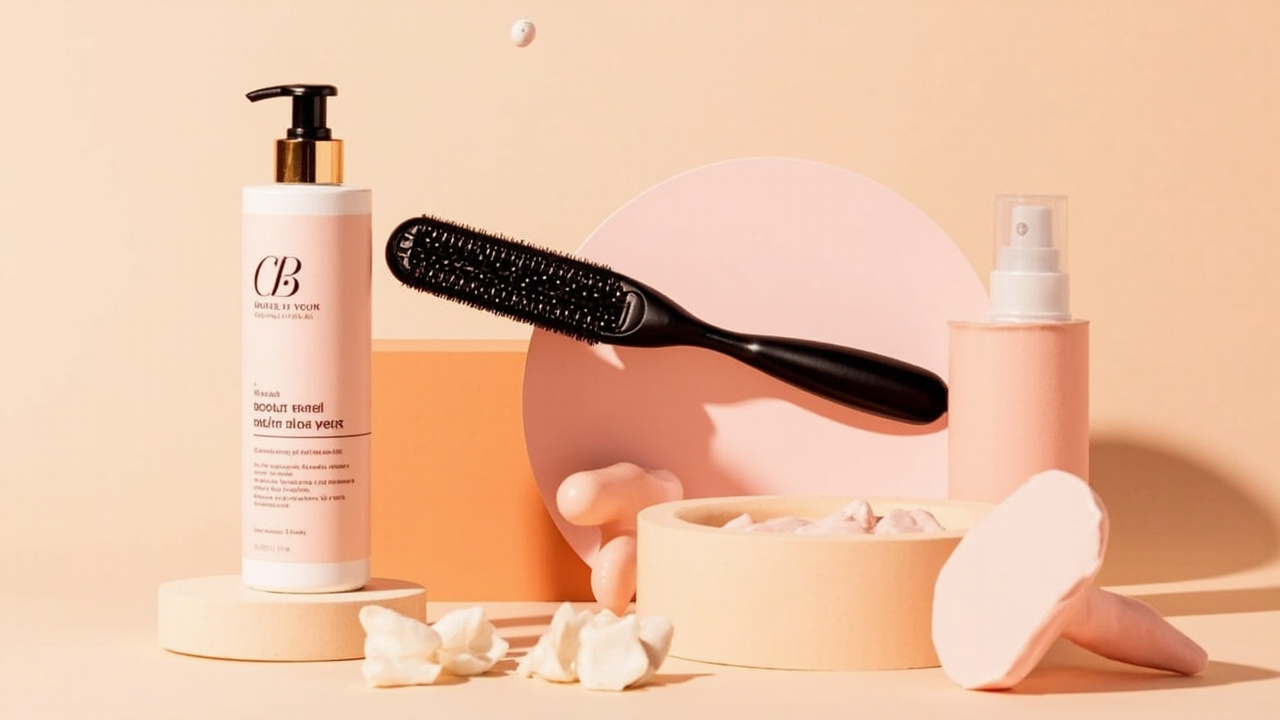
A high-quality detangling spray or leave in detangler works by reducing friction between hair fibers. The primary mechanisms include lubrication, moisture restoration, and pH balancing.
- Cationic Surfactants (e.g., Behentrimonium Chloride): These positively charged molecules bind to the negatively charged hair shaft, smoothing the cuticle and reducing static. They are the workhorses of most conditioners and detangling sprays.
- Silicones (e.g., Dimethicone, Amodimethicone): These synthetic polymers form a thin, flexible film over the hair, providing instant slip and gloss. While effective, some users prefer silicone-free formulas to avoid buildup.
- Hydrolyzed Proteins (e.g., Keratin, Wheat Protein): These small protein fragments penetrate the hair cortex, temporarily repairing gaps in the cuticle and strengthening the fiber. A 2020 review in the International Journal of Trichology noted that hydrolyzed proteins can improve hair tensile strength and reduce breakage during combing (Gavazzoni Dias, 2020).
- Humectants (e.g., Glycerin, Aloe Vera): These attract moisture from the air into the hair shaft, increasing flexibility and reducing brittleness. Aloe vera, in particular, is a well-known soothing agent that can also calm an irritated scalp—a benefit explored further in our guide on Aloe Vera for Skin: Science-Backed Benefits, Uses, and How to Apply.
The most effective detanglers also maintain a slightly acidic pH (around 4.5–5.5), which helps flatten the cuticle and close the hair’s outer layer, minimizing friction.
Types of Hair Detanglers: Sprays, Brushes, and Conditioners
!Types of Hair Detanglers: Sprays, Brushes, and Conditioners
Choosing the best hair detangler depends on your hair type and lifestyle. The market offers three primary categories, each with distinct advantages.
Detangling Sprays (Leave-In)
These are water-based formulas that you spritz onto damp or dry hair before combing. They are lightweight, easy to apply, and ideal for quick touch-ups. Look for sprays that list a cationic surfactant or silicone as one of the first ingredients for maximum slip. Many also contain UV protectants or heat protectants, making them a multifunctional step in your routine.
Detangling Brushes
The tool is just as important as the product. Specialized detangling brushes feature flexible bristles that bend with the hair, reducing tension on individual strands. The wet brush detangler is a popular choice because its bristles are designed to glide through wet hair without snagging. The Knot Genie and Tangle Teezer detangler use a two-tier bristle system that separates and detangles simultaneously, minimizing pulling on the scalp.
Conditioner-Based Detanglers
For those with very thick, curly, or damaged hair, a conditioner detangler (often a rinse-out product) provides the most substantial slip. These products have a higher concentration of smoothing ingredients and are left on for several minutes before rinsing. They are particularly effective when used in the shower, as the combination of warm water and conditioner opens the cuticle, allowing deep penetration of moisturizing agents.
Best Hair Detangler for Kids: Gentle and Tear-Free
Detangling a child’s hair can be a battle. Children’s hair is often finer and more delicate than adult hair, making it prone to breakage. The best hair detangler for kids prioritizes safety, gentleness, and a pleasant sensory experience.
- Key Features to Look For: Tear-free, hypoallergenic formulas; no harsh sulfates or parabens; a pleasant but not overpowering scent; and a spray nozzle that delivers a fine mist rather than a heavy stream.
- Top Ingredient: Aloe vera juice is a common base in kids’ detanglers because it is soothing and hydrating without being greasy.
- Application Tip: Always spray the product onto your hands first, then gently work it through the child’s hair. This avoids startling them and ensures even distribution. Use a brush with very soft, flexible bristles, such as the Wet Brush Pro Flex Dry. Start detangling at the ends and work your way up to the roots to minimize pain and breakage.
Best Detangler for Curly Hair: Hydration and Slip
Curly and coily hair textures are inherently drier than straight hair because natural sebum (oil) has a harder time traveling down the spiral hair shaft. This dryness leads to increased friction and tangling. The best detangler for curly hair must provide intense hydration and sustained slip.
- Key Features to Look For: Rich in humectants (glycerin, honey) and emollients (shea butter, coconut oil); free of drying alcohols; and often formulated as a cream or thick spray rather than a watery mist.
- Top Ingredient: Glycerin is one of the most effective humectants for curly hair, drawing moisture from the air into the hair shaft. A 2019 study in the Journal of the American Academy of Dermatology highlighted glycerin’s role in maintaining moisture balance in textured hair (AAD, 2019).
- Application Tip: Apply the detangler to soaking wet hair in the shower. Use a wide-tooth comb or your fingers to gently separate curls, never a fine-tooth brush on dry hair. The Tangle Teezer detangler is particularly effective for curly hair because its flexible bristles can navigate tight curls without disrupting the curl pattern.
Best Detangler for Fine Hair: Lightweight and Volumizing
Fine hair requires a delicate balance: it needs enough slip to detangle without being weighed down by heavy oils or silicones. The best detangler for fine hair is lightweight, often a spray or a mist, and may contain volumizing ingredients.
- Key Features to Look For: Water-based formula; low or no silicones (or water-soluble silicones); added proteins for strength; and a lightweight hold.
- Top Ingredient: Hydrolyzed rice protein is a great choice for fine hair because it adds body and strength without heaviness. It can temporarily thicken the hair shaft, making it feel fuller.
- Application Tip: Apply only to the mid-lengths and ends of the hair. Avoid the roots to prevent greasiness. Use a wet brush detangler with widely spaced, flexible bristles to avoid pulling out fragile strands.
How to Use a Detangling Spray Properly
Even the best hair detangler will fail if used incorrectly. Follow these science-backed steps for optimal results:
The Role of the Detangling Brush: Wet Brush Detangler, Knot Genie, and Tangle Teezer
While a good spray or conditioner provides the slip, the brush is the mechanical tool that physically separates the fibers. The wet brush detangler is designed with ultra-flexible bristles that bend significantly under pressure, reducing the force exerted on the hair follicle. This is particularly important for wet hair, which is up to 30% weaker than dry hair and more susceptible to breakage.
The Knot Genie and Tangle Teezer detangler both feature a unique two-tier bristle design. The longer bristles separate larger tangles, while the shorter bristles smooth the hair cuticle. A 2016 consumer study published in the Journal of the American Academy of Dermatology found that participants using a specialized detangling brush reported significantly less pain and hair breakage compared to using a standard paddle brush (AAD, 2016).
When choosing a brush:
- For thick, curly hair: The Tangle Teezer (Original or Curly) is a top choice.
- For fine or straight hair: The Wet Brush Pro Flex Dry is gentle and effective.
- For kids or sensitive scalps: The Knot Genie is known for its very soft bristles and ergonomic handle.
Frequently Asked Questions
Can I use a regular conditioner as a detangler?
Yes, a regular rinse-out conditioner can act as a conditioner detangler. However, leave-in detanglers are specifically formulated to provide slip without requiring rinsing. If you use a regular conditioner, apply it in the shower, detangle with a wide-tooth comb, and rinse thoroughly. For post-shower detangling, a dedicated leave in detangler is more convenient.
Is it better to detangle wet or dry hair?
It depends on your hair type. For straight or wavy hair, detangling when damp (not soaking wet) is generally safest, as wet hair is more elastic but also weaker. For curly or coily hair, detangling when soaking wet and coated with conditioner is recommended to minimize breakage. Dry detangling should be avoided for most hair types, as it can cause significant friction and damage.
How often should I use a detangling spray?
You can use a detangling spray as often as you wash or comb your hair. For daily use, choose a lightweight formula. For deep conditioning, use a heavier conditioner detangler once a week. Overuse of a heavy spray may lead to product buildup, so clarify your hair with a gentle shampoo every 2–4 weeks.
What is the best detangler for extremely tangled hair?
For severely matted or tangled hair, start with a conditioner detangler (rinse-out) and let it sit for 5–10 minutes. Then, apply a generous amount of a detangling spray before using a Tangle Teezer detangler or Knot Genie. Work in very small sections, and never force the brush through. If the hair is matted, consider seeking professional help from a stylist.
Can detangling sprays cause hair loss?
No, when used correctly, detangling sprays reduce the risk of hair loss by minimizing the force needed to comb through knots. However, aggressive brushing or pulling can cause traction alopecia over time. Always use a gentle touch and a flexible brush. If you notice excessive hair shedding, consult a dermatologist or trichologist.
Conclusion
You May Also Like
Explore more articles in our Health collection:
- The Ultimate Guide to Body Care for Mature Skin: Merging Advanced Anti-Aging Actives with K-Beauty Innovation
- The Ultimate Guide to Foundations and Cleansers for Acne-Prone and Mature Skin: Achieving a Flawless, Healthy Complexion at Any Age
- The Ultimate Guide to Soothing Eczema and Perfecting Lip Color: Combining Barrier Repair with Long-Lasting Beauty
Achieving knot-free hair without tears or breakage is entirely possible with the right combination of product, tool, and technique. The best hair detangler is not a one-size-fits-all solution; it depends on your hair type, texture, and specific needs. For children, prioritize gentle, tear-free sprays and soft brushes. For curly hair, focus on hydration and slip with thick creams and flexible brushes. For fine hair, choose lightweight sprays and avoid heavy buildup.
Actionable Takeaways:- Start detangling from the ends and work upward to minimize breakage.
- Use a detangling spray or leave in detangler on damp hair for the best slip.
- Invest in a high-quality brush like the wet brush detangler, Knot Genie, or Tangle Teezer detangler.
- For extremely tangled hair, use a conditioner detangler first, then follow with a spray.
- Always be gentle—hair is strongest when treated with care.
By incorporating these science-backed strategies into your routine, you can transform detangling from a stressful chore into a soothing, beneficial part of your hair care regimen.
References
Medically Reviewed By
Dr. James Chen, MD, PhD — Dermatology ResearcherDr. Chen is a physician-scientist specializing in skin barrier research. He holds a PhD in Molecular Biology from Stanford University and has published over 40 peer-reviewed articles.
This article was medically reviewed on 2026-06-09 for accuracy and completeness.
Medical Disclaimer: This article is for informational purposes only and does not constitute medical advice. Always consult a qualified healthcare provider for diagnosis and treatment of any medical condition. Individual results may vary.Related Tools
Try these free calculators and quizzes to personalize your routine: