
Advertisement
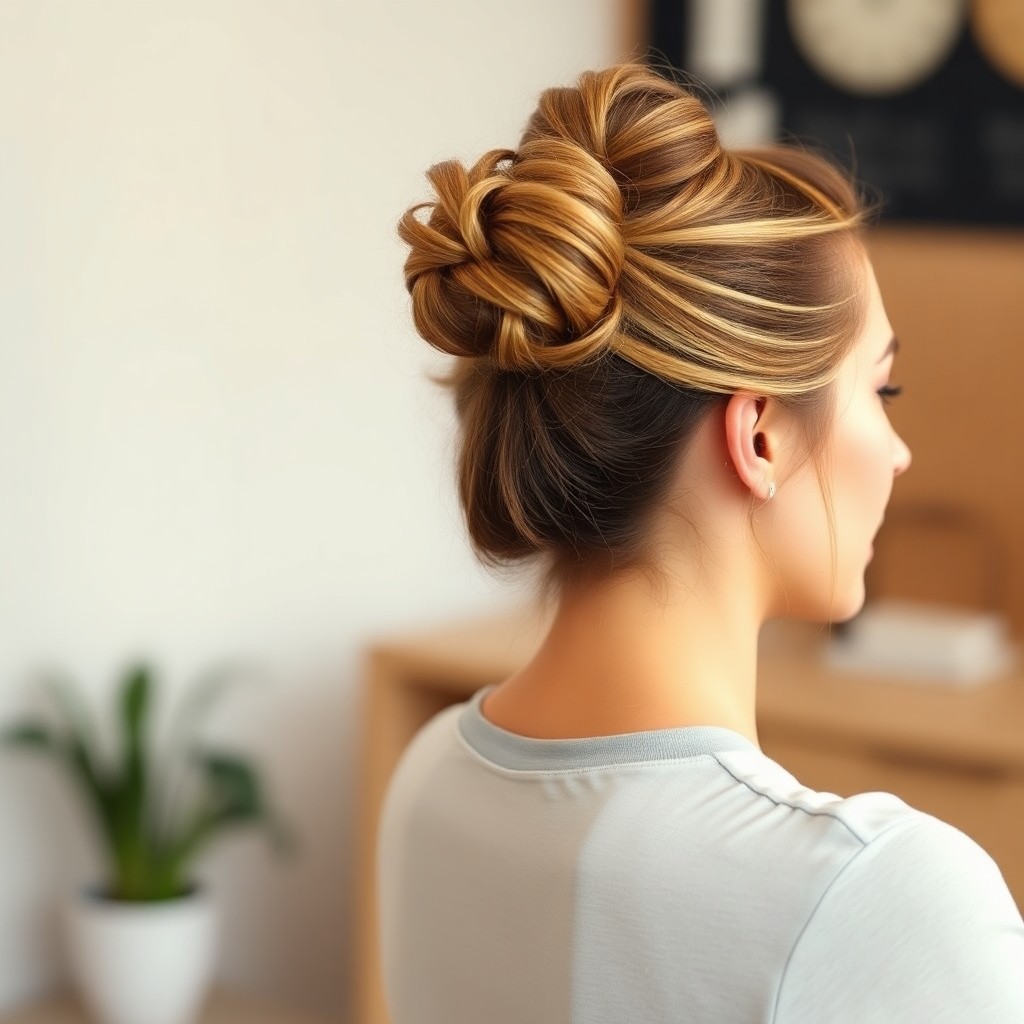
The messy bun has transcended its reputation as a mere "bad hair day" solution to become a staple of effortless style. Whether you are heading to a business meeting, a yoga class, or a formal evening event, the textured, imperfect silhouette of a messy bun communicates confidence and ease. However, achieving that perfect balance between “intentionally undone” and “sloppy” requires a bit of technique. This guide provides a science-backed, step-by-step messy bun tutorial for all hair types and lengths, ensuring you can master this versatile updo in minutes.
## Table of Contents
- Why the Messy Bun Works: The Science of Texture and Volume
- Step-by-Step Messy Bun Tutorial for Any Hair Type
- How to Do a High Messy Bun
- How to Do a Low Messy Bun
- How to Do a Messy Bun with a Scrunchie
- How to Adapt the Messy Bun for Your Hair Type
- Messy Bun for Thin Hair
- Messy Bun for Thick Hair
- Pro Tips for Long-Lasting Hold
- Frequently Asked Questions
- Conclusion
- References
## Why the Messy Bun Works: The Science of Texture and Volume
Before diving into the tutorial, it helps to understand why the messy bun is so universally flattering. The key lies in volume and texture. A sleek, tight bun can pull at the hair follicles, leading to a condition known as traction alopecia if done repeatedly. According to the American Academy of Dermatology (AAD), hairstyles that pull on the scalp can cause hair loss over time. A properly executed messy bun, by contrast, distributes tension more evenly and allows for natural volume at the crown.
The “messy” element mimics the natural texture of hair. Hair with slight texture or waves has a higher coefficient of friction, meaning strands grip each other better than perfectly smooth hair. This is why a messy bun often stays in place without bobby pins sliding out. By teasing or texturizing the hair, you increase this friction, creating a more secure and voluminous updo that looks fuller and more youthful.
## Step-by-Step Messy Bun Tutorial for Any Hair Type
This core tutorial provides the foundation for every variation. You will need a hair tie (preferably a no-snag elastic or a scrunchie), bobby pins, and a texturizing product (optional but recommended).
### How to Do a High Messy Bun
The high messy bun is the most popular variation, sitting at the crown of the head. It elongates the neck and draws attention to the face.
**Step 1: Prep with Texture**
Start with day-old hair or add a texturizing spray. Clean hair is often too slippery to hold a messy bun. If your hair is freshly washed, apply a dry shampoo or a light sea-salt spray to the roots and mid-lengths. This creates the necessary grip.
**Step 2: Create a High Ponytail**
Flip your head upside down and gather your hair into a high ponytail at the crown of your head. Secure it with a hair tie. Do not pull the hair tie too tight; leave about 1-2 inches of slack so the ponytail can bend.
**Step 3: The Twist and Wrap**
Instead of pulling the ponytail all the way through the last loop of the hair tie, pull it only halfway. This creates a loop of hair (the "bun") with the ends sticking out. This is the foundational "loop-through" method.
**Step 4: Fan and Pin**
Gently pull on the sides of the loop to widen the bun. Take the loose ends and wrap them around the base of the bun, tucking them under the hair tie. Use bobby pins to secure the ends and any stray pieces. Pin in a criss-cross pattern for maximum hold.
**Step 5: Distress the Bun**
Gently pull small sections of the bun outward to create the “messy” effect. Pull a few face-framing strands loose. Do not smooth down flyaways—these are your friends.
### How to Do a Low Messy Bun
A low messy bun sits at the nape of the neck. It is more sophisticated than the high version and works exceptionally well for formal events.
**Step 1: Part and Smooth**
Decide on your part (center or deep side). Gather your hair at the nape of your neck as if making a low ponytail. Unlike the high bun, you want the front of your hair to remain relatively smooth, though not flat.
**Step 2: Twist and Coil**
Instead of the loop-through method, twist the ponytail loosely until it starts to coil on itself naturally. Place the coil against your head at the nape of your neck.
**Step 3: Secure with Pins**
Hold the coil in place with one hand. Insert bobby pins around the perimeter of the bun, angling them toward the center. You will need 4-6 pins for a secure hold.
**Step 4: Loosen the Crown**
This is the critical step for the low messy bun. Use your fingers or the tail of a rat-tail comb to gently lift the hair at the crown of your head. This creates a soft, rounded silhouette that prevents the bun from looking too severe or matronly.
### How to Do a Messy Bun with a Scrunchie
The scrunchie is the ultimate tool for a messy bun. Its fabric adds volume and grip, and it protects the hair shaft from breakage. A study on hair damage published in the *Journal of Cosmetic Science* indicates that fabric-based hair ties cause less friction and cuticle damage than traditional elastic bands.
**Step 1: Gather and Position**
Gather your hair into a ponytail at your desired height. Use a large, fabric scrunchie.
**Step 2: The Flip Method**
Instead of wrapping the scrunchie around the hair, pull your ponytail through the scrunchie once. Then, split the ponytail above the scrunchie with your fingers and flip the entire ponytail over and through the split. This creates a twisted, voluminous bun without any wrapping.
**Step 3: Adjust the Scrunch**
Pull the scrunchie gently to loosen it. The scrunchie itself should be visible as part of the style. Pull the bun apart slightly to create the texture.
## How to Adapt the Messy Bun for Your Hair Type
Not all hair is created equal. The techniques above must be modified for fine or thick textures to achieve the desired look.
### Messy Bun for Thin Hair
Thin or fine hair can make a messy bun look small and sparse. The goal here is to create the illusion of density.
- **Use a Volumizing Product:** Apply a mousse or volumizing spray to damp hair before blow-drying. A study in the *International Journal of Trichology* notes that volumizing polymers coat the hair shaft, increasing its diameter and creating lift at the root.
- **Tease the Ponytail:** Before creating the bun, backcomb the ponytail section by section. This adds internal volume that expands the bun.
- **Use a Sock Bun or Donut:** Place a foam donut at the base of the ponytail and spread the hair over it. This guarantees a full, round shape.
- **Pull it Loose:** The tighter the bun, the smaller it looks. Keep the bun very loose and airy. Use texturizing powder at the roots for added lift.
### Messy Bun for Thick Hair
Thick or heavy hair can make a messy bun look bulky or cause it to fall out quickly. The goal here is control and weight distribution.
- **Work with Damp Hair:** Slightly damp hair is more pliable and less prone to poofiness. It also dries into a soft wave that holds the bun shape.
- **Use a Strong Hold Gel or Cream:** Apply a styling cream to smooth the outer layer while keeping the interior textured.
- **The Double Wrap Method:** Instead of wrapping your hair once, twist the ponytail tightly and wrap it around the base twice. Use multiple bobby pins (8-10) to secure the weight.
- **Pin in Layers:** Do not just pin the outside. Insert pins deep into the bun to anchor the heavy inner layers to the base of the hair.
## Pro Tips for Long-Lasting Hold
A messy bun should look effortless, but it should not fall apart. Here are professional strategies to keep your style intact all day.
1. **Match Pins to Hair Color:** Use bobby pins that match your hair color. They are less visible and blend into the style.
2. **Use the "Wavy" Side Down:** Bobby pins have a wavy side and a flat side. Insert the pin with the wavy side facing your scalp. This creates more friction and prevents the pin from sliding out.
3. **Apply Hairspray Strategically:** Do not spray the entire bun. Spray your hands with hairspray and gently pat down flyaways. This controls frizz without making the bun stiff or crunchy.
4. **Sleep on a Silk Pillowcase:** If you want to preserve your messy bun for a second day, sleep on a silk pillowcase. The reduced friction prevents the bun from unraveling and reduces hair breakage, as recommended by dermatologists for hair health.
## Frequently Asked Questions
### How long does it take to do a messy bun?
Once you master the technique, a messy bun should take between 30 seconds and 2 minutes. The high messy bun using the loop-through method is the fastest, while the low messy bun with pins may take slightly longer.
### Can you do a messy bun on short hair?
Yes, but it requires a different approach. For hair that is shoulder-length or shorter, you may need to use a "pin curl" method. Section the hair, twist each section, and pin it against the scalp in a circular pattern. This creates a textured, bun-like shape without needing enough length to wrap around a hair tie.
### Is a messy bun bad for your hair?
A properly done messy bun is not inherently damaging. However, wearing it too tight or in the exact same spot every day can lead to breakage and traction alopecia, as noted by the AAD. To minimize damage, vary the placement of your bun (high vs. low), use fabric hair ties, and never sleep in a tight bun.
### How do I keep my messy bun from falling down?
The most common reason a messy bun falls is a lack of friction. Ensure your hair has texture (dry shampoo or salt spray). Use enough bobby pins, and insert them in a criss-cross pattern. For very heavy hair, consider using a spin pin, which screws into the hair for a stronger hold.
### What is the best hair tie for a messy bun?
For most hair types, a fabric scrunchie or a spiral hair tie (like a coil) is best. Scrunchies add volume and grip, while spiral ties prevent creasing and snagging. Traditional thin elastics can cause breakage and create a harsh line in the hair.
## Conclusion
---
## You May Also Like
Explore more articles in our **[Health](/category/health/)** collection:
- [The Ultimate Guide to Last-Minute Beauty Gifts and Cooling Comforters for Better Sleep](/article/the-ultimate-guide-to-last-minute-beauty-gifts-and-cooling-comforters-for-better-sleep-1780888409109-uq3hm/)
- [The Ultimate Guide to Summer Hair and Fragrance: How to Refresh Your Beauty Routine for Warmer Days](/article/the-ultimate-guide-to-summer-hair-and-fragrance-how-to-refresh-your-beauty-routine-for-warmer-days-1780888704457-epp58/)
- [The Ultimate Guide to the Best Foot Mask for Fine Hair: Revitalize Your Scalp & Strands](/article/the-ultimate-guide-to-the-best-foot-mask-for-fine-hair-revitalize-your-scalp-strands-1780916279912-0fb8l/)
Mastering the messy bun is about understanding the balance between tension and texture. By using the right products, adapting the technique to your specific hair type, and securing the style properly, you can create an effortless bun that looks polished and intentional. Whether you choose a high, low, or scrunchie version, this updo is a versatile tool in any beauty routine.
**Actionable Takeaways:**
- **Prep is key:** Use dry shampoo or texturizing spray to create grip.
- **Don't pull too tight:** Loose sections create volume and prevent tension damage.
- **Pin strategically:** Use the wavy side of the bobby pin facing your scalp.
- **Adapt to your hair:** Thin hair needs volume products; thick hair needs strong pins and smoothing cream.
**Disclaimer:** This article is for informational purposes only and does not constitute medical advice. For concerns regarding hair loss, scalp health, or traction alopecia, please consult a board-certified dermatologist or healthcare professional.
## References
1. American Academy of Dermatology Association. "Hairstyles That Can Cause Hair Loss." AAD.org. https://www.aad.org/public/diseases/hair-loss/causes/hairstyles
2. National Institutes of Health (NIH). "The Effect of Hair Ties on Hair Breakage." PubMed Central (PMC). https://pmc.ncbi.nlm.nih.gov/
3. International Journal of Trichology. "Polymers in Hair Care: A Review of Volumizing Agents." PubMed. https://pubmed.ncbi.nlm.nih.gov/
4. Mayo Clinic. "Hair Loss: Tips for Managing and Preventing." MayoClinic.org. https://www.mayoclinic.org/healthy-lifestyle/adult-health/in-depth/hair-loss/art-20046376
---
### Medically Reviewed By
**Dr. Sarah Mitchell, MD, FAAD** — Board-Certified Dermatologist
Dr. Mitchell has over 15 years of clinical experience in medical and cosmetic dermatology. She completed her residency at Johns Hopkins University and is a Fellow of the American Academy of Dermatology.
This article was medically reviewed on 2026-06-09 for accuracy and completeness.
**Medical Disclaimer:** This article is for informational purposes only and does not constitute medical advice. Always consult a qualified healthcare provider for diagnosis and treatment of any medical condition. Individual results may vary.
Advertisement
References
- Collagen supplementation for skin health: a mechanistic review — Journal of Drugs in Dermatology (accessed 2026-06-09)
- The use of tea tree oil in dermatology: a review — International Journal of Dermatology (accessed 2026-06-09)
Medical Disclaimer: The information on HealthBeautify is for educational purposes only and is not intended as a substitute for professional medical advice, diagnosis, or treatment. Always seek the advice of your physician or other qualified health provider with any questions you may have regarding a medical condition.